| | | | | PROGRAMME INFO | | | |
| | | From Shetland to the Scilly Isles, Open Country travels the UK in search of the stories, the people and the wildlife that make our countryside such a vibrant place. Each week we visit a new area to hear how local people are growing the crops, protecting the environment, maintaining the traditions and cooking the food that makes their corner of rural Britain unique.
Email: open.country@bbc.co.uk
Postal address: Open Country,
BBC Radio 4, Birmingham, B5 7QQ.
| | | | | LISTEN AGAIN | | | |
|
|
| | PRESENTERS | | | |
|  | | | More about Helen Mark | | |  | | | More about Richard Uridge | | | | |
| | | | | | PROGRAMME DETAILS | | | |
|  | The Roseland Peninsula
| |
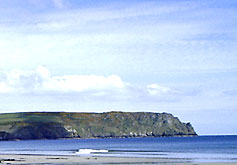
Richard Uridge visits the Roseland Peninsula, a finger of coastline on the Cornish Riviera. The Lizard shelters the region from the worst of the weather and there's a huge range of landscape to explore.
The Carricks Roads is a large waterway created after the last Ice Age from an ancient valley which flooded as the melt waters caused the sea level to rise dramatically. This created the world's third largest harbour, navigable from Falmouth to Truro. Stephen Warman, from English Nature, explains that this is the route of the River Fal which reaches the sea at Falmouth. It starts in china clay country near the Eden Project. The telltale signs of the clay sediment which covers the saltmarsh betray the fact that the landscape has been created by the waste that washed down and the estuary moved back towards the sea. Today the regulations have been tightened and Stephen says that soon the landscape will revert to being the drowned river valley which it once was.
The Fal Estuary
China Clay Museum
English Nature
Richard meets Peter Messer-Bennetts, an ex-railway man, at the fishing village of Portscatho. Peter collects stiles and footpaths and they set off around the cliffs as Peter explains that the majority of inland footpaths were the quickest way from home to work - if you worked on a farm, the footpath would develop between your cottage and the farmyard, across fields because they didn't have roads as we have today. The coastal footpaths developed because of the Preventative Service (present-day Customs & Excise). In the 1800s, these were the people who kept an eye out for shipwrecks and smugglers.
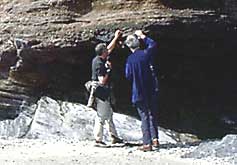 | Richard Uridge and John Macdam
| |
At Pendower Beach, geologist John Macadam is exploring the wealth of history hidden in the rock face. The rocks of the modern beach itself are the oldest part, going back some 350 million years. At low winter tides, you can also see a fossil forest. There's a cliff-face where the bands of rock are like the layers of a cake and, if you know how to read them, you can discover previous beaches, ancient sand dunes, ice age landscapes and even an ancient soil. There's a tiny line where 350 million years of geological history has just gone missing: John is adamant that global warming is nothing new and is only a problem for us humans, who've built so much near the sea. It's not, he says, a problem for the planet at all.
Inland from the coast, Richard decides that it's time for some Cornish tea - only in this case, there's not a scone in sight. At Lord Falmouth's Tregothnan estate near Truro, they're growing tea. Jonathon Jones is the head gardener and the inspiration behind the idea. They previously specialised in camellias, growing them for flowers and for foliage - today there are thousands on the estate from the exotic to the ordinary. Tea (Camellia sinensis) as its name implies, comes from the same family and so grew the idea of making Cornwall the next Darjeeling. Jonathon spent three months visiting tea plantations throughout Asia, Australia and Africa on a Nuffield agricultural scholarship. Now one of the kitchen gardens has been made into a trial plantation and there are plans to have 20 acres under cultivation in the next few years.
Jonathon Jones' research paper
Finally Richard hitches a lift out to Gull Rock with crab fisherman Simon Taffender. Gull Rock is a sheer escarpment rising from the sea, about 100ft high. As the boat approaches, Stephen Westcott, a naturalist with a penchant for climbing and birds, dives off, swims to the rock and climbs to the top pinnacle. He checks birds nests and returns with the news that the birds on the Rock are using some strange nesting materials: fishing line, rubber from wetsuits and other detritus gathered from the sea. He's intrigued by the way shags often have pink seafans lining their nests, almost like their upholstery, because it seems like they are consciously adding them solely for decoration. The BBC is not responsible for external websites | | |
RELATED LINKS
Food Programme Food Awards 2002
BBC Holiday Category
BBC Countryfile
| | |
| | | | | | |  | | | | | | | | | Audio Help | | | | | | PREVIOUS PROGRAMMES | | | | | Current Week
Last Week
The A44
Aberdeenshire
Aberdeenshire, River Don
Aberfan
Alderley Edge, Cheshire
Ancient buildings
Anglesey
Applecross Peninsula
Aran Islands
Armistice Day, Somerset & Sussex
Auxiliary Units
Bardsey Island
Batsford Park Estate, Glos
Berkshire
Berwyn Mountains
Birdsong
Blackwater Estuary, Essex
Blaenafon
The Blean, Kent
Bosworth Field
Brecon Beacons
Buckinghamshire
Butterflies
By Brook Valley
The Cairngorms
Caithness
Cambridgeshire
Carmarthenshire
Cheddar Gorge
Cherwell Valley
Cheshire: Harrop Valley
Chesil Bank
Clee Hills, Shropshire
Climbers
Corfe Castle
Cornwall
Cornwall: Cape Cornwall
Cornwall: Padstow Lifeboat
Cornwall: Roseland Peninsula
Cotswold
Cotswold Way
County Clare, Ireland
Cranbourne Chase
Cumbria: Eden Valley
Cumbria: Coniston Water
Cumbria: Sellafield
Cumbria
Daingean in Glengarry
Dee Estuary
Derbyshire
Devon & Somerset: Grand Western Canal
Donegal
Dorset
Dorset: Cranborne Chase
Dorsetman
Dowsing
Dunalastair
Durham
Durham: Witton Park
East Anglian Churches
Eden Valley in Cumbria
Eigg
Eire: Co. Mayo
Eire: Skibbereen
Eire: West Cork
Elan Valley, Wales
Eshott, Norhumberland
Essex
Essex: coastal
Exmoor, churches
Falkirk
Farne Islands, Part 1
Farne Islands, Part 2
Fenn's, Whixall & Bettisfield Mosses National Nature Reserve
The Fens
Fife
Flanders
Forster Country
Glencoe Mountains
Glencoe
Gloucestershire
Goa
Goodwin Sands
Gower Peninsula, June 2006
Gower Peninsula, October 2005
Grouse shooting
Guernsey
Hadrian's Wall 2003
Hadrian's Wall 2004
Hambledon Cricket Club
Hampshire: Odium
Hampshire: Selborne
Hardcastle Crags
Heart of Wales Railway
Hebden Bridge
Herefordshire
Hertfordshire
Hidden Treasures
High Weald, Sussex
Holy Island
Ilmington
Isle of Gigha 2004
Isle of Gigha, 2005
Isle of Man - Seas
Isle of Man
Isle of Wight, 2003
Isle of Wight, 2005
Izak Walton
Kent: Dover
Kent: Dungeness Peninsular
Kent: North
Kielder Water
Kinver Edge
Kingham, Oxfordshire
Lake District
Leicestershire: Bosworth Field
Leicestershire: death rituals
Lincolshire farming
Lincolnshire
Lincolnshire
Loch Morar
Looe Island
Ludlow
Lunar Influence
Don McCullin
Richard Mabey
Marsden, West Yorkshire
Mary Towneley Loop
Mersea Island
Mersey Marshes
Metal Detectingg
Mid-Wales
Morecambe Bay
Moel Findeg, North Wales
Morecombe Sands
Nant Gwrtheyrn
National Forest
New Forest
Newton Dee, nr Aberdeen
Norfolk Broads
Norfolk: Thetford Forest
Norfolk: North Norfolk coast
North Devon Combes
Northants: Sulgrave Manor
Northants: Underground
Northern Ireland: Belfast
Northern Ireland: Border Counties
Northern Ireland: Moneypenny's Lock
Northern Ireland: Sperrin Mountains
Northern Ireland: Strangford Lough
Northern Ireland: Toomebridge
North Norfolk Coast
Northumberland, part 1
Northumberland, part 2
North Wessex Downs
North Yorkshire
North Yorkshire Moors
North Yorkshire Moors Railway
Nottinghamshire
Nottinghamshire: Sherwood Forest
Oak Trees
Offa's Dyke
Orford Ness
Orkneys
Out Skerries, Shetland
Outward Bound
Oxfordshire
Peak District
Peak District
Pembrokeshire Coast
Pentland Hills
Perthshire
Poachers
Pony Club
River Severn
Romney Marsh
Rutland Water
Scilly
Scotland: Abernethy Forest
Scotland: Loch Morar
Scotland: Shetland
Scotland: Strathclyde
Scotland: What value the countryside?
Scottish Borders
Sefton Coast
Self-sufficient communities
Severn Valley Railway
Shropshire: Ellesmere
Shropshire: Much Wenlock
Shropshire and Wales, Newport
Skegness
Skomer Island
Snowdon
Snowdonia National Park
Somerset Levels
Somerset Levels
Somerset: Montacute House
Somerset writers
South Downs
South Somerset: watermills
Southwold
Spurn Peninsular
Start Bay
Stour Valley
Survival
Sussex
Sutherland, Scotland
Tamar Valley
Thornham Estate, Suffolk
Thurstonland Cricket Club
Twyford Down
Tyntesfield, North Somerset
Village Life
Terry Waite
Wales
Wales: Flatholm Island
Wales: Nant Gwrtheyrn
Wales: Snowdonia
Warwickshire: rare breeds
Wayoh Reservoir
Wenlock Edge
West Sussex
West Yorks: Calder Valley
Weston Common, Surrey
Wild boar
Wiltshire
Wiltshire: Savernake Forest
Women's Institute
Wroxeter
Yorkshire Dales, June 2002
Yorkshire Dales, 1 July 2006
Yorkshire Dales, 8 July 2006
Z to Z Britain
Open Country looks back 2003
| | | | | MESSAGE BOARDS | | | | | Join the discussion:
The Learning Curve
Pick of the Week
Questions, Questions
Woman's Hour
Word of Mouth | | | | | RELATED PROGRAMMES | | | | | Excess Baggage
Changing Places
Similar programmes this week on Radio 4
| | |
|