| | | | | PROGRAMME INFO | | | |
| | | From Shetland to the Scilly Isles, Open Country travels the UK in search of the stories, the people and the wildlife that make our countryside such a vibrant place. Each week we visit a new area to hear how local people are growing the crops, protecting the environment, maintaining the traditions and cooking the food that makes their corner of rural Britain unique.
Email: open.country@bbc.co.uk
Postal address: Open Country,
BBC Radio 4, Birmingham, B5 7QQ.
| | | | | LISTEN AGAIN | | | |
|
|
| | PRESENTER | | | |
| 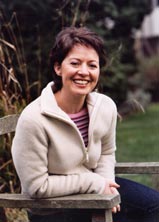 | | | | More about Helen Mark | | | | |
| | | | | | PROGRAMME DETAILS | | | |
| 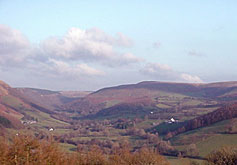 | | The Cothi Valley | |
Helen Mark travels to Carmarthenshire, where she starts her visit at Llandre Farm, high on a hilltop overlooking the Cothi Valley. Huw and Sheila Davies, the third generation to farm here, point out the local landmarks - Llandovery, Caio, Pumpsaint and, of course, the River Cothi itself. There are also ancient drovers' routes, a Roman church and burial place, the line of a Roman aqueduct used in gold mining, which all serve as clues for anyone researching the history of this ancient part of Wales.
Carmarthenshire County Council
Neil Ludlow, of Cambria Archaeology takes Helen to the remains of 12th-century Talley Abbey, founded by the Welsh king Rhys ap Gruffydd. The end wall still towers 80 feet above the remote valley. The writings of Gerald of Wales, which mention the Abbey, describe a thickly wooded landscape and the countryside has remained, essentially, unchanged. The landscape, says Neil, is like a piece of parchment - generation upon generation make their mark, only to have it scraped away and replaced again and again in later years - but dig just a little below the surface of any part of Britain and you will find very clear signs of who went before and how they lived. This part of Wales is fascinating largely, he says, because you don't have to dig down very far at all to bring the past to life.
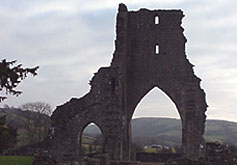 | | Talley Abbey | |
The Romans left their mark on Carmarthenshire in the shape of gold mines. Paul Faulkner takes Helen down into one of the cold, wet corridors of Dolaucothi mine, used by the Romans to extract quartz and, as he says, they didn't do things by halves. They used mining engineers and contractors, rather than the unskilled slave labour as is commonly imagined, broke new ground in mining technology and used vast quantities of water - up to two and a half million gallons a day. Some Romans would have married into the local native population and the next research project in this area will be to excavate the nearby village where the two communities would have lived together.
Dolaucothi Mine
Local rivers can be extremely rich in sea trout and salmon and Andy Schofield is one of the people trying to keep it that way. He's working with the Environment Agency to restore fish stocks not only in the interests of local wildlife like otters and birds, but to attract anglers and to feed the local economy. He's not in favour of direct restocking because, if fish aren't thriving in a river, there's probably a fundamental problem which won't be solved by adding more fish. He also believes that expensive, hatchery-bred fish are less "river-wise" than river-bred fish and less likely to survive in the long-term. One of the biggest threats to fish is soil erosion from river banks, which raises the temperature of the water by making the river wider and shallower, and which clogs the clean gravel required by fish to lay their eggs. Andy is encouraging local farmers to plant trees and build fences along the river banks, protecting the banks and, indirectly, the fish and the livelihoods of local people who profit from the angling industry.
Carmarthenshire Fishermen's Federation
Helen next goes to a tributary of the River Towy, which also plays an important role for wildlife - this time, for otters. Geoff Liles, who first became interested in the species when they were really on the brink 20 years ago, wades into the river with Helen to follow the tell-tale trail of otter droppings, or spraints, along the bank. It's a perfect river for otters, despite the traffic thundering on the A40 overhead. When the waters rise and form a torrent under the nearby road bridge, the otters are forced onto the bank and across the road, putting their lives at risk. Several, mostly females, have been killed at this spot, so a metal shelf under the bridge coupled with a fence on the bank to funnel the otters in the right direction has been installed. Life still isn't easy for the otter, but at least the roadkill toll will now be lower in this part of Wales.
The BBC is not responsible for external websites | | |
RELATED LINKS
BBC Holiday Category
BBC Countryfile
| | |
| | | | | | |  | | | | | | | | | Audio Help | | | | | | PREVIOUS PROGRAMMES | | | | | Current Week
Last Week
The A44
Aberdeenshire
Aberdeenshire, River Don
Aberfan
Alderley Edge, Cheshire
Ancient buildings
Anglesey
Applecross Peninsula
Aran Islands
Armistice Day, Somerset & Sussex
Auxiliary Units
Bardsey Island
Batsford Park Estate, Glos
Berkshire
Berwyn Mountains
Birdsong
Blackwater Estuary, Essex
Blaenafon
The Blean, Kent
Bosworth Field
Brecon Beacons
Buckinghamshire
Butterflies
By Brook Valley
The Cairngorms
Caithness
Cambridgeshire
Carmarthenshire
Cheddar Gorge
Cherwell Valley
Cheshire: Harrop Valley
Chesil Bank
Clee Hills, Shropshire
Climbers
Corfe Castle
Cornwall
Cornwall: Cape Cornwall
Cornwall: Padstow Lifeboat
Cornwall: Roseland Peninsula
Cotswold
Cotswold Way
County Clare, Ireland
Cranbourne Chase
Cumbria: Eden Valley
Cumbria: Coniston Water
Cumbria: Sellafield
Cumbria
Daingean in Glengarry
Dee Estuary
Derbyshire
Devon & Somerset: Grand Western Canal
Donegal
Dorset
Dorset: Cranborne Chase
Dorsetman
Dowsing
Dunalastair
Durham
Durham: Witton Park
East Anglian Churches
Eden Valley in Cumbria
Eigg
Eire: Co. Mayo
Eire: Skibbereen
Eire: West Cork
Elan Valley, Wales
Eshott, Norhumberland
Essex
Essex: coastal
Exmoor, churches
Falkirk
Farne Islands, Part 1
Farne Islands, Part 2
Fenn's, Whixall & Bettisfield Mosses National Nature Reserve
The Fens
Fife
Flanders
Forster Country
Glencoe Mountains
Glencoe
Gloucestershire
Goa
Goodwin Sands
Gower Peninsula, June 2006
Gower Peninsula, October 2005
Grouse shooting
Guernsey
Hadrian's Wall 2003
Hadrian's Wall 2004
Hambledon Cricket Club
Hampshire: Odium
Hampshire: Selborne
Hardcastle Crags
Heart of Wales Railway
Hebden Bridge
Herefordshire
Hertfordshire
Hidden Treasures
High Weald, Sussex
Holy Island
Ilmington
Isle of Gigha 2004
Isle of Gigha, 2005
Isle of Man - Seas
Isle of Man
Isle of Wight, 2003
Isle of Wight, 2005
Izak Walton
Kent: Dover
Kent: Dungeness Peninsular
Kent: North
Kielder Water
Kinver Edge
Kingham, Oxfordshire
Lake District
Leicestershire: Bosworth Field
Leicestershire: death rituals
Lincolshire farming
Lincolnshire
Lincolnshire
Loch Morar
Looe Island
Ludlow
Lunar Influence
Don McCullin
Richard Mabey
Marsden, West Yorkshire
Mary Towneley Loop
Mersea Island
Mersey Marshes
Metal Detectingg
Mid-Wales
Morecambe Bay
Moel Findeg, North Wales
Morecombe Sands
Nant Gwrtheyrn
National Forest
New Forest
Newton Dee, nr Aberdeen
Norfolk Broads
Norfolk: Thetford Forest
Norfolk: North Norfolk coast
North Devon Combes
Northants: Sulgrave Manor
Northants: Underground
Northern Ireland: Belfast
Northern Ireland: Border Counties
Northern Ireland: Moneypenny's Lock
Northern Ireland: Sperrin Mountains
Northern Ireland: Strangford Lough
Northern Ireland: Toomebridge
North Norfolk Coast
Northumberland, part 1
Northumberland, part 2
North Wessex Downs
North Yorkshire
North Yorkshire Moors
North Yorkshire Moors Railway
Nottinghamshire
Nottinghamshire: Sherwood Forest
Oak Trees
Offa's Dyke
Orford Ness
Orkneys
Out Skerries, Shetland
Outward Bound
Oxfordshire
Peak District
Peak District
Pembrokeshire Coast
Pentland Hills
Perthshire
Poachers
Pony Club
River Severn
Romney Marsh
Rutland Water
Scilly
Scotland: Abernethy Forest
Scotland: Loch Morar
Scotland: Shetland
Scotland: Strathclyde
Scotland: What value the countryside?
Scottish Borders
Sefton Coast
Self-sufficient communities
Severn Valley Railway
Shropshire: Ellesmere
Shropshire: Much Wenlock
Shropshire and Wales, Newport
Skegness
Skomer Island
Snowdon
Snowdonia National Park
Somerset Levels
Somerset Levels
Somerset: Montacute House
Somerset writers
South Downs
South Somerset: watermills
Southwold
Spurn Peninsular
Start Bay
Stour Valley
Survival
Sussex
Sutherland, Scotland
Tamar Valley
Thornham Estate, Suffolk
Thurstonland Cricket Club
Twyford Down
Tyntesfield, North Somerset
Village Life
Terry Waite
Wales
Wales: Flatholm Island
Wales: Nant Gwrtheyrn
Wales: Snowdonia
Warwickshire: rare breeds
Wayoh Reservoir
Wenlock Edge
West Sussex
West Yorks: Calder Valley
Weston Common, Surrey
Wild boar
Wiltshire
Wiltshire: Savernake Forest
Women's Institute
Wroxeter
Yorkshire Dales, June 2002
Yorkshire Dales, 1 July 2006
Yorkshire Dales, 8 July 2006
Z to Z Britain
Open Country looks back 2003
| | | | | MESSAGE BOARDS | | | | | Join the discussion:
The Learning Curve
Pick of the Week
Questions, Questions
Woman's Hour
Word of Mouth | | | | | RELATED PROGRAMMES | | | | | Excess Baggage
Changing Places
Similar programmes this week on Radio 4
| | |
|