| | | | | PROGRAMME INFO | | | |
| | | From Shetland to the Scilly Isles, Open Country travels the UK in search of the stories, the people and the wildlife that make our countryside such a vibrant place. Each week we visit a new area to hear how local people are growing the crops, protecting the environment, maintaining the traditions and cooking the food that makes their corner of rural Britain unique.
Email: open.country@bbc.co.uk
Postal address: Open Country,
BBC Radio 4, Birmingham, B5 7QQ.
| | | | | LISTEN AGAIN | | | |
|
|
| | PRESENTER | | | |
| 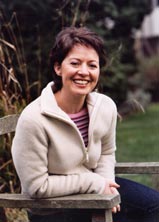 | | | | More about Helen Mark | | | | |
| | | | | | PROGRAMME DETAILS | | | |
| 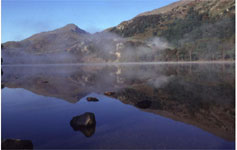 | |
Helen Mark visits the Snowdonia National Park or parc cenedlaethol Eryri (Eryri means place of the eagles). It was designated a National Park in 1951 and is the second largest after the Peak District, covering some 838 square miles.
As well as being home to the highest mountain in England and Wales, Snowdonia boasts two mountain ranges.
Eryri has not only some of the most beautiful scenery in Britain, but also a variety of landscapes and habitats for animals, birds and plants; as well as 23 miles of coastline with sand dunes and estuaries; and glacial valleys.
There are more National Nature Reserves in Eryri than any other National Park in Britain. It is home to the Snowdon Lily, Lloydia Serotina, an arctic/alpine plant only present in the park, and the beautiful rainbow coloured Snowdon Beetle, chrysolina cerealis.
Snowdonia National Park
Helen begins her journey through the park by meeting upland ecologist Barabara Jones and together they go in search of the purple saxifrage, an artic alpine plant. The emergence and flowering of the saxifrage is one of the first signs of spring in the mountains. It clings to life in the crevices of the bleak north facing crags of the many Cwms that form the mountains.
Barbara is a keen climber - and she has to be to reach the rarest of plants in Snowdonia - the Snowdon Lily. The Snowdon Lily, although common in the rest of Europe, is only found in Britain in Snowdonia. In the National Park it is on the limit of its southern reach and as such is a good indicator of climactic change.
Electric Mountain houses the generators of Dinorwig power station. Situated near the village of Llanberis, it is a modern industrial wonder of the world. The cavern which houses the electricity generators is so large it could easily accommodate Saint Paul's Cathedral. The main turbine and generator chamber is one of the largest underground chambers excavated by man.
As site warden Clive MacGregor explains to Helen, the power plant comes on line when there is peak demand in the National Grid. There is a lake on top of the mountain that is filled with water and a lake at the bottom that is partially full. A series of pipes takes the water from the upper lake through the mountain and the turbines to the lower lake.
Electricity is generated by the power of the water running at incredible pressure and driving the turbines. During off peak times electric pumps then pump the water from the bottom lake back up to the top and the cycle starts again.
Electric Mountain
Helen meets Kate Williamson and Dave Hewett at a nature reserve near Abergwyngregyn. They are organising a project to monitor the green woodpeckers in the National Park - there has recently been a decline in their numbers and the park authority would like see how many there are left. They are looking for volunteers to play a tape of the male woodpecker's call to see if any real woodpeckers present in the reserve reply. The park will provide tapes and players for the experiment.
Kate can be contacted at kate.williamson@eryri-npa.gov.uk
or phone 01766-772255.
Helen also meets Duncan Brown - who's counting moths as part of a project to monitior the effects on the wildlife of coppicing the elder forest. The elders were once used by itinerant workers to make clogs for the mill workers in Lancashire but as that demand died out the forest was allowed to grow unchecked so the park started a rotation of coppicing to encourage new growth and regenerate the forest.
Helen then crosses into Anglesey to visit Gareth Lloyd-Jones, Professor of Theology at Bangor University to discuss the importance of William Morgan on the history of the Welsh language. Born on the edge of the national park near Betws-y-Coed, the Rev William Morgan translated the Bible into Welsh in 1588. This translation has been described as the most important book in Welsh history and it's importance to Welsh life and preservation of the Welsh language cannot be overstated.
Morgan's translation meant that Welsh was the only non-state language of Protestant Europe to be the medium of a published Bible within a century of the Reformation - a key factor in keeping the language alive in the chapels and hearths of the remote Welsh valleys.
The Welsh Language
BBC History: The Welsh Bible
Competition
Professor Lloyd-Jones set this week's question: the Welsh flag is a red dragon on a green and white background. Which monarch is associated with the green and white colours of the Welsh flag? The prize this week is a beautifully decorated piece of Welsh slate. Submit your entry by Tuesday, March 12 by clicking on this link - open.country@bbc.co.uk
The BBC is not responsible for external websites | | |
RELATED LINKS
BBC Holiday Category
BBC Countryfile
| |
| | | | | | |  | | | | | | | | | Audio Help | | | | | | PREVIOUS PROGRAMMES | | | | | Current Week
Last Week
The A44
Aberdeenshire
Aberdeenshire, River Don
Aberfan
Alderley Edge, Cheshire
Ancient buildings
Anglesey
Applecross Peninsula
Aran Islands
Armistice Day, Somerset & Sussex
Auxiliary Units
Bardsey Island
Batsford Park Estate, Glos
Berkshire
Berwyn Mountains
Birdsong
Blackwater Estuary, Essex
Blaenafon
The Blean, Kent
Bosworth Field
Brecon Beacons
Buckinghamshire
Butterflies
By Brook Valley
The Cairngorms
Caithness
Cambridgeshire
Carmarthenshire
Cheddar Gorge
Cherwell Valley
Cheshire: Harrop Valley
Chesil Bank
Clee Hills, Shropshire
Climbers
Corfe Castle
Cornwall
Cornwall: Cape Cornwall
Cornwall: Padstow Lifeboat
Cornwall: Roseland Peninsula
Cotswold
Cotswold Way
County Clare, Ireland
Cranbourne Chase
Cumbria: Eden Valley
Cumbria: Coniston Water
Cumbria: Sellafield
Cumbria
Daingean in Glengarry
Dee Estuary
Derbyshire
Devon & Somerset: Grand Western Canal
Donegal
Dorset
Dorset: Cranborne Chase
Dorsetman
Dowsing
Dunalastair
Durham
Durham: Witton Park
East Anglian Churches
Eden Valley in Cumbria
Eigg
Eire: Co. Mayo
Eire: Skibbereen
Eire: West Cork
Elan Valley, Wales
Eshott, Norhumberland
Essex
Essex: coastal
Exmoor, churches
Falkirk
Farne Islands, Part 1
Farne Islands, Part 2
Fenn's, Whixall & Bettisfield Mosses National Nature Reserve
The Fens
Fife
Flanders
Forster Country
Glencoe Mountains
Glencoe
Gloucestershire
Goa
Goodwin Sands
Gower Peninsula, June 2006
Gower Peninsula, October 2005
Grouse shooting
Guernsey
Hadrian's Wall 2003
Hadrian's Wall 2004
Hambledon Cricket Club
Hampshire: Odium
Hampshire: Selborne
Hardcastle Crags
Heart of Wales Railway
Hebden Bridge
Herefordshire
Hertfordshire
Hidden Treasures
High Weald, Sussex
Holy Island
Ilmington
Isle of Gigha 2004
Isle of Gigha, 2005
Isle of Man - Seas
Isle of Man
Isle of Wight, 2003
Isle of Wight, 2005
Izak Walton
Kent: Dover
Kent: Dungeness Peninsular
Kent: North
Kielder Water
Kinver Edge
Kingham, Oxfordshire
Lake District
Leicestershire: Bosworth Field
Leicestershire: death rituals
Lincolshire farming
Lincolnshire
Lincolnshire
Loch Morar
Looe Island
Ludlow
Lunar Influence
Don McCullin
Richard Mabey
Marsden, West Yorkshire
Mary Towneley Loop
Mersea Island
Mersey Marshes
Metal Detectingg
Mid-Wales
Morecambe Bay
Moel Findeg, North Wales
Morecombe Sands
Nant Gwrtheyrn
National Forest
New Forest
Newton Dee, nr Aberdeen
Norfolk Broads
Norfolk: Thetford Forest
Norfolk: North Norfolk coast
North Devon Combes
Northants: Sulgrave Manor
Northants: Underground
Northern Ireland: Belfast
Northern Ireland: Border Counties
Northern Ireland: Moneypenny's Lock
Northern Ireland: Sperrin Mountains
Northern Ireland: Strangford Lough
Northern Ireland: Toomebridge
North Norfolk Coast
Northumberland, part 1
Northumberland, part 2
North Wessex Downs
North Yorkshire
North Yorkshire Moors
North Yorkshire Moors Railway
Nottinghamshire
Nottinghamshire: Sherwood Forest
Oak Trees
Offa's Dyke
Orford Ness
Orkneys
Out Skerries, Shetland
Outward Bound
Oxfordshire
Peak District
Peak District
Pembrokeshire Coast
Pentland Hills
Perthshire
Poachers
Pony Club
River Severn
Romney Marsh
Rutland Water
Scilly
Scotland: Abernethy Forest
Scotland: Loch Morar
Scotland: Shetland
Scotland: Strathclyde
Scotland: What value the countryside?
Scottish Borders
Sefton Coast
Self-sufficient communities
Severn Valley Railway
Shropshire: Ellesmere
Shropshire: Much Wenlock
Shropshire and Wales, Newport
Skegness
Skomer Island
Snowdon
Snowdonia National Park
Somerset Levels
Somerset Levels
Somerset: Montacute House
Somerset writers
South Downs
South Somerset: watermills
Southwold
Spurn Peninsular
Start Bay
Stour Valley
Survival
Sussex
Sutherland, Scotland
Tamar Valley
Thornham Estate, Suffolk
Thurstonland Cricket Club
Twyford Down
Tyntesfield, North Somerset
Village Life
Terry Waite
Wales
Wales: Flatholm Island
Wales: Nant Gwrtheyrn
Wales: Snowdonia
Warwickshire: rare breeds
Wayoh Reservoir
Wenlock Edge
West Sussex
West Yorks: Calder Valley
Weston Common, Surrey
Wild boar
Wiltshire
Wiltshire: Savernake Forest
Women's Institute
Wroxeter
Yorkshire Dales, June 2002
Yorkshire Dales, 1 July 2006
Yorkshire Dales, 8 July 2006
Z to Z Britain
Open Country looks back 2003
| | | | | MESSAGE BOARDS | | | | | Join the discussion:
The Learning Curve
Pick of the Week
Questions, Questions
Woman's Hour
Word of Mouth | | | | | RELATED PROGRAMMES | | | | | Excess Baggage
Changing Places
Similar programmes this week on Radio 4
| | |
|