| | | | | PROGRAMME INFO | | | |
| | | From Shetland to the Scilly Isles, Open Country travels the UK in search of the stories, the people and the wildlife that make our countryside such a vibrant place. Each week we visit a new area to hear how local people are growing the crops, protecting the environment, maintaining the traditions and cooking the food that makes their corner of rural Britain unique.
Email: open.country@bbc.co.uk
Postal address: Open Country,
BBC Radio 4, Birmingham, B5 7QQ.
| | | | | LISTEN AGAIN | | | |
|
|
| | PRESENTER | | | |
|  | | | | More about Helen Mark | | | | |
| | | | | | PROGRAMME DETAILS | | | |
| 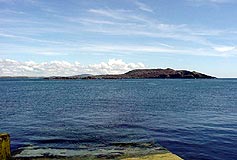 | | Sherkin Island | |
Helen this week visits the Islands of Roaring Water Bay off West Cork in Ireland. Officially known as the Carbery Hundred Islands they are reached by ferry and private boat from the picturesque fishing village of Baltimore.
Some of the islands are no more than a knob of rock coated in gorse and bracken and bearded with seaweed; ten or so are big enough to have been inhabited in the past; four or five carry summer populations and in the case of the two largest islands, Sherkin and Cape Clear (the latter more correctly an off-shore island) there are year-round, vibrant communities.
The history of these islands is a history of a people that have to make a living and survive with the sea.
Helen begins our programme on the boat of Michael Murphy as they skim over the bay at twenty five knots heading for the Marine Station on Sherkin island. Run by Michael's father Matt, the marine station was one of the first to be set up in Ireland and has now been running for twenty eight years. Matt moved there with his wife Eileen and five children(to subsequently become seven) in 1975 to begin an adventure centre for youngsters but the science of Marine life soon overtook them and their future life was set.
The Marine Station is located on the North-West end of the island on 16 acres and has blossomed from a small laboratory into a complex of five labs., aquarium, Natural History Museum and a library of some 100,000 books, journals, reports, reprints, together with an herbarium of plants and seaweeds.
The aim of the station is long term monitoring of the sea and it relies on volunteer scientists who come to the island in April and stay until November.
It receives no state aid which according to Matt has been it's strength. It
gave them a freedom to chose the research that they decide is necessary and enabled them to continue monitoring projects such as the Rocky shore and Plankton projects over twenty five years.
Helen talked to Matt as they wondered around the station talking about it's humble beginnings and how despite the death of his wife Eileen Matt never thought of giving up but remained determined to build Sherkin island into one of Irelands most important Marine monitoring sites.
Helen walked along the lanes of Sherkin with Matt's daughter Audrey talking about life on the island as they made their way to one of the "Rocky Shore" monitoring sites. Audrey told Helen about her role in the Murphy dynasty -she runs an outreach project bringing the fascination of life in the sea to schools. Education is a cornerstone of Sherkin -it's one of the founding principles of the whole Station.
Helen finishes her visit to the island at the oyster beds of Michael and Robbie Murphy -as well as helping their father with running the station the boys have built up the oyster business over fourteen years into a thriving concern.
Helen then set out with Cormac Levis on his re-constructed Lobster Boat for a sail over the bay. The "Marie-Colette" has been built as an exact replica of the boats that used to fish these waters from the 1800's until well into the nineteen fifties.
The main occupations for the Islanders has been fishing and farming, in the last century the Heir Island Lobster boat unique to the island (and built on the Island) was used for Lobster fishing all along the south West Coat from Ballycotton in the East to Crookhaven in the West.
Lobsters were essential to the economy of island life and the men were away at sea for weeks on end trawling around the coast. The
boats were completely open and had a crew of three but the life was so dangerous that the crew all came from different families because as Cormac explained an accident at sae could mean that whole families would loose their main bread winner.
The men used to haul the pots every two hours leaving little time for sleeping -life was hard and the weather often meant the crew spent days on end in wet clothing.
Cormac has written a book on the history of the Lobster boats in Roaring water bay called the "Towelsail Yawls".
Cormac Levis has spent many years collecting folklore and memories from the older generation of seafarers, and tells for the first time the remarkable story of these boats and the men who fished them, providing a fascinating insight into a unique way of life that had been in danger of passing unrecorded into oblivion. The author also puts forward evidence of the existence of a pre-Famine lobsterfleet, and details the modernisation and eventual demise of the lobsterboats in the 1950s and 1960s.
Helen's bout of island hoping ends at Cape Clear island where she meets Michael John Cadogan and Mary O'Driscoll.
Michael runs the island co-operative whilst Mary runs the pub. They tell Helen about the struggles and attractions of island life. Mary's grandmother left the island to live on the mainland but Mary married an islander and after two generations she has returned and she loves it.
The small community and familiarity that island life brings suits her but she does admit that island children probably need to spend some time on the mainland to get a wider perspective on life-living on an island though physically challenging can be quite cosseted.
Cape Clear is Ireland's southernmost inhabited island, 3 miles long by 1 mile wide, lies 8 miles off the coast of West Cork. The island is accessible by boat from Baltimore. Three miles west of the island stands the solitary Fastnet Rock. To the northwest stretches the Mizen Head, the mainland's most southerly point.
Cape's wild romantic scenery, its sparkling harbours, its cliffs and bogs and lake, all contribute to the island's unspoiled charm. Heather, gorse and wild flowers cover the rugged hills. Myriad stonewalls have a patchwork effect on the varied landscape. Megalithic standing stones and a 5000 year-old passage grave, a twelfth century church ruin, a fourteenth century O'Driscoll castle, cannonaded in the early 1600s, suggest times past. Saint Ciarán, the island's patron saint, is allegedly the earliest of Ireland's four pre-Patrician saints.
Next week: Helen will be celebrating harvest home at Selgrave Manor in Oxfordshire.
This week's competition
Last week's question was - The cricket uses his wings to make his chirring noise. What is the technical name for this?
It's Michael Cadogan who sets this weeks question and it's a tricky one .
St Ciaran the island's patron saint was on Cape island before St.Patrick came to Ireland. How many years before St.Patrick came to Ireland was St.Cairan on Cape island.
This week's question is: The cricket uses his wings to make his chirring noise. What is the technical name for this?
Submit your entry by emailing open.country@bbc.co.uk
The BBC is not responsible for external websites | | |
RELATED LINKS
BBC Holiday Category
BBC Countryfile
| |
| | | | | | |  | | | | | | | | | Audio Help | | | | | | PREVIOUS PROGRAMMES | | | | | Current Week
Last Week
The A44
Aberdeenshire
Aberdeenshire, River Don
Aberfan
Alderley Edge, Cheshire
Ancient buildings
Anglesey
Applecross Peninsula
Aran Islands
Armistice Day, Somerset & Sussex
Auxiliary Units
Bardsey Island
Batsford Park Estate, Glos
Berkshire
Berwyn Mountains
Birdsong
Blackwater Estuary, Essex
Blaenafon
The Blean, Kent
Bosworth Field
Brecon Beacons
Buckinghamshire
Butterflies
By Brook Valley
The Cairngorms
Caithness
Cambridgeshire
Carmarthenshire
Cheddar Gorge
Cherwell Valley
Cheshire: Harrop Valley
Chesil Bank
Clee Hills, Shropshire
Climbers
Corfe Castle
Cornwall
Cornwall: Cape Cornwall
Cornwall: Padstow Lifeboat
Cornwall: Roseland Peninsula
Cotswold
Cotswold Way
County Clare, Ireland
Cranbourne Chase
Cumbria: Eden Valley
Cumbria: Coniston Water
Cumbria: Sellafield
Cumbria
Daingean in Glengarry
Dee Estuary
Derbyshire
Devon & Somerset: Grand Western Canal
Donegal
Dorset
Dorset: Cranborne Chase
Dorsetman
Dowsing
Dunalastair
Durham
Durham: Witton Park
East Anglian Churches
Eden Valley in Cumbria
Eigg
Eire: Co. Mayo
Eire: Skibbereen
Eire: West Cork
Elan Valley, Wales
Eshott, Norhumberland
Essex
Essex: coastal
Exmoor, churches
Falkirk
Farne Islands, Part 1
Farne Islands, Part 2
Fenn's, Whixall & Bettisfield Mosses National Nature Reserve
The Fens
Fife
Flanders
Forster Country
Glencoe Mountains
Glencoe
Gloucestershire
Goa
Goodwin Sands
Gower Peninsula, June 2006
Gower Peninsula, October 2005
Grouse shooting
Guernsey
Hadrian's Wall 2003
Hadrian's Wall 2004
Hambledon Cricket Club
Hampshire: Odium
Hampshire: Selborne
Hardcastle Crags
Heart of Wales Railway
Hebden Bridge
Herefordshire
Hertfordshire
Hidden Treasures
High Weald, Sussex
Holy Island
Ilmington
Isle of Gigha 2004
Isle of Gigha, 2005
Isle of Man - Seas
Isle of Man
Isle of Wight, 2003
Isle of Wight, 2005
Izak Walton
Kent: Dover
Kent: Dungeness Peninsular
Kent: North
Kielder Water
Kinver Edge
Kingham, Oxfordshire
Lake District
Leicestershire: Bosworth Field
Leicestershire: death rituals
Lincolshire farming
Lincolnshire
Lincolnshire
Loch Morar
Looe Island
Ludlow
Lunar Influence
Don McCullin
Richard Mabey
Marsden, West Yorkshire
Mary Towneley Loop
Mersea Island
Mersey Marshes
Metal Detectingg
Mid-Wales
Morecambe Bay
Moel Findeg, North Wales
Morecombe Sands
Nant Gwrtheyrn
National Forest
New Forest
Newton Dee, nr Aberdeen
Norfolk Broads
Norfolk: Thetford Forest
Norfolk: North Norfolk coast
North Devon Combes
Northants: Sulgrave Manor
Northants: Underground
Northern Ireland: Belfast
Northern Ireland: Border Counties
Northern Ireland: Moneypenny's Lock
Northern Ireland: Sperrin Mountains
Northern Ireland: Strangford Lough
Northern Ireland: Toomebridge
North Norfolk Coast
Northumberland, part 1
Northumberland, part 2
North Wessex Downs
North Yorkshire
North Yorkshire Moors
North Yorkshire Moors Railway
Nottinghamshire
Nottinghamshire: Sherwood Forest
Oak Trees
Offa's Dyke
Orford Ness
Orkneys
Out Skerries, Shetland
Outward Bound
Oxfordshire
Peak District
Peak District
Pembrokeshire Coast
Pentland Hills
Perthshire
Poachers
Pony Club
River Severn
Romney Marsh
Rutland Water
Scilly
Scotland: Abernethy Forest
Scotland: Loch Morar
Scotland: Shetland
Scotland: Strathclyde
Scotland: What value the countryside?
Scottish Borders
Sefton Coast
Self-sufficient communities
Severn Valley Railway
Shropshire: Ellesmere
Shropshire: Much Wenlock
Shropshire and Wales, Newport
Skegness
Skomer Island
Snowdon
Snowdonia National Park
Somerset Levels
Somerset Levels
Somerset: Montacute House
Somerset writers
South Downs
South Somerset: watermills
Southwold
Spurn Peninsular
Start Bay
Stour Valley
Survival
Sussex
Sutherland, Scotland
Tamar Valley
Thornham Estate, Suffolk
Thurstonland Cricket Club
Twyford Down
Tyntesfield, North Somerset
Village Life
Terry Waite
Wales
Wales: Flatholm Island
Wales: Nant Gwrtheyrn
Wales: Snowdonia
Warwickshire: rare breeds
Wayoh Reservoir
Wenlock Edge
West Sussex
West Yorks: Calder Valley
Weston Common, Surrey
Wild boar
Wiltshire
Wiltshire: Savernake Forest
Women's Institute
Wroxeter
Yorkshire Dales, June 2002
Yorkshire Dales, 1 July 2006
Yorkshire Dales, 8 July 2006
Z to Z Britain
Open Country looks back 2003
| | | | | MESSAGE BOARDS | | | | | Join the discussion:
The Learning Curve
Pick of the Week
Questions, Questions
Woman's Hour
Word of Mouth | | | | | RELATED PROGRAMMES | | | | | Excess Baggage
Changing Places
Similar programmes this week on Radio 4
| | |
|