| | | | | PROGRAMME INFO | | | |
| | | From Shetland to the Scilly Isles, Open Country travels the UK in search of the stories, the people and the wildlife that make our countryside such a vibrant place. Each week we visit a new area to hear how local people are growing the crops, protecting the environment, maintaining the traditions and cooking the food that makes their corner of rural Britain unique.
Email: open.country@bbc.co.uk
Postal address: Open Country,
BBC Radio 4, Birmingham, B5 7QQ.
| | | | | LISTEN AGAIN | | | |
|
|
| | PRESENTER | | | |
| 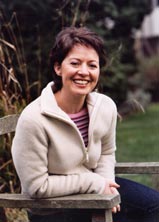 | | | | More about Helen Mark | | | | |
| | | | | | PROGRAMME DETAILS | | | |
| 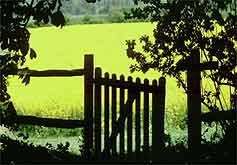 | | Sussex fields | |
Helen Mark travels to what is often called sunny Sussex: the county sometimes described as "where our modern history began - William the Conqueror arrived from Normandy in 1066 and from this point proceeded to bring 'civilisation' to the country." It's a county of picturesque landscapes, productive soil and a sunshine coastline.
Helen begins her visit in the small town of Arundel, famous for its castle, which was founded on Christmas Day 1867. Blue Badge Guide Frances Farrer-Brown tells Helen that West Sussex has ruins like most places have mice. And touring cricket teams always play their first matches in the grounds of the castle. But at Lyminster, Helen learns the tale of the Knucker Hole Dragon, which lived in a large pool fed by underground springs. The dragon terrorised people until a local man called Jim Puttock stepped in and killed it. But he was no St George with a large sword, he used a poisoned Sussex Pond Puddin'. And there's a cautionary tale involved about washing your hands before meals.
The Legends and Myths of Britain
Helen meets craftsman David Cooper at Amberley Working Museum. He makes clay pipes in the traditional way using simple hand tools and original cast steel moulds dating from the 1800s. David was a keen Morris dancer and couldn't find the 18-24 inch 'long church clay pipes' that he needed to dance over in one of his jigs. After retiring, he decided to learn to make his own and, although it took him eight years, he eventually made the pipe he so wanted - and danced over it!
Clay pipes were first used in England with the introduction of tobacco in 1564 and, because it was a luxury commodity, the pipes were the size of acorns. They were produced in large numbers right through to the 1930s, when other materials were increasingly used in pipe production, and cigarettes were becoming more affordable. Clay pipes were the only thing that the working class could smoke tobacco in until the 20th century, when they were superseded by cheap cigarettes. David explains how husbands would give their wives pipes instead of bouquets, and how smoking a pipe can be a political insult.
Amberley Museum
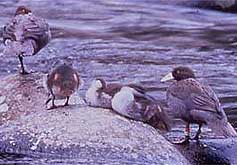 | | Blue Ducks | |
Helen meets a very precious bird at the Wildfowl and Wetland Trust: the blue duck breeds in the mountainous areas of New Zealand and is one of the world's most endangered waterfowl, with an estimated 2000-4000 birds left in the wild. Habitat destruction, reduced water quality, and introduction of fish may also have contributed to their decline. Their future may well depend on the Trust in Sussex which studies and breeds these ducks, sharing their knowledge with New Zealand. They're feisty creatures, not afraid to attack anything (including man) which threatens them. Fiercely territorial and very noisy (the male whistles and the female grunts) they are kept in in a curious pyramidal pen in pairs, which means they can hear each other but they can't see each other, maintaining their territorial boundaries. They form deep pair bonds, and Helen learns of a tragic love story that ended happily ever after.
The Blue Duck
Blue Duck picture gallery
The Wildfowl & Wetlands Trust
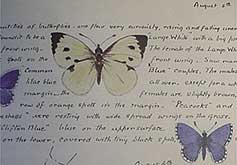 | | A Country Woman's Journal | |
And as the rain comes down in torrents, Helen takes shelter in a cottage in Bosham, where Reg Pritchard recently came across a wonderful book. This was A Countrywoman's Journal (published by Constable Robinson; ISBN: 1841196312), the nature diary and sketchbook of Margaret Shaw, which charts the seasons between 1926 and 1928. Margaret had "adopted" Reg as a nephew and he explains how she gave up a life of luxury and privilege to help him on his farm. The partnership thrived and they lived in self-sufficient, industrious contentment until Shaw died in 1970. Peggy Vance talks about why she felt it important to publish the book and why this gentle diary has much to say to 21st century people.
This week's competition
What is the difference between weasels and stoats in winter?
Submit your entry by emailing open.country@bbc.co.uk
Last week's winner
Last week we asked what Singing Sands were. Claire Baylis from Aberystwyth correctly said that they were beaches made up from same-sized pieces of quartz, which make a curious "singing" noise.
The BBC is not responsible for external websites | | |
RELATED LINKS
BBC Holiday Category
BBC Countryfile
| | | |
| | | | | | |  | | | | | | | | | Audio Help | | | | | | PREVIOUS PROGRAMMES | | | | | Current Week
Last Week
The A44
Aberdeenshire
Aberdeenshire, River Don
Aberfan
Alderley Edge, Cheshire
Ancient buildings
Anglesey
Applecross Peninsula
Aran Islands
Armistice Day, Somerset & Sussex
Auxiliary Units
Bardsey Island
Batsford Park Estate, Glos
Berkshire
Berwyn Mountains
Birdsong
Blackwater Estuary, Essex
Blaenafon
The Blean, Kent
Bosworth Field
Brecon Beacons
Buckinghamshire
Butterflies
By Brook Valley
The Cairngorms
Caithness
Cambridgeshire
Carmarthenshire
Cheddar Gorge
Cherwell Valley
Cheshire: Harrop Valley
Chesil Bank
Clee Hills, Shropshire
Climbers
Corfe Castle
Cornwall
Cornwall: Cape Cornwall
Cornwall: Padstow Lifeboat
Cornwall: Roseland Peninsula
Cotswold
Cotswold Way
County Clare, Ireland
Cranbourne Chase
Cumbria: Eden Valley
Cumbria: Coniston Water
Cumbria: Sellafield
Cumbria
Daingean in Glengarry
Dee Estuary
Derbyshire
Devon & Somerset: Grand Western Canal
Donegal
Dorset
Dorset: Cranborne Chase
Dorsetman
Dowsing
Dunalastair
Durham
Durham: Witton Park
East Anglian Churches
Eden Valley in Cumbria
Eigg
Eire: Co. Mayo
Eire: Skibbereen
Eire: West Cork
Elan Valley, Wales
Eshott, Norhumberland
Essex
Essex: coastal
Exmoor, churches
Falkirk
Farne Islands, Part 1
Farne Islands, Part 2
Fenn's, Whixall & Bettisfield Mosses National Nature Reserve
The Fens
Fife
Flanders
Forster Country
Glencoe Mountains
Glencoe
Gloucestershire
Goa
Goodwin Sands
Gower Peninsula, June 2006
Gower Peninsula, October 2005
Grouse shooting
Guernsey
Hadrian's Wall 2003
Hadrian's Wall 2004
Hambledon Cricket Club
Hampshire: Odium
Hampshire: Selborne
Hardcastle Crags
Heart of Wales Railway
Hebden Bridge
Herefordshire
Hertfordshire
Hidden Treasures
High Weald, Sussex
Holy Island
Ilmington
Isle of Gigha 2004
Isle of Gigha, 2005
Isle of Man - Seas
Isle of Man
Isle of Wight, 2003
Isle of Wight, 2005
Izak Walton
Kent: Dover
Kent: Dungeness Peninsular
Kent: North
Kielder Water
Kinver Edge
Kingham, Oxfordshire
Lake District
Leicestershire: Bosworth Field
Leicestershire: death rituals
Lincolshire farming
Lincolnshire
Lincolnshire
Loch Morar
Looe Island
Ludlow
Lunar Influence
Don McCullin
Richard Mabey
Marsden, West Yorkshire
Mary Towneley Loop
Mersea Island
Mersey Marshes
Metal Detectingg
Mid-Wales
Morecambe Bay
Moel Findeg, North Wales
Morecombe Sands
Nant Gwrtheyrn
National Forest
New Forest
Newton Dee, nr Aberdeen
Norfolk Broads
Norfolk: Thetford Forest
Norfolk: North Norfolk coast
North Devon Combes
Northants: Sulgrave Manor
Northants: Underground
Northern Ireland: Belfast
Northern Ireland: Border Counties
Northern Ireland: Moneypenny's Lock
Northern Ireland: Sperrin Mountains
Northern Ireland: Strangford Lough
Northern Ireland: Toomebridge
North Norfolk Coast
Northumberland, part 1
Northumberland, part 2
North Wessex Downs
North Yorkshire
North Yorkshire Moors
North Yorkshire Moors Railway
Nottinghamshire
Nottinghamshire: Sherwood Forest
Oak Trees
Offa's Dyke
Orford Ness
Orkneys
Out Skerries, Shetland
Outward Bound
Oxfordshire
Peak District
Peak District
Pembrokeshire Coast
Pentland Hills
Perthshire
Poachers
Pony Club
River Severn
Romney Marsh
Rutland Water
Scilly
Scotland: Abernethy Forest
Scotland: Loch Morar
Scotland: Shetland
Scotland: Strathclyde
Scotland: What value the countryside?
Scottish Borders
Sefton Coast
Self-sufficient communities
Severn Valley Railway
Shropshire: Ellesmere
Shropshire: Much Wenlock
Shropshire and Wales, Newport
Skegness
Skomer Island
Snowdon
Snowdonia National Park
Somerset Levels
Somerset Levels
Somerset: Montacute House
Somerset writers
South Downs
South Somerset: watermills
Southwold
Spurn Peninsular
Start Bay
Stour Valley
Survival
Sussex
Sutherland, Scotland
Tamar Valley
Thornham Estate, Suffolk
Thurstonland Cricket Club
Twyford Down
Tyntesfield, North Somerset
Village Life
Terry Waite
Wales
Wales: Flatholm Island
Wales: Nant Gwrtheyrn
Wales: Snowdonia
Warwickshire: rare breeds
Wayoh Reservoir
Wenlock Edge
West Sussex
West Yorks: Calder Valley
Weston Common, Surrey
Wild boar
Wiltshire
Wiltshire: Savernake Forest
Women's Institute
Wroxeter
Yorkshire Dales, June 2002
Yorkshire Dales, 1 July 2006
Yorkshire Dales, 8 July 2006
Z to Z Britain
Open Country looks back 2003
| | | | | MESSAGE BOARDS | | | | | Join the discussion:
The Learning Curve
Pick of the Week
Questions, Questions
Woman's Hour
Word of Mouth | | | | | RELATED PROGRAMMES | | | | | Excess Baggage
Changing Places
Similar programmes this week on Radio 4
| | |
|