| | | | | PROGRAMME INFO | | | |
| | | From Shetland to the Scilly Isles, Open Country travels the UK in search of the stories, the people and the wildlife that make our countryside such a vibrant place. Each week we visit a new area to hear how local people are growing the crops, protecting the environment, maintaining the traditions and cooking the food that makes their corner of rural Britain unique.
Email: open.country@bbc.co.uk
Postal address: Open Country,
BBC Radio 4, Birmingham, B5 7QQ.
| | | | | LISTEN AGAIN | | | |
|
|
| | PRESENTER | | | |
|  | | | | More about Helen Mark | | | | |
| | | | | | PROGRAMME DETAILS | | | |
| 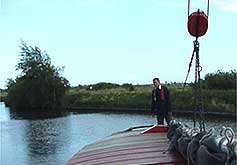 | |
Helen Mark visits the Norfolk Broads, an area of outstanding natural beauty on the eastern edge of Norfolk. It is a unique area of water, grazing marshes, fen and woodland, and home to some of the rarest plants and creatures in the UK. It is Britain's largest protected wetland.
The story of the Broads begins in the Middle Ages: by the 12th Century much of east Norfolk had been cleared of its woodland for fuel and building materials and over the following 350 years peat digging was a major industry. It was carried out on a massive scale with almost every area we now know as the Broads digging its own pit, or tubary, for extracting peat as its principal source of fuel. The pits began to fill with water, making the peat more difficult to extract and eventually the diggings were abandoned. They eventually flooded and so was created the wildlife-rich wetland we recognise today.
Norfolk Broads Authority
The waterways of the Broads provided the perfect access to the North Sea and goods from the coast at ports such as Great Yarmouth were taken by boats to supply the growing communities springing up around the area. The boats that supplied these communities eventually reached their perfect form in the Norfolk wherry. The wherry is a single-sail boat that has specifically been designed to carry cargo around the shallow waterways of the Broads. No sailing vessels can be found like them in the world, the closest being the colourful Dutch boats built to sail the dykes on the flat reclaimed land of the Netherlands. Helen joins skipper Chris Shellcross and boat builder Mike Fuller aboard The Albion, the last of the Norfolk trading wherries. She is a classic wherry, with a black sail and is kept in perfect sailing order by the Norfolk Wherry Trust.
Norfolk Wherry Trust
Tom Williamson is an historian at the University of East Anglia and has written extensively on the landscape of the Broads. He tells Helen about the massive extent of the peat diggings and how the waterways and natural resources of the Broads helped Norwich to become a city that rivalled London in importance, creating a huge surge in population that made peat digging not only essential but economically very attractive. Communities built up around the diggings and it wasn't until the Black Death came to Norfolk and decimated the population that deep pit peat digging was abandoned. After the Black Death labour became scarce and costs increased making peat digging no longer economically viable. The extraction of peat wasn't completely given up, the deep pits were abandoned, but peat continued to be dug from the surface until the 1920s and 30s.
Tom Williamson
The RSPB reserve at Strumpshaw Fen is a special place: just six miles from the centre of Norwich, it could in another world. A precious wetland landscape, it's famous for its bird and insect life. Spectacular dragonflies and swallowtail butterflies, the biggest in England, flit and dart amongst the reeds. Marsh harriers swoop between the tree tops and even the bitterns have recently returned to the fen. Reserve manager John Haw takes Helen for a tour of the fen and explains how a recent re-working of the reed beds has provided the perfect habitat for the bitterns. An elusive bird, the bittern was once plentiful in the broads, but up until last year they hadn't seen one at Strumpshaw since the 1950s. It seems the hard work put in managing the marsh coupled with environmental changes have coaxed it back and now they even have a breeding pair. But it is the call of the male bittern that is perhaps how most people are familiar with them - the boom a mating call that can be heard up to a mile away. Did Helen hear one? Listen to the programme and find out.
RSPB
Guides to East Anglia
Eric Edwards has been a marshman for 35 years. Everyday he quants his punt across the river at How Hill near Ludham and begins the job of keeping the waterways of the Broads open. He clears out the silt and mud that are clogging the rivers and dykes, and cuts and scythes the reeds and sedge that threaten to reclaim the broads, selling them for thatch. He turns up in all weathers, rain, shine and cold. Marshmen were once common in the Broads, making a living from the fen, a bit of eel fishing and reed cutting enabled them to survive and even thrive but nowadays they are few and far between. He takes Helen into his secret world, a jungle world of head high reeds and sedge. Although they can hear the passing pleasure boats, they can't be seen; it's a private place in a public landscape and Eric loves it. He shows Helen how to scythe the reed and Helen ends her trip to the Broads by quanting up the river enjoying the tranquility.
The BBC is not responsible for external websites | | |
RELATED LINKS
BBC Holiday Category
BBC Countryfile
| |
| | | | | | |  | | | | | | | | | Audio Help | | | | | | PREVIOUS PROGRAMMES | | | | | Current Week
Last Week
The A44
Aberdeenshire
Aberdeenshire, River Don
Aberfan
Alderley Edge, Cheshire
Ancient buildings
Anglesey
Applecross Peninsula
Aran Islands
Armistice Day, Somerset & Sussex
Auxiliary Units
Bardsey Island
Batsford Park Estate, Glos
Berkshire
Berwyn Mountains
Birdsong
Blackwater Estuary, Essex
Blaenafon
The Blean, Kent
Bosworth Field
Brecon Beacons
Buckinghamshire
Butterflies
By Brook Valley
The Cairngorms
Caithness
Cambridgeshire
Carmarthenshire
Cheddar Gorge
Cherwell Valley
Cheshire: Harrop Valley
Chesil Bank
Clee Hills, Shropshire
Climbers
Corfe Castle
Cornwall
Cornwall: Cape Cornwall
Cornwall: Padstow Lifeboat
Cornwall: Roseland Peninsula
Cotswold
Cotswold Way
County Clare, Ireland
Cranbourne Chase
Cumbria: Eden Valley
Cumbria: Coniston Water
Cumbria: Sellafield
Cumbria
Daingean in Glengarry
Dee Estuary
Derbyshire
Devon & Somerset: Grand Western Canal
Donegal
Dorset
Dorset: Cranborne Chase
Dorsetman
Dowsing
Dunalastair
Durham
Durham: Witton Park
East Anglian Churches
Eden Valley in Cumbria
Eigg
Eire: Co. Mayo
Eire: Skibbereen
Eire: West Cork
Elan Valley, Wales
Eshott, Norhumberland
Essex
Essex: coastal
Exmoor, churches
Falkirk
Farne Islands, Part 1
Farne Islands, Part 2
Fenn's, Whixall & Bettisfield Mosses National Nature Reserve
The Fens
Fife
Flanders
Forster Country
Glencoe Mountains
Glencoe
Gloucestershire
Goa
Goodwin Sands
Gower Peninsula, June 2006
Gower Peninsula, October 2005
Grouse shooting
Guernsey
Hadrian's Wall 2003
Hadrian's Wall 2004
Hambledon Cricket Club
Hampshire: Odium
Hampshire: Selborne
Hardcastle Crags
Heart of Wales Railway
Hebden Bridge
Herefordshire
Hertfordshire
Hidden Treasures
High Weald, Sussex
Holy Island
Ilmington
Isle of Gigha 2004
Isle of Gigha, 2005
Isle of Man - Seas
Isle of Man
Isle of Wight, 2003
Isle of Wight, 2005
Izak Walton
Kent: Dover
Kent: Dungeness Peninsular
Kent: North
Kielder Water
Kinver Edge
Kingham, Oxfordshire
Lake District
Leicestershire: Bosworth Field
Leicestershire: death rituals
Lincolshire farming
Lincolnshire
Lincolnshire
Loch Morar
Looe Island
Ludlow
Lunar Influence
Don McCullin
Richard Mabey
Marsden, West Yorkshire
Mary Towneley Loop
Mersea Island
Mersey Marshes
Metal Detectingg
Mid-Wales
Morecambe Bay
Moel Findeg, North Wales
Morecombe Sands
Nant Gwrtheyrn
National Forest
New Forest
Newton Dee, nr Aberdeen
Norfolk Broads
Norfolk: Thetford Forest
Norfolk: North Norfolk coast
North Devon Combes
Northants: Sulgrave Manor
Northants: Underground
Northern Ireland: Belfast
Northern Ireland: Border Counties
Northern Ireland: Moneypenny's Lock
Northern Ireland: Sperrin Mountains
Northern Ireland: Strangford Lough
Northern Ireland: Toomebridge
North Norfolk Coast
Northumberland, part 1
Northumberland, part 2
North Wessex Downs
North Yorkshire
North Yorkshire Moors
North Yorkshire Moors Railway
Nottinghamshire
Nottinghamshire: Sherwood Forest
Oak Trees
Offa's Dyke
Orford Ness
Orkneys
Out Skerries, Shetland
Outward Bound
Oxfordshire
Peak District
Peak District
Pembrokeshire Coast
Pentland Hills
Perthshire
Poachers
Pony Club
River Severn
Romney Marsh
Rutland Water
Scilly
Scotland: Abernethy Forest
Scotland: Loch Morar
Scotland: Shetland
Scotland: Strathclyde
Scotland: What value the countryside?
Scottish Borders
Sefton Coast
Self-sufficient communities
Severn Valley Railway
Shropshire: Ellesmere
Shropshire: Much Wenlock
Shropshire and Wales, Newport
Skegness
Skomer Island
Snowdon
Snowdonia National Park
Somerset Levels
Somerset Levels
Somerset: Montacute House
Somerset writers
South Downs
South Somerset: watermills
Southwold
Spurn Peninsular
Start Bay
Stour Valley
Survival
Sussex
Sutherland, Scotland
Tamar Valley
Thornham Estate, Suffolk
Thurstonland Cricket Club
Twyford Down
Tyntesfield, North Somerset
Village Life
Terry Waite
Wales
Wales: Flatholm Island
Wales: Nant Gwrtheyrn
Wales: Snowdonia
Warwickshire: rare breeds
Wayoh Reservoir
Wenlock Edge
West Sussex
West Yorks: Calder Valley
Weston Common, Surrey
Wild boar
Wiltshire
Wiltshire: Savernake Forest
Women's Institute
Wroxeter
Yorkshire Dales, June 2002
Yorkshire Dales, 1 July 2006
Yorkshire Dales, 8 July 2006
Z to Z Britain
Open Country looks back 2003
| | | | | MESSAGE BOARDS | | | | | Join the discussion:
The Learning Curve
Pick of the Week
Questions, Questions
Woman's Hour
Word of Mouth | | | | | RELATED PROGRAMMES | | | | | Excess Baggage
Changing Places
Similar programmes this week on Radio 4
| | |
|