| | | | | PROGRAMME INFO | | | |
| | | From Shetland to the Scilly Isles, Open Country travels the UK in search of the stories, the people and the wildlife that make our countryside such a vibrant place. Each week we visit a new area to hear how local people are growing the crops, protecting the environment, maintaining the traditions and cooking the food that makes their corner of rural Britain unique.
Email: open.country@bbc.co.uk
Postal address: Open Country,
BBC Radio 4, Birmingham, B5 7QQ.
| | | | | LISTEN AGAIN | | | |
|
|
| | PRESENTER | | | |
|  | | | | More about Helen Mark | | | | |
| | | | | | PROGRAMME DETAILS | | | |
| 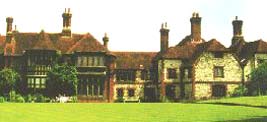 | | The Wakes, Selborne | |
A biographical note from 1813 says:
"...being of an unambitious temper, and strongly attached to the charms of rural scenery, he early fixed his residence in his native village, where he spent the greater part of his life in literary occupations, and especially in the study of nature. This he followed with patient assiduity, and a mind ever open to the lessons of piety and benevolence which such a study is so well calculated to afford. Though several occasions offered of settling upon a college living, he could never persuade himself to quite the beloved spot, which was, indeed, a peculiarly happy situation for an observer..."
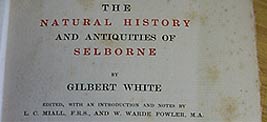
Gilbert White is often called England's first ecologist and lived in the quiet Hampshire village of Selborne for most of his life. He had a very enquiring mind and a passion for the natural world. His observations - in the form of letters to friends - were eventually published in his classic book The Natural History and Antiquities of Selborne. The book has been in print for over 200 years and is the fourth most published in English after the Bible, Shakespeare and the Oxford English Dictionary.
His observations are idiosyncratic, though acute and detailed. Modern day researchers who try to follow his books find themselves faced with a jigsaw puzzle of clues with gaps they have to fill in themselves.
Gilbert White's Hampshire offered a wide variety of habitats to study. Within a few miles of Selborne there were (and indeed in many cases, still are) woodland, sheep-grazed downland, acid heathland, farmland, ponds and streams, marshes and bogs.
Charlotte Smith treads in Gilbert White's footsteps as she visits his haunts around Selborne.
Her first port of call is The Wakes, White's house, now a museum. Here, gardener Karen Bridgman talks about Gilbert and his life, and in particular his love for his garden. This is gradually being restored. Already established are his Quincunx, wooden ha-ha, alcove and Six Quarters, beds to display many of the plants known to White. And then there was his passion for eating hundreds of cucumbers.
The Wakes, Selborne
Insects fascinated White, he even went as far as trying to see if bees could hear by shouting down a large ear trumpet next to the hives. He was also enchanted with the habits of May flies. Charlotte goes to Shortheath Common to meet Dr Bill Wain and Charlie Murray of the British Dragonfly Society to learn more about these creatures, who live for years underwater and then have a brief but glorious life in the air.
British Dragonfly Society
 | | |
On the other side of the Common Charlotte meets Nicky Hetherington, of the County Council, and learns of a modern experiment to re-introduce field crickets to the area. Gilbert White mentions them as shy and cautious creatures who stop singing the moment he approaches. Nicky explains that they've died out since then, but an enterprising partnership with London Zoo has released some crickets back on the common and she shows Charlotte how they count them by tickling them out of their burrows.
English Nature field cricket recovery programme
Birds were perhaps Gilbert White's great passion and in particular, the hirondines - the swallows, swifts and martins. In the graveyard where Gilbert is buried, Keith Noble of the RSPB talks about the habits of these summer visitors and explains that Gilbert was convinced at one point they were too small to migrate, and must merely hibernate through the winter.
RSPB
"In a district so diversified with such a variety of hill and dale, aspects and soils, it is no wonder that great choice of plants should be found. To ennumerate all the plants that have been discovered within our limits would be a needless work; but a short list of the more rare, and the spots where they are to be found, may be neither unacceptable nor unentertaining..." Many of the flower meadows so beloved of Gilbert have succumbed to modern pressures. Chris Webb of the National Trust takes Charlotte to Kings Field, a tiny patch of chalk grassland full of colourful and fragrant flowers. He explains what's vanished since Gilbert's time and the ways in which 21st century environmentalists are trying to stop the decline.
As evening descends, Charlotte goes on a glow worm hunt with John Durnell of the Hampshire Wildlife Trust on Noar Hill. Gilbert White described the creatures as lighting an "amorous fire" and, as it gets dark, Charlotte spots the tell-tale signal that the female is waiting for a male to fly down from the skies: they glow by mixing two chemicals in their abdomen, an effect known as bioluminescence.
Hampshire Wildlife Trust
UK Glow worm Survey
This week's competition
Last week Ian Mackintosh of Dunkirk Mill asked what was the dye used to make Stroud Scarlet - the vivid red colour of Guardsmen's uniforms? The answer was cochineal and the winner is Mr D H Stewart of Edinburgh.
This week's question is: The cricket uses his wings to make his chirring noise. What is the technical name for this?
Submit your entry by emailing open.country@bbc.co.uk
The BBC is not responsible for external websites | | |
RELATED LINKS
BBC Holiday Category
BBC Countryfile
| | |
| | | | | | |  | | | | | | | | | Audio Help | | | | | | PREVIOUS PROGRAMMES | | | | | Current Week
Last Week
The A44
Aberdeenshire
Aberdeenshire, River Don
Aberfan
Alderley Edge, Cheshire
Ancient buildings
Anglesey
Applecross Peninsula
Aran Islands
Armistice Day, Somerset & Sussex
Auxiliary Units
Bardsey Island
Batsford Park Estate, Glos
Berkshire
Berwyn Mountains
Birdsong
Blackwater Estuary, Essex
Blaenafon
The Blean, Kent
Bosworth Field
Brecon Beacons
Buckinghamshire
Butterflies
By Brook Valley
The Cairngorms
Caithness
Cambridgeshire
Carmarthenshire
Cheddar Gorge
Cherwell Valley
Cheshire: Harrop Valley
Chesil Bank
Clee Hills, Shropshire
Climbers
Corfe Castle
Cornwall
Cornwall: Cape Cornwall
Cornwall: Padstow Lifeboat
Cornwall: Roseland Peninsula
Cotswold
Cotswold Way
County Clare, Ireland
Cranbourne Chase
Cumbria: Eden Valley
Cumbria: Coniston Water
Cumbria: Sellafield
Cumbria
Daingean in Glengarry
Dee Estuary
Derbyshire
Devon & Somerset: Grand Western Canal
Donegal
Dorset
Dorset: Cranborne Chase
Dorsetman
Dowsing
Dunalastair
Durham
Durham: Witton Park
East Anglian Churches
Eden Valley in Cumbria
Eigg
Eire: Co. Mayo
Eire: Skibbereen
Eire: West Cork
Elan Valley, Wales
Eshott, Norhumberland
Essex
Essex: coastal
Exmoor, churches
Falkirk
Farne Islands, Part 1
Farne Islands, Part 2
Fenn's, Whixall & Bettisfield Mosses National Nature Reserve
The Fens
Fife
Flanders
Forster Country
Glencoe Mountains
Glencoe
Gloucestershire
Goa
Goodwin Sands
Gower Peninsula, June 2006
Gower Peninsula, October 2005
Grouse shooting
Guernsey
Hadrian's Wall 2003
Hadrian's Wall 2004
Hambledon Cricket Club
Hampshire: Odium
Hampshire: Selborne
Hardcastle Crags
Heart of Wales Railway
Hebden Bridge
Herefordshire
Hertfordshire
Hidden Treasures
High Weald, Sussex
Holy Island
Ilmington
Isle of Gigha 2004
Isle of Gigha, 2005
Isle of Man - Seas
Isle of Man
Isle of Wight, 2003
Isle of Wight, 2005
Izak Walton
Kent: Dover
Kent: Dungeness Peninsular
Kent: North
Kielder Water
Kinver Edge
Kingham, Oxfordshire
Lake District
Leicestershire: Bosworth Field
Leicestershire: death rituals
Lincolshire farming
Lincolnshire
Lincolnshire
Loch Morar
Looe Island
Ludlow
Lunar Influence
Don McCullin
Richard Mabey
Marsden, West Yorkshire
Mary Towneley Loop
Mersea Island
Mersey Marshes
Metal Detectingg
Mid-Wales
Morecambe Bay
Moel Findeg, North Wales
Morecombe Sands
Nant Gwrtheyrn
National Forest
New Forest
Newton Dee, nr Aberdeen
Norfolk Broads
Norfolk: Thetford Forest
Norfolk: North Norfolk coast
North Devon Combes
Northants: Sulgrave Manor
Northants: Underground
Northern Ireland: Belfast
Northern Ireland: Border Counties
Northern Ireland: Moneypenny's Lock
Northern Ireland: Sperrin Mountains
Northern Ireland: Strangford Lough
Northern Ireland: Toomebridge
North Norfolk Coast
Northumberland, part 1
Northumberland, part 2
North Wessex Downs
North Yorkshire
North Yorkshire Moors
North Yorkshire Moors Railway
Nottinghamshire
Nottinghamshire: Sherwood Forest
Oak Trees
Offa's Dyke
Orford Ness
Orkneys
Out Skerries, Shetland
Outward Bound
Oxfordshire
Peak District
Peak District
Pembrokeshire Coast
Pentland Hills
Perthshire
Poachers
Pony Club
River Severn
Romney Marsh
Rutland Water
Scilly
Scotland: Abernethy Forest
Scotland: Loch Morar
Scotland: Shetland
Scotland: Strathclyde
Scotland: What value the countryside?
Scottish Borders
Sefton Coast
Self-sufficient communities
Severn Valley Railway
Shropshire: Ellesmere
Shropshire: Much Wenlock
Shropshire and Wales, Newport
Skegness
Skomer Island
Snowdon
Snowdonia National Park
Somerset Levels
Somerset Levels
Somerset: Montacute House
Somerset writers
South Downs
South Somerset: watermills
Southwold
Spurn Peninsular
Start Bay
Stour Valley
Survival
Sussex
Sutherland, Scotland
Tamar Valley
Thornham Estate, Suffolk
Thurstonland Cricket Club
Twyford Down
Tyntesfield, North Somerset
Village Life
Terry Waite
Wales
Wales: Flatholm Island
Wales: Nant Gwrtheyrn
Wales: Snowdonia
Warwickshire: rare breeds
Wayoh Reservoir
Wenlock Edge
West Sussex
West Yorks: Calder Valley
Weston Common, Surrey
Wild boar
Wiltshire
Wiltshire: Savernake Forest
Women's Institute
Wroxeter
Yorkshire Dales, June 2002
Yorkshire Dales, 1 July 2006
Yorkshire Dales, 8 July 2006
Z to Z Britain
Open Country looks back 2003
| | | | | MESSAGE BOARDS | | | | | Join the discussion:
The Learning Curve
Pick of the Week
Questions, Questions
Woman's Hour
Word of Mouth | | | | | RELATED PROGRAMMES | | | | | Excess Baggage
Changing Places
Similar programmes this week on Radio 4
| | |
|