| | | | | PROGRAMME INFO | | | |
| | | From Shetland to the Scilly Isles, Open Country travels the UK in search of the stories, the people and the wildlife that make our countryside such a vibrant place. Each week we visit a new area to hear how local people are growing the crops, protecting the environment, maintaining the traditions and cooking the food that makes their corner of rural Britain unique.
Email: open.country@bbc.co.uk
Postal address: Open Country,
BBC Radio 4, Birmingham, B5 7QQ.
| | | | | LISTEN AGAIN | | | |
|
|
| | PRESENTER | | | |
|  | | | | More about Helen Mark | | | | |
| | | | | | PROGRAMME DETAILS | | | |
Can you help?
Is your village or local rural area planning something brilliant for the August Bank Holiday weekend this year? Open Country is looking for somewhere interesting to record a programme on 25 and 26 August. Naturally it has to have a strong rural theme, so if you are planning something and would like to feature in the programme, please email us and let us know all about it: open.country@bbc.co.uk
| 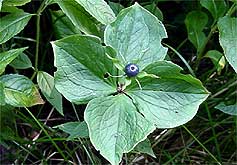 | | Paris quadifolia | |
Helen Mark visits County Durham, one of the oldest mining areas in the United Kingdom. There are records of coal being extracted as far back as the 13th century. At the height of the industry, in the early part of the 20th century, there were over 150 active collieries and, as these closed, the land became derelict: not just the pit heaps and collieries, but also the railways and by-products works which served them. During the last 20 years the towering heaps of shale have disappeared through a series of large-scale reclamation schemes.
Durham Wildlife Trust
Helen first goes to the coastal town of Seaham, where local historian Donald Miller explains that Seaham was once a natural inlet that was blown up and made into a harbour by the local landowners in order to have a cheaper way of transporting their coal from the area. Before the 1840s, the land was used for agriculture, supplemented by some fishing and smuggling on the coast. The whole of the surrounding area became collieries, with three in Seaham itself. Much of the resulting slag was simply dumped on the beaches and by the time the last colliery closed in the 1990s the coast was totally polluted. The Turning the Tide project removed most of this, although some remains around Castle Eden Dene which the sea will remove in its own time. Helen also meets Dennis Rooney, who was a miner in a Seaham mine. Now he's a coastal warden for the National Trust's Operation Neptune project, involved in the continued restoration and maintenance of the area.
Seaham Harbour
Seaham History
Turning the Tide
Castle Eden Dene National Nature Reserve is the largest area of natural woodland in Northeast England. It's a deep, steep-sided ravine formed in Magnesian Limestone and boulder clay. Naturalist Rob Lamboll manages the nature reserve for English Nature and takes Helen on a walk through the dene, which is full of rare plants (such as the curious herb paris), that have survived in this pocket of countryside once surrounded by collieries and industry. There are important stands of yew and rare mosses to be found in the parts which are ancient wildwood. The rare Northern Brown Argus butterfly has its home on the grassland areas which are also part of this reserve. The dene is also full of folklore and Steve Metcalf, education officer at Castle Eden Dene, recounts tales of how the rock formations are supposed to have been created by the devil when he was helping to build Durham Cathedral.
Castle Eden Dene National Nature Reserve
English Nature projects
Helen visits textile artist Marilyn Hopkins on the outskirts of Bishop Auckland. Marilyn's speciality is hooky rugs, which used to be made by mining families, traditionally using old clothes that had been handed-down until they were of no further use. They were then torn into strips and made into rugs: the original total recycling! The rugs have a closely packed looped pile, the fabric was always wool, and the backing old sugar sacks. Ever-resourceful, the rug-makers made their own tools out of anything from bedheads to screwdrivers. Making a rug was a family affair, with the children sitting under the frame cutting fabric into strips whilst their parents made the rug above them. Most of the clothes they used were quite dull in colour and rug-makers "would kill for a bit of red flannelette from a petticoat".
Rug Making
Helen grabs a pair of binoculars and heads off for Bishop Middleham Quarry, where she joins excited bird-watchers waiting to spot one of a pair of Bee Eaters. These exotically-coloured birds (their plumage is turquoise, red, chestnut, yellow and blue) are normally found in the Mediterranean and Africa and only occasionally seen in Britain. The current pair have built a nest and, as ornithologist Kevin Spindlow explains, there may well be chicks inside. It's difficult to tell as they burrow into the quarry sides, zigzagging nine feet into the soft Magnesian limestone. Kevin's been watching the birds' foraging habits and is convinced that the birds are feeding their young.
RSPB News
The tradition of the colliery brass band is still strong in County Durham, despite the ending of the mining industry. This week the Easington Colliery Band provides a musical backdrop to the programme. It was founded in 1915, when players with band experience were enticed by the colliery management to come to the mine to work, and play in the band. At that time the mining workers' unions of the colliery supported the band financially, each miner paying a penny from his wages. After the closure of the colliery, the band's headquarters were demolished along with the rest of the site. Since then the band has had to rely on sponsorship and fund-raising to keep going. Even so times are hard financially, but Band Manager Peter Lawson says they are determined to keep this link with the mining past alive. It's the youth band which holds the key as Helen discovers when she meets 14-year-old percussionist Sarah Burn, whose passion for playing has already won her praise and prizes.
Easington Colliery Band
This week's competition
How many sections - such as the tenor horn section - are there in a traditional brass band?
Last week's competition winner is Les Powell from Morton on Lugg, Herefordshire, who correctly said that Black Medick was the common name of the plant which looks like Hop Trefoil, apart from the spike on its leaf.
Submit your entry by emailing open.country@bbc.co.uk
The BBC is not responsible for external websites | | |
RELATED LINKS
BBC Radio Tyne
BBC Holiday Category
BBC Countryfile
| | |
| | | | | | |  | | | | | | | | | Audio Help | | | | | | PREVIOUS PROGRAMMES | | | | | Current Week
Last Week
The A44
Aberdeenshire
Aberdeenshire, River Don
Aberfan
Alderley Edge, Cheshire
Ancient buildings
Anglesey
Applecross Peninsula
Aran Islands
Armistice Day, Somerset & Sussex
Auxiliary Units
Bardsey Island
Batsford Park Estate, Glos
Berkshire
Berwyn Mountains
Birdsong
Blackwater Estuary, Essex
Blaenafon
The Blean, Kent
Bosworth Field
Brecon Beacons
Buckinghamshire
Butterflies
By Brook Valley
The Cairngorms
Caithness
Cambridgeshire
Carmarthenshire
Cheddar Gorge
Cherwell Valley
Cheshire: Harrop Valley
Chesil Bank
Clee Hills, Shropshire
Climbers
Corfe Castle
Cornwall
Cornwall: Cape Cornwall
Cornwall: Padstow Lifeboat
Cornwall: Roseland Peninsula
Cotswold
Cotswold Way
County Clare, Ireland
Cranbourne Chase
Cumbria: Eden Valley
Cumbria: Coniston Water
Cumbria: Sellafield
Cumbria
Daingean in Glengarry
Dee Estuary
Derbyshire
Devon & Somerset: Grand Western Canal
Donegal
Dorset
Dorset: Cranborne Chase
Dorsetman
Dowsing
Dunalastair
Durham
Durham: Witton Park
East Anglian Churches
Eden Valley in Cumbria
Eigg
Eire: Co. Mayo
Eire: Skibbereen
Eire: West Cork
Elan Valley, Wales
Eshott, Norhumberland
Essex
Essex: coastal
Exmoor, churches
Falkirk
Farne Islands, Part 1
Farne Islands, Part 2
Fenn's, Whixall & Bettisfield Mosses National Nature Reserve
The Fens
Fife
Flanders
Forster Country
Glencoe Mountains
Glencoe
Gloucestershire
Goa
Goodwin Sands
Gower Peninsula, June 2006
Gower Peninsula, October 2005
Grouse shooting
Guernsey
Hadrian's Wall 2003
Hadrian's Wall 2004
Hambledon Cricket Club
Hampshire: Odium
Hampshire: Selborne
Hardcastle Crags
Heart of Wales Railway
Hebden Bridge
Herefordshire
Hertfordshire
Hidden Treasures
High Weald, Sussex
Holy Island
Ilmington
Isle of Gigha 2004
Isle of Gigha, 2005
Isle of Man - Seas
Isle of Man
Isle of Wight, 2003
Isle of Wight, 2005
Izak Walton
Kent: Dover
Kent: Dungeness Peninsular
Kent: North
Kielder Water
Kinver Edge
Kingham, Oxfordshire
Lake District
Leicestershire: Bosworth Field
Leicestershire: death rituals
Lincolshire farming
Lincolnshire
Lincolnshire
Loch Morar
Looe Island
Ludlow
Lunar Influence
Don McCullin
Richard Mabey
Marsden, West Yorkshire
Mary Towneley Loop
Mersea Island
Mersey Marshes
Metal Detectingg
Mid-Wales
Morecambe Bay
Moel Findeg, North Wales
Morecombe Sands
Nant Gwrtheyrn
National Forest
New Forest
Newton Dee, nr Aberdeen
Norfolk Broads
Norfolk: Thetford Forest
Norfolk: North Norfolk coast
North Devon Combes
Northants: Sulgrave Manor
Northants: Underground
Northern Ireland: Belfast
Northern Ireland: Border Counties
Northern Ireland: Moneypenny's Lock
Northern Ireland: Sperrin Mountains
Northern Ireland: Strangford Lough
Northern Ireland: Toomebridge
North Norfolk Coast
Northumberland, part 1
Northumberland, part 2
North Wessex Downs
North Yorkshire
North Yorkshire Moors
North Yorkshire Moors Railway
Nottinghamshire
Nottinghamshire: Sherwood Forest
Oak Trees
Offa's Dyke
Orford Ness
Orkneys
Out Skerries, Shetland
Outward Bound
Oxfordshire
Peak District
Peak District
Pembrokeshire Coast
Pentland Hills
Perthshire
Poachers
Pony Club
River Severn
Romney Marsh
Rutland Water
Scilly
Scotland: Abernethy Forest
Scotland: Loch Morar
Scotland: Shetland
Scotland: Strathclyde
Scotland: What value the countryside?
Scottish Borders
Sefton Coast
Self-sufficient communities
Severn Valley Railway
Shropshire: Ellesmere
Shropshire: Much Wenlock
Shropshire and Wales, Newport
Skegness
Skomer Island
Snowdon
Snowdonia National Park
Somerset Levels
Somerset Levels
Somerset: Montacute House
Somerset writers
South Downs
South Somerset: watermills
Southwold
Spurn Peninsular
Start Bay
Stour Valley
Survival
Sussex
Sutherland, Scotland
Tamar Valley
Thornham Estate, Suffolk
Thurstonland Cricket Club
Twyford Down
Tyntesfield, North Somerset
Village Life
Terry Waite
Wales
Wales: Flatholm Island
Wales: Nant Gwrtheyrn
Wales: Snowdonia
Warwickshire: rare breeds
Wayoh Reservoir
Wenlock Edge
West Sussex
West Yorks: Calder Valley
Weston Common, Surrey
Wild boar
Wiltshire
Wiltshire: Savernake Forest
Women's Institute
Wroxeter
Yorkshire Dales, June 2002
Yorkshire Dales, 1 July 2006
Yorkshire Dales, 8 July 2006
Z to Z Britain
Open Country looks back 2003
| | | | | MESSAGE BOARDS | | | | | Join the discussion:
The Learning Curve
Pick of the Week
Questions, Questions
Woman's Hour
Word of Mouth | | | | | RELATED PROGRAMMES | | | | | Excess Baggage
Changing Places
Similar programmes this week on Radio 4
| | |
|