Disneyland to living city: Dubrovnik's bold fight against overtourism

 Yuya Matsuo
Capping visitor numbers, turning away cruise money and even outlawing wheely suitcases: Dubrovnik's mayor Mato Franković is making radical moves to transform one of Europe's most overtouristed cities back into a place locals can live – and travellers can enjoy.
The Telegraph did not hold back on its assessment of Dubrovnik back in 2018: "Tourism has killed Dubrovnik," wrote reporter Greg Dickinson. The verdict followed Unesco's 2016 warning that the city's medieval stone walls could be delisted if the city did not manage its tourism better.
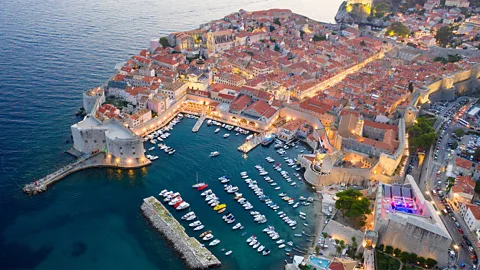
Known as the "Pearl of the Adriatic", Dubrovnik's postcard-perfect old town has long been a popular stop for cruise routes, package holidays and budget airlines, as well as a slew of film makers. For the tens of millions who watched Game of Thrones, it was King's Landing and the stage for Cersei Lannister's famous "walk of shame". But this popularity has come at a price. With visitors outnumbering locals at a rate of 27:1, Dubrovnik has become known as one of the most overtouristed cities in Europe.
In recent years overtourism has forced many of Europe's hotspots into damage control. Venice now charges daytrippers, Barcelona has capped hotel beds and Amsterdam is curbing Airbnbs. Yet none have gone so far as Dubrovnik, which has now set a hard upper limit on how many people can be inside its walls at once.
"Mass tourism is not a win-win for Dubrovnik," says Mato Franković, mayor of Dubrovnik. "At the beginning you feel like you are winning, but at the end, actually you are losing the quality of service and quality of life. It is just a losing game. So we overturned everything."
 Julien Duval
Since taking office in 2017, Franković has rolled out initiatives to control the flow of tourists into the city. Along with capping cruise ships at two per day (down from a peak of around eight), Frankovic has made it mandatory for ships to dock for at least eight hours, giving passengers time to explore at leisure and spend more money locally rather than rush through the sights. The city is also managing visitor flow with CCTV cameras installed during Covid. The Dubrovnik Pass is another key tool; as well as offering visitors a simple way to gain entry to all museums and the city walls, it provides the city with data for decision-making.
Most radically, a management plan created with the University of Dubrovnik has fixed the maximum number of people within the city walls at 11,200. Back in 2019, 9,000-9,500 cruise visitors arrived daily in peak season, on top of those entering by air or land. It's a system that's working. According to Frankovic, numbers never exceeded 10,500 this year, largely thanks to fewer cruise arrivals.
Next year, visitors will need to book time slots for the city walls and museums via the Pass, which uses a traffic light system to show crowded and quieter times. Other upcoming changes to the tourist experience include silencing the unwelcome noise of wheeled suitcases on the cobblestones with a low-cost luggage delivery service, while new rules and taxation around short term rentals will make it less desirable for locals to rent out their apartments. Hotel prices may rise as a result.
Perhaps most unconventional of all, the city is purchasing buildings in the old town to rent to young families and has established a school in a former palace. Paired with the new home-rental legislation, the aim is to rehouse residents and bring life back to a city hollowed out by tourism, reversing what has been described as a "Disneyfication" of Dubrovnik.
 Marc Van Bloemen
"This is very important for the long term," says Franković. "Strategically, step by step we will gain more and more houses within the city walls. This is the main way that we can bring people back to the old city."
Not everybody feels so positive about the changes, however. School caretaker Marc van Bloemen, who rents out apartments in his home to tourists, feels the moves do not go far enough. He attended a local anti-tourism rally earlier in the year in protest that citizens' views were not being heard.
"The old city is an ATM machine," he says. "It's turning this city into a theme park – and people trying to live here feel like they're in the way." He thinks the idea of timed slots is about getting more people into the city, not managing flow, and that long term problems are not being thought through. "We moved here in 1972," he said, "but we wouldn't do that now."
Marko Milos, the owner of tour company Dubrovnik Local Guides and an old town resident, sees it differently. "In my honest opinion, it's much better than it used to be," he says. "Sometimes it is hectic and overcrowded, but compared to 2017 and 2018, as local guides, we have found it has improved."
More like this:
• The new tourist fines sweeping Europe
• Why 'best time to visit' no longer applies
• Can Europe beat the overtourism crisis?
Buying up buildings with public money and renting them out to locals is an expensive strategy, but one that seems to be working, so far.
"I live inside the city walls with 1,000 people," says Milos "I grew up here, and was born and raised here. I think they're trying their best! Local life is coming back in with the school that opened last year. To me as a tourism stakeholder and a local, I want a city where we all have a good time and where tourism can benefit everyone."
 Zoran Marinovic
Andrea Godfrey, marketing manager at Regent Holidays, a Bristol-based travel agent that has been operating tours in the region since the 1970s, welcomes the changes with caution. "It's not clear how timed entry will work yet – maybe it limits flexibility and maybe it leads to longer wait times – it's hard to know," she said. "Our sales team feel that the idea of a timed entry into the city walls is a good idea overall though. Sustainable controlled tourism is definitely a selling point. But given overtourism in the area in general, we're sending more people to quieter spots in Istria and other Croatian islands these days, rather than Dubrovnik."
Due to Dubrovnik's popularity – along with a starring role in the new television series of Outer Banks, soon to be filmed in the city – visitors should not expect to see empty streets. But Franković's moves mark a rare turning point in mass tourism: a city rejecting tourism dollars for the sake of its citizens. In an era when most destinations chase growth at any cost, Dubrovnik is making the opposite bet: that quality, not quantity, will define its future.
Still, tourism interventions take years to reset the balance locals crave. Dubrovnik may have set the global benchmark, but it remains crowded – and Franković admits the gamble will take patience.
"I see the city of Dubrovnik in three years' time with happy citizens, good tourism numbers and as a living city," said Franković. "Everyone will be happy – but it will take some hard decisions."
"I'm trying to persuade our citizens that I'm doing this for the good of everyone. At the beginning they were definitely losing income. Now they can see that they are gaining much more profit than they used to, because their restaurants are full, coffee bars are full and people are enjoying [themselves]. So more is not always equal to more. Sometimes more is equal to less – and less is more."
--
If you liked this story, sign up for The Essential List newsletter – a handpicked selection of features, videos and can't-miss news, delivered to your inbox twice a week.
For more Travel stories from the BBC, follow us on Facebook and Instagram.
