The nurses caring for new parents in the Netherlands

 Yenthe van Sasse van IJsselt
All new mothers in the Netherlands have a legal right to "kraamzorg" – a unique form of maternity care in the days after they give birth. Here's how it transforms the "fourth trimester".
New mum Caterina Yannicelli recalls feeling wholly unprepared for the arrival of her little one when she gave birth four weeks early by caesarean-section following a rare complication. "We wouldn't have even known how to set up the bed," she says. "We didn't know how to do anything."
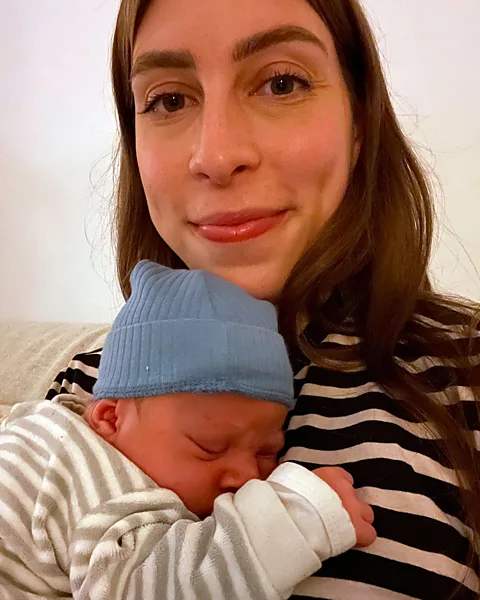
This was also the case for Elissa Fischel – she had a surprise home birth when her baby came several weeks earlier than expected. "I didn't know how to change a diaper [nappy]. The first time that I did it, I put it on backwards," says Fischel.
As any new parent knows, welcoming a baby into the world can be a time of immense joy, but also stress, sleep deprivation, leaking bodily fluids and an ever-growing list of conflicting advice.
It's no wonder then that many new mothers feel overwhelmed and alone postpartum. But Yannicelli and Fischel both benefited in ways many other parents do not – they gave birth to their babies in the Netherlands.
All new parents in this small European country receive the support of a trained professional who arrives shortly after birth. These are the Netherlands' "kraamverzorgenden" – maternity carers.
These trained maternity carers typically spend up to eight days in the new parents' home, helping with everything from doing the washing to spotting health issues early.
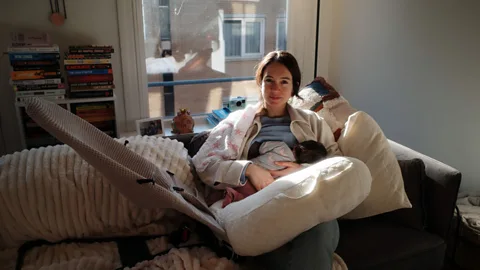
For Yannicelli, an American expat who was living in Amsterdam but is now back in the US, having the reassurance of a trained professional in her home made her feel more confident and secure. "It just felt like we weren't alone," she says.
Fischel felt the same. "It was really reassuring to just have somebody to ask questions to," she says.
All parents in the Netherlands are entitled to this personalised form of care. For those living elsewhere, turning to family, friends or the internet, the "Kraamzorg" service is an unheard of benefit. It is a unique form of care that those I spoke to for this piece believe helps parents and babies thrive.
 Alexander Riezebeek
"We give new parents a good start in their home environment," explains Wendy Olieman, a maternity carer from KraamZus, one of the organisations that provides care to new families. The magic of the role, she says, lies in the ability to transform a family's initial experience with a newborn "from what might feel chaotic to peace", and to help parents feel more confident. "We are the eyes and ears of the midwife and can identify problems early, because it doesn't always go smoothly."
Parents are entitled to between 24 and 80 hours, typically spread over eight days. The service is largely covered by health insurance, but some policies require an additional fee of €5.70 (£5.00/$6.70) per hour. It's usually provided by private organisations and, as insurance is mandatory in the Netherlands, everyone is entitled to kraamzorg. The carers have a wide-ranging role, from domestic support to checking the wellbeing of the family. They can watch the baby so the new mother can rest, look after the baby's siblings and monitor the health of the new mother and child, such as checking stitches or providing breastfeeding support.
Fischel recalls feeling relieved that someone medically trained was readily available in her first week as a new mother. She was especially surprised by the practical support – her carer "did a tonne of laundry", including items languishing at the bottom of the laundry basket. The kraamverzorgende would also cut up fresh fruit and prepare tea for Fishcel every morning. She even cleaned the toilet. Most of all, Fischel felt reassured that she could ask any questions as they came up.
Kraamverzorgenden will do other tasks, such as changing the bed sheets each day and light cleaning around the house. They will often provide a steady supply of hot drinks alongside "beschuit met muisjes", a traditional Dutch snack when a child is born. These crackers have blue or pink sugar and anise-flavoured seeds on top. (My Dutch mother baffled our grocery delivery driver by offering him some of these when she brought them to the UK after my daughter was born. He seemed to enjoy them though.)
Wendy Aaij-Karuth, a mother of three, found the support for her last child so helpful that she cried when the carers left. She had two carers supporting her, since one was a trainee. "They really knew what needed to be done and made sure I got snacks before I could ask." They also cared for her older two children, allowing her and her partner to rest and bond with their newborn.
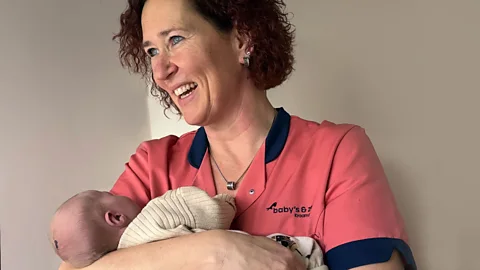
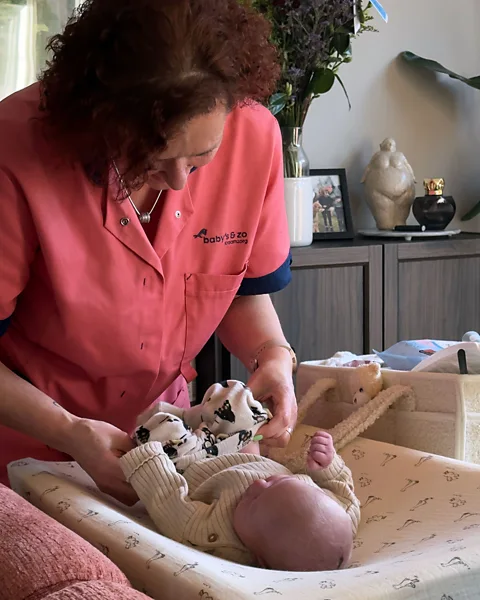
"We monitor everything, the mother's wellbeing, the baby's wellbeing," says Marie Claire de Ligt, a kraamverzorgende at Baby's en Zo who switched to this role two years ago after working as a nurse for two decades. "We explain feeding, we teach new parents how to hold a baby, how to change them and how to put them to bed safely."
These kraamzorg experiences are a stark contrast to when I had my first child in the UK. After an emergency caesarean section, a day later we were at home with a tiny infant, guessing what each sound meant and whether I was feeding correctly, with only a brief midwife visit the day after birth. I spent many of the early days messaging friends late into the night, checking that every small pimple, sleep and feeding change was normal.
It would have been so much easier – and medically safer in my case due to a life-threatening C-section complication – if we had the help of a trained professional monitoring my health closely. Instead, I was bundled off into an ambulance for emergency surgery as my bewildered husband looked after our four-day-old daughter, who was still exclusively breastfed, alone in the waiting room. He had to hunt down formula and a bottle in the hospital in the middle of the night when she woke up howling and hungry.
Esther Feijen-de Jong, an associate professor in midwifery science at the University Medical Center Groningen in the Netherlands and a former midwife, says that kraamzorg can prevent serious issues from occurring. Carers can quickly notice if the baby shows signs of jaundice or is losing too much weight and not feeding well, which a new mother may not spot right away.
"If the baby's safety is at risk, we step in," says Sandra Leerves, a colleague of De Ligt. "I once had a case where the mother became unwell on day six and I called an ambulance. It turned out something serious was happening. The family was so grateful I was there."
Preventative care
The postpartum phase can be intense and it can be hard for new mothers to monitor what is normal and what is routine. Many women tend to ignore their own physical complaints because they are so focused on their new baby, says Feijen-de Jong. A trained maternity carer can therefore catch issues before they get worse.
Fischel found this comforting: she had experienced a tear during childbirth, so her carer checked her stitches for signs of infection. Similarly, Frouke Engelaer, a mother of two and medical doctor, lost a lot of blood during her second birth so it was reassuring to have someone regularly check up on her.
Engelaer had planned a hospital birth but as labour progressed so quickly, she had a home birth instead. Her kraamverzorgende arrived in the middle of the night to help her get settled. "I've got great memories of that time," says Engelaer. "Everyone feels so insecure in the beginning, wondering am I doing it right, is there enough milk... all kind of small questions pop up in your mind and you’ve got somebody there who you can ask immediately and who can support you."
The system is designed to facilitate a "smooth transition into motherhood", especially as it's such an "intense period, both mentally and physically", says Feijen-de Jong. One important goal of the care, she says, is for women to gain the confidence necessary to care for their newborns independently once their carer leaves.
As everyone's situation is unique, maternity carers must adapt to the needs of each family they support – and this can range from parents who have prepared for weeks, to extremely vulnerable families living in poverty. Low-income families can apply for benefits to cover the cost.
 Yenthe van Sasse van IJsselt
Each kraamverzorgende I spoke to mentions how they must act "like a chameleon" to fit in where needed. De Ligt laughs and says she has to quickly figure out where everyday items are stored, from cleaning supplies to cutlery, because new mothers may not themselves know what they need support with. She recalls how she recently entered a home where both parents wanted to sleep, so she figured out where the dishwasher and cleaning products were and made herself useful.
Whilst some people may welcome a stranger at home, others may find it intrusive at a time when they feel at their most vulnerable.
Yannicelli says her carer was very chatty, which she enjoyed, but recalls hearing how others sent theirs away early for being "too chatty". Engelaer also didn’t feel fully supported by her first kraamverzorgende, whose values didn’t align with her own. "For our second child I preferred somebody we felt really connected to."
'Behind the door care'
Maternity carers are also in a unique position to be able to spot early warning signs of abuse, neglect, an unsafe environment or relationship stress. "You pick up on that. You can actually feel the tension in the household," says Olieman. "We are among the few professionals who get to step 'behind the front door' for several days in a row, which gives us a very clear picture of the family situation."
She also monitors a mother's mood, specifically looking for signs of the "baby blues" or postnatal depression.
 Elissa Fischel
Leerves has direct experience of this – and explains that detecting issues early "can save a lot of care costs". If there are concerns – be it from domestic violence or poverty, she can help source additional support.
Feijen-de Jong recalls how, as a midwife, she has visited families who had no baby items or clothes. "We had to quickly arrange supplies and maternity care. As a team you can put the right help in place. This is one of the most beautiful parts of our system."
Increased confidence
One in-depth study by medical doctor Lyzette Laureij features interviews with postpartum women and found that kraamzorg increases "parenting self-efficacy", that is, it makes parents feel more competent to handle all the challenges that come with caring for a newborn. One mother noted that she was "just as insecure" with her second child as her first and needed that "extra reassurance" to know she was doing a good job.
More like this:
● The myth that women are more naturally empathetic than men
● How where you grow up affects your personality
● Is it really possible to 'bank' sleep for later?
But there are challenges. Vulnerable women, including those from lower socioeconomic backgrounds, those who are victims of domestic violence or those with a history of drug or alcohol addiction often face additional health concerns yet are less likely to access healthcare in the first place. Despite the clear benefits of preventative healthcare, vulnerable women tend to use fewer hours of the care they are recommended, the report notes, with 5% using no postpartum care at all.
Due to the costs and labour shortages there is now extra scrutiny in the Netherlands on showing evidence of the benefits, says Feijen-de Jong, but this is difficult to track with data. What is clear though is that mothers in the Netherlands are more likely to have home births compared to other countries. About 16% of mothers have a home birth there, compared to about 1% in many neighbouring countries, and evidence has shown that complications are lower among planned home births.
"We know from research that women have complaints for a long time after giving birth," says Feijen-de Jong. "If we can address things in the first week… they may have fewer long-term problems."
The immediate impact of this care is obvious to the women I spoke to. Olieman too says her role therefore feels not only vital but extremely rewarding. She doesn't do it for the money, she says, "but for the differences we can make".
Leerves and de Ligt agree. "You’re allowed into the most important moment of someone’s life and can support them. That’s so beautiful," says de Ligt. "Seeing families feel confident who started out insecure is fantastic."
* Melissa Hogenboom is a senior health correspondent at the BBC and author of Breadwinners (2025) and The Motherhood Complex.
--
For trusted insights on health and wellbeing, sign up to theHealth Fix newsletter by senior health correspondent Melissa Hogenboom who also writes theLive Well For Longer andSix Steps to Calm courses.
For more science, technology, environment and health stories from the BBC, follow us on Facebookand Instagram.
