The myth that women are more naturally empathetic than men

 Getty Images/ Javier Hirschfeld/ BBC
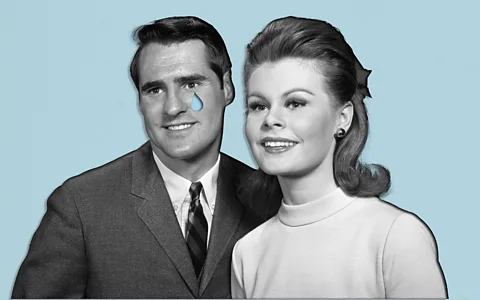
Scientific research is up-ending age-old gender stereotypes about empathy – and revealing new ways of thinking about masculinity.
When women achieve great things, it was erroneously supposed that "they were not Women who did those Great Actions, but that they were Men in Petticoats!", the philosopher Mary Astell wrote in 1705. Even Queen Elizabeth I once famously said that she'd rule the country like a king, despite having the body of a "feeble woman" – as if ruling had to be a masculine path.
While these anecdotes are from the past, subtle gendered biases of what it means to be a successful, powerful individual still permeate.
Notably, we still typically describe traits like empathy as naturally feminine and traits like dominance and assertiveness as masculine. Even when displaying the same behaviour, men are seen as assertive and women as aggressive.
One particularly notable trait that is often gendered in this way is empathy. Women supposedly are natural empaths while men who show more empathy are typically seen as weak.
But why is that? Is it true that women are naturally more empathetic than men, or are we socialised to be?
Gender stereotypes like these have clear consequences on how we raise our children, workplace culture and leadership. But what's less visible is how early these biases start, and the fact that stereotypes reinforce our expectations – imposing significant constraints on how we expect others to behave.
The hormones behind empathy
Empathy involves both the ability to understand others' thoughts and feelings, allowing us to respond appropriately. It can also be thought of in terms of cognitive empathy – our ability to recognise emotions and take other perspectives – and affective or emotional empathy, where we have an emotional response to someone's thoughts and feelings.
Scientists use a variety of methods to empirically measure empathy, including questionnaires and experiential tasks.
And it's long been found that, on average, women tend to consistently score higher than men.
Simon Baron-Cohen, a clinical psychologist at Cambridge University, argues that it is because the female brain is "predominantly hard-wired for empathy", which makes women especially suited for caring roles, while the male brain is "predominantly hard-wired for understanding and building systems".
 Alamy/ Javier Hirschfeld/ BBC
While social factors clearly influence empathy, says Baron-Cohen, his work suggests that hormone exposure in the womb plays a role in social development.
His 2006 study of over 200 children aged 6-9 found that testosterone levels in the amniotic fluid during pregnancy – which are higher in males than in females – are directly correlated with how the children performed on cognitive tests on systemising, defined as the ability to analyse rules or patterns. Indeed, testosterone exposure in the womb was a stronger predictor of a child's test scores than their sex alone.
A similar 2007 study also showed that foetal exposure to testosterone was inversely correlated with empathy test scores.
"What's clear is that something like empathy or systemising are a complex mix of biology and social factors," says Baron-Cohen.
Is empathy in the genes?
Many other researchers, such as neuroscientist Gina Rippon, find this hormonal theory problematic. "The idea that all women are naturally more empathic is part of the persistence of the so-called 'female brain myth'," she says. We also must remember, says Rippon, that young children's brains are "hugely responsive to outside influences". (Learn more about the sexist myths that won't die in this BBC interview with Gina Rippon.)
In one seminal study that found gender differences in empathy tasks, thedifferences were not large: women were more empathetic in 36 of the 57 countries studied, but in 21 countries the scores were very similar, and the authors stated that they "cannot determine causation".
And though women do score slightly higher than average on empathy studies, the range of variation within genders is much greater than between them. "If you look at the spread of the empathy scores within the male and female populations, it's huge," says Rippon.
Girls and women are often said to be more attuned to the faces of others, an important skillset needed for empathy, but results are mixed, and recent research suggests this preference is not something they are born with. A meta-analysis published in 2025 examined 31 studies featuring 40 separate experiments on how one-month-old girls and boys observed others' faces, if they cried when others cried and how alert they were to those surrounding them. In all these measures, no matter the sex, the infants did not differ in their social awareness and keenness in understanding others' emotions.
Indeed, a 2018 large-scale genetic study of empathy involving over 46,000 participants who completed a questionnaire and submitted DNA samples, suggested that genes do play a role in how empathetic a person is. But none of these genes are associated with a person's sex.
Varun Warrier, an assistant professor of neurodevelopmental research at Cambridge University and author of the study, explained at the time that "since only a tenth of the variation in the degree of empathy between individuals is down to genetics, it is equally important to understand the non-genetic factors". This means that the environment in which someone grows up and lives must be playing a role.
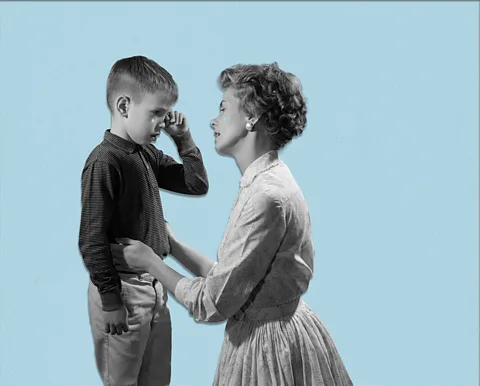
Women tend to display empathetic traits more, not because they are innate, many scientists argue, but because girls and women are socialised to act on their emotions and to prioritise the needs of others from an extremely young age. Girls are also often presented with toys that emphasise softer, more nurturing skills, while boys are encouraged to play with toy tools and cars.
"Little girls are told to be nice and not to be unkind and rough, so it gradually becomes part of who they are," says Rippon.
Many studies have similarly shown that power distorts our empathy and inhibits people from feeling it. In my book Breadwinners, I outline the argument that, as men have historically had more power than women – and continue to do so in business and politics – they are therefore more likely to experience less empathy.
On the other hand, those who are financially disempowered have been shown to be better at reading emotions.
One study found that individuals who perceived themselves as having "lower subjective rank, lower income and belonging to cultural groups associated with the lower class" were better at reading the emotions of others, for instance. That women score higher on empathy could therefore stem from a need to be highly perceptive to those in power, coupled with their own relative lack of power.
Empathy is a malleable trait
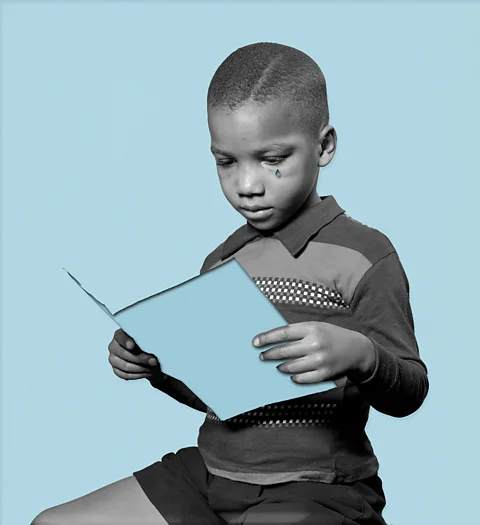
Crucially, empathy can be learned, according to Nathan Spreng, a neurologist at McGill University in Montreal, Quebec, Canada. "Once we understand this idea of a range of emotional experience, we can focus on it and learn what other people's emotions are, and improve our empathy," Spreng said on the BBC's The Documentary Podcast. "It's not static, it's a dynamic thing across the lifespan."
A 2023 neurological study clearly shows that both women's and men's brain waves respond in much the same way when shown images of painful or neutral facial expressions. But in the part of the experiment where participants completed empathy questionnaires rating how empathetic they felt, men scored lower than women did on average. That is, unless they were told beforehand that they'd score well.
In the group of men who were primed with information suggesting that men are also naturally "good at sharing and caring for the feelings of others", the gender differences in how empathetic they felt disappeared.
 Alamy/ Javier Hirschfeld/ BBC
Not only do these findings suggest that self-reported empathy experiments are hard to untangle from a slew of personal and social biases, but they also further support the hypothesis that a person's expectations and motivations play a major role in their empathy.
Women "tend to come out as more empathic when they know their empathy levels are being assessed", says Rippon, of experiments like these. "It's a socially acceptable trait, so they want to score highly."
One study found that women only outperformed men on a task asking them to accurately infer someone else's feelings when they were first asked to reflect on how they felt. If they weren't nudged in this way, there was no observed gender gap. And when researchers offered participants money to infer others' feelings accurately, empathic accuracy improved for both genders. Participants easily learned to be empathetic because there was a reward for doing so.
Sara Hodges, a psychologist at the University of Oregon and co-author of this study, proposes that women may show improved empathic accuracy not due to an innate ability, but because they are more motivated to do so by societal expectations.
Rather than viewing empathy as a fixed trait we should see it as a process that draws upon multiple sources of information, including body language, speech, stereotypes, personal experiences and past interactions, according to Hodges. "When people are more motivated to know what someone is thinking or feeling, they recruit more sources for constructing that," says Hodges.
The dire consequences of the empathy bias
What is less talked about, says Hodges, is that empathy isn't just a soft skill used for good – it can also be used to manipulate others or exploit people. "For example, in negotiation, if you know the other person's bottom line, you're a better negotiator," says Hodges.
But ultimately, the consequences of expectations surrounding empathy and the like can contribute to inequality in society and have dire consequences for both women and men.
Women are judged as less likely to have leadership potential than men because we tend to see leaders as needing to be dominant and assertive, traitstypically associated with masculinity.
But when it comes to loneliness, women are more likely to seek support from their social network than men. Social isolation, instead, is a known risk factor for attempting suicide, the rate of which is much higher among men.
 Alamy/ Javier Hirschfeld/ BBC
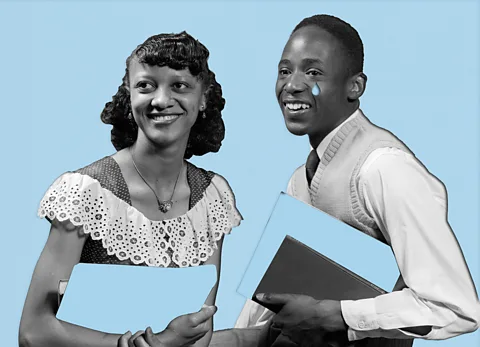
Fortunately, the narrative about the importance of emotional skills among men and women is slowly changing, including the importance of empathy towards others and caring responsibilities, according to Niall Hanlon, a sociologist from Technological University Dublin, in Ireland.
More like this:
● The gender biases that shape our brains
● Why the way we talk to children really matters
● The sexist myths that won't die
"Broadly speaking, men and boys are socialised to not see care in the way that women and girls do, that it's not part of the trajectory of being a man," says Hanlon. "They do imagine themselves to be fathers, but they don't expect that they will be in a primary caring position."
But society is already shifting to pave the way for more men to embrace caring responsibilities and be more outwardly empathetic. Men are spending more time with children than in the past, and they state they want to spend more time with their family (though women still do the bulk of flexible working and childcare).
The work being done to reframe men as more caring and empathetic will open the door to a new type of masculinity that could help prevent loneliness, says Hanlon – one that emphasises interdependence and empathy rather than autonomous, power-focused individuals.
"There's a lot of research that shows this is much better," says Hanlon. "For men, women and children."
* Melissa Hogenboom is a BBC health correspondent and author of the Breadwinners (2025) and The Motherhood Complex.
--
For trusted insights on health and wellbeing, sign up to the Health Fix newsletter by senior health correspondent Melissa Hogenboom who also writes the Live Well For Longer and Six Steps to Calm courses.
For more science, technology, environment and health stories from the BBC, follow us on Facebook and Instagram.
