Tourism is booming in 2026 - just not where you think

 Getty Images
As global travel rebounds, the fastest growth is happening beyond the usual tourism heavyweights – from Ethiopia to Bhutan.
More than 1.5 billion international tourists travelled abroad in 2025, setting the stage for a record-breaking 2026. According to the latest World Tourism Barometer published by UN Tourism, international arrivals grew 4% globally, beginning to match the pre-pandemic growth average of around 5% per year between 2009 and 2019.
While Europe remained the world's most visited region, welcoming nearly 800 million arrivals and posting a solid 6% growth over 2024, the destinations recording the fastest growth were not the usual headliners. Brazil saw arrivals surge by 37%, Egypt by 20%, Ethiopia by 15% and Bhutan by 30%. Even the Seychelles, a tiny archipelago off East Africa, recorded a 13% increase.
"These countries fall into a growing category of high-identity, emerging destinations that are no longer niche but not yet saturated," said Steven Vigor, CEO of travel advisory firm Revigorate. "More travellers are now drawn to distinctive culture, landscapes and the possibilities of discovery, so countries with a strong identity and decent access are clear winners."
To understand what's driving this shift – and how destinations are managing the influx while staying mindful of overtourism – we spoke with tourism authorities and industry operators across several of the fastest-growing countries.
Egypt
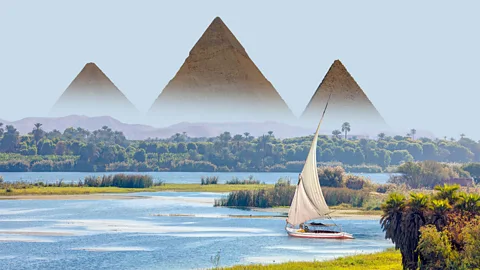
With a 20% jump in international arrivals over 2025, Egypt emerged as one of the strongest performers in the Middle East, a region that has seen some of the world's fastest post-pandemic tourism growth. According to tour operators, the biggest driver has been the long-awaited opening of the Grand Egyptian Museum near the Pyramids of Giza.
"It took more than 20 years and was announced multiple times before it finally and truly opened," said Jorge Salas-Guevara, founder of New Paths Expeditions. For years, travellers who trusted those earlier announcements and visited Egypt returned home feeling they'd missed one of its most anticipated highlights, he notes. Others chose to wait until the opening was certain. "Today, we are seeing both groups act at the same time," he said.
 Alamy
AlamyJohnny Prince, CEO of Timbuktu Travel, has seen the shift reflected in booking data, a nearly 50% increase in enquiries from 2024 to 2025. He notes that a perceived improvement in safety has encouraged more families with young children to travel, alongside a rise in female solo travellers. Interest is also building ahead of the solar eclipse visible from Egypt in 2027.
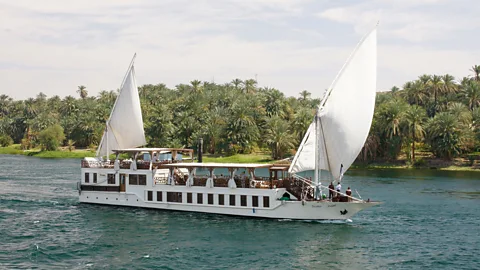
To manage visitor volumes, operators are increasingly encouraging slower and more curated experiences. Salas-Guevara recommends small dahabiyas (traditional wooden sailboats) on the Nile instead of large cruise ships, allowing access to quieter temples and a more relaxed pace.
The shift toward slower travel is also creating space for new ways to experience the country. Boat Bike Tours, which has offered tours across Europe for nearly 50 years, launched its first Egypt and Nile itinerary this year, the first of its kind in the country. The tours follow less-travelled routes through villages and date groves, with Egyptologists joining the rides.
"Active travel is booming right now, and bike travel is completely new to Egypt," said Laurens Winkel, the company's CEO. "We still visit the temples and monuments, and the pyramids in Cairo, but we're getting there at a pace that lets you take it all in to a fuller extent."
Brazil
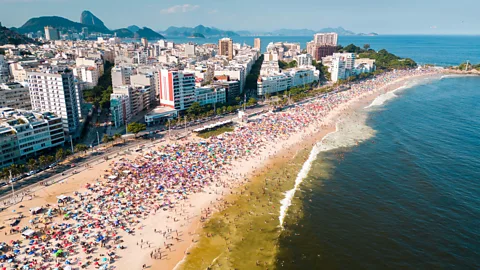
No destination recorded a larger year-on-year increase than Brazil, which posted a 37% rise in international arrivals in 2025. Much of that growth has been driven by deliberate policy. In 2024, the Brazilian Agency for International Tourism Promotion (Embratur), which runs Visit Brasil, launched a programme to attract new international flights through public-private partnerships with airlines and airports, subsidising the promotion of new routes.
"Achieving the growth targets for international tourism in Brazil is intrinsically linked to air connectivity," said Marcelo Freixo, president at Embratur. "There is no point in the growing international interest in getting to know Brazil if there are no direct flights or short connections at a competitive price."
Marco Amaral, vice president of operations and development at Minor Hotels, also credits a shift in how the country is perceived globally. Major events – including the Olympic Games in Rio, the Football World Cup, last year's São Paulo Grand Prix and the upcoming Women's World Cup in 2027 – have all helped raise awareness, while São Paulo has emerged as a global hub for culture, music and dining.
The profile of those visiting is changing, too. "Now that wellness, time and nature are top priorities for everyone, Brazil is seeing the arrival of a new kind of tourist: the conscious luxury seeker," said Amaral. Executives are travelling with families and extending stays, and there's a rise in tourists seeking to connect with local communities. A competitive exchange rate has further positioned the country as a high-value destination.
 Alamy
AlamyWhile the country is conscious of overtourism, it also faces specific hurdles. "The issues with overtourism are not the same as those in Europe," said Amaral. The country has more than 9,000km of coastline plus a vast interior so the core challenge is diversifying tourism away from major hubs like Rio de Janeiro and São Paulo.
"Being a late bloomer has worked in our favour," added Gisele Abrahao, founder and CEO of Global Vision Access and Brasil DNA Initiative. "There is a more segmented, thoughtful and qualified approach within the industry, focused on promoting and selling destinations and experiences more consciously. Destinations at risk of overtourism are already taking action, prioritising more meaningful and positive engagement with local communities."
To that end, industry leaders encourage visitors to explore beyond the main hubs. In Belém, the historic open air Ver-o-Peso Market and an emerging food scene drawing on Amazonian ingredients – from edible ants to unique spices – are attracting international travellers. "Once you visit two different Brazilian cities, you realise there are many 'versions' of Brazil," said Amaral. "Getting to know each one of them is a true adventure."
Ethiopia
Ethiopia recorded a 15% increase in international arrivals in 2025, contributing to Africa's continent-wide 8% increase – the strongest regional growth in the Barometer. The rebound follows several years of depressed numbers linked to the conflict in Tigray region. Flights in the north resumed in 2023, and 2024 saw a bump in travel interest.
Since then, the country has made significant investments in improving accessibility and traveller confidence, including the launch of the Visit Ethiopia platform in 2025. New hotels and upgraded services have also helped revive demand.
"As a result, we are seeing renewed interest from our long-standing travellers, along with a steady return of visitors who had postponed plans for several years," says Salas-Guevara, noting Ethiopia was New Paths Expeditions' first destination. "We are also receiving increasing interest from a younger audience looking for more active and outdoor-focused travel."
 Alamy
AlamyPrince says they have seen a 40% increase in interest from 2024 to 2025. "Similar to Egypt, there's a perceived improvement in safety, and guests are starting to return," he notes. "We've had a booking of a 20-plus school group to visit Ethiopia this year, showcasing this new demand for travel."
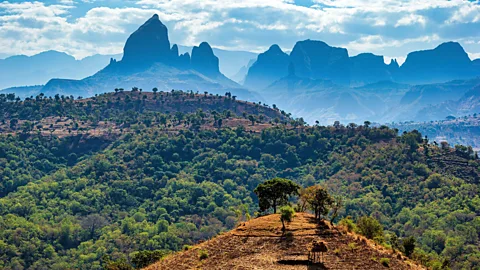
Salas-Guevara describes Ethiopia as one of the world's richest destinations to experience archaeology, anthropology and natural history at scale. He recommends exploring the legacy of the Axumite Empire in the north, which includes the rock-hewn churches of Lalibela, and medieval Gondar architecture. The Simien Mountains offer close encounters with wildlife, particularly the rare gelada monkey found nowhere else in the world. In the south, the Omo Valley remains home to communities that have maintained distinct cultural traditions for centuries.
Seychelles
The Seychelles posted a 13% rise in arrivals through 2025, placing it among Africa's stronger performers. The country's tourism department credits a strong collaboration between public and private sectors, targeted marketing and a commitment to quality.
"Surpassing our 2024 target is a result of our shared effort and the strong partnerships we continue to build," said Sherin Francis, Principal Secretary for Tourism for the Seychelles, in a statement marking the year's results.
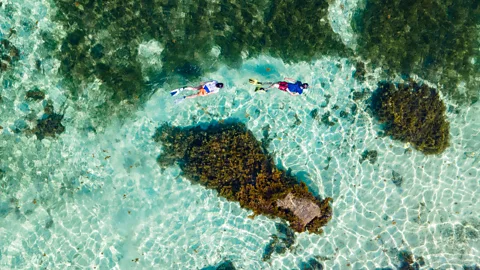
Industry leaders credit the broadening of the destination's appeal beyond traditional honeymoon travel. "Visitors can enjoy so much more than just flopping on the beach," said Naji Esta, general manager for Anantara Maia Seychelles Villas and Avani+ Barbarons Seychelles. "From hikes to waterfalls, snorkelling, creole cuisine or getting stuck into a Moutya dance around the bonfire, when you come to Seychelles you'll find a very barefoot luxury charm which is embedded in the culture."
 Alamy
AlamyWhile couples remain a core market, Esta notes a rise in families and wellness-focussed travellers. Anantara Maia recently introduced a vegan menu, though "it remains to be seen if it will be as popular as the creole curries", Esta joked.
The Seychelles has positioned itself as a leader in marine conservation, protecting 30% of its ocean territory. The islands also pride themselves on inclusivity, with no private beaches anywhere in the archipelago. "The islands remain a place for everyone, and local people appreciate its beauty just as much as holidaymakers," said Esta.
More like this:
Esta encourages visitors to support local makers, such as taking a morning yoga session at Vallée des Fruits, an organic fruit plantation and eco-farm, or a workshop at Belliche, where handcrafted natural products are made by a local entrepreneur.
Bhutan
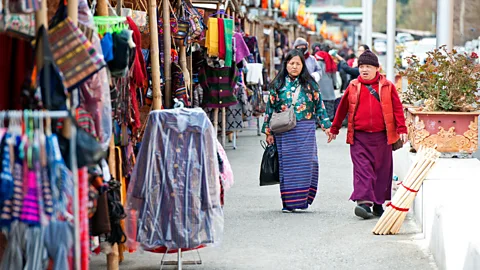
A long-isolated kingdom, Bhutan first opened its borders to tourism in the 1970s but has always taken a "high value, low volume" approach. Its 30% increase in 2025 arrivals may seem at odds with this restraint over expansion policy, but Bhutan has worked to make its growth sustainable, including charging a nightly Sustainable Development Fee to tourists (currently at $100/£73 per night) that funds facilities, infrastructure and services for residents and visitors alike.
 Getty Images
"'Low volume' doesn't mean limiting the number of visitors," said the country's former prime minister H E Dr Lotay in a press release explaining the fee. "We will appreciate everyone who visits us to treasure our values, while we also learn as much from them."
The country has long been known for its focus on Gross National Happiness, which reframes the typical GDP economic measurement around wellbeing instead.
"Bhutan has become the antidote to modern travel fatigue," said Yeishan Goel, founder and CEO of travel company Himalayan Echoes. "Bhutan attracts travellers who feel they have already seen the world and are searching for something deeper."
Goel recommends visitors seek out quieter experiences, like sitting with a senior monk during a private blessing, spending time with a textile weaver who has practised their craft for generations, or sharing a meal in a remote valley farmhouse. "These often leave a deeper impression than the major landmarks," he said.
He also favours exploring Bhutan by motorcycle. "It's one of the most visceral ways to experience the country's scale and solitude," he noted, also mentioning hiking as equally essential. Most importantly, he says, visitors should seek out the country's relationship with impermanence. "It offers visitors a rare chance to pause and reflect, which is ultimately what many travellers come here seeking," he said. "Even if they don't realise it at first."
--
If you liked this story, sign up for The Essential List newsletter – a handpicked selection of features, videos and can't-miss news, delivered to your inbox twice a week.
