Inside Atlanta's soul food revolution

 Lynsey Weatherspoon
From fried chicken to hoisin-glazed oxtail, the city's most famous comfort food is changing. But its flavours still tell the story of migration and survival in every bite.
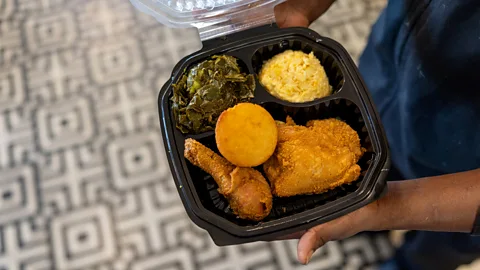
In kitchens all over Atlanta, Georgia, ham hocks and collard greens are bubbling in stockpots. Plates piled with fried chicken are being passed; macaroni and cheese is heaped alongside crispy pork chops smothered in gravy.
But elsewhere in this same city, charred redfish is being simmered into bolognese to be spooned over radiatori pasta. Fried green tomatoes are drizzled with truffle burrata cheese and garnished with applewood bacon; cornbread cheesecake is emerging hot from an oven.
At all these tables, family and friends are laughing, sipping sweet tea.
This is soul food, as Atlanta now knows it. As this rapidly growing city welcomes food trends and immigrant communities, its Black chefs are experimenting with heritage ingredients and global flavours alongside new techniques, creating dishes their grandmothers wouldn't recognise. Or would they?
Here's how Atlanta's most famous cooking style is evolving, while keeping its famous soul.
 Lynsey Weatherspoon
Survival cooking and perseverance
Soul food, typically defined as dishes from the Southern US made by African Americans, is consumed throughout the Black diaspora. But Atlanta, with its profound, historic Black population and role as the epicentre of the Civil Rights Movement in the 1950s-'60s, is widely considered one of its premiere hubs.
Where to experience Atlanta's Black soul
Pay respects: at Dr Martin Luther King's birth home and Ebenezer Baptist Church, his spiritual home.
Stroll: the historic Sweet Auburn neighbourhood, once the commercial centre of Black Atlanta.
Learn: at the National Center for Civil and Human Rights, then travel west to APEX Museum for African American history through a local lens.
Admire: the collection at Spelman College Museum of Fine Art, then Hammonds House Museum of contemporary Black art.
Shaped after the US Civil War by an influx of freed Black people, Georgia's new capital soon cemented its reputation as a "Black Mecca". A rich food culture followed; the collard greens, beans, cornmeal and yams that characterised African and African American diets joined inexpensive cuts of meat like neckbones and oxtail to become wholesome meals. Church potlucks, fundraisers and family-owned restaurants transformed survival cooking into collective culture.
"Soul food is born from resilience," said Melvin Browne, Managing Director of The Busy Bee Cafe. "It comes from Black American history, from families making something extraordinary out of very little. It's about resourcefulness, community, seasoning and care."
Atlanta resident Teonykkia Starr echoed the sentiment: "It's food cooked with love and patience that nourishes our souls and bodies. It's food from Black hands blessed in the skill of making Black folks stronger."
The cuisine spread throughout the US during the Great Migration of the early 1900s, its dishes becoming fixtures at both suppertime and celebrations. In Atlanta, soul food restaurants anchored entire neighbourhoods, many opening along Auburn Avenue in the historically Black Sweet Auburn.
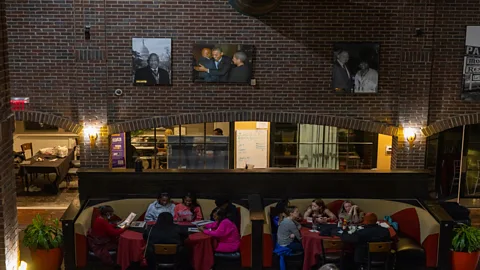
Civil rights leaders like Adam Clayton Powell Jr and Jesse Jackson used the city's soul food eateries as spaces to strategise. "Some of my favourite restaurants tell incredible civil rights stories right on their walls through pictures and murals," said local resident Nikki Thompson.
 Lynsey Weatherspoon
One towering example is Paschal's. Opened in 1947 by brothers James and Robert Paschal, the imposing brick structure is renowned for old-school soul cooking – and its place in Atlanta's political history. Paschal's has fed civil rights icons including Martin Luther King Jr, as well as former US President Barack Obama, serving as the unofficial headquarters for revolutionary initiatives like the March on Washington.
"This isn't just a restaurant," said Ernest Oliver, Director of Operations. "This building, this kitchen and these recipes are part of Atlanta's identity."
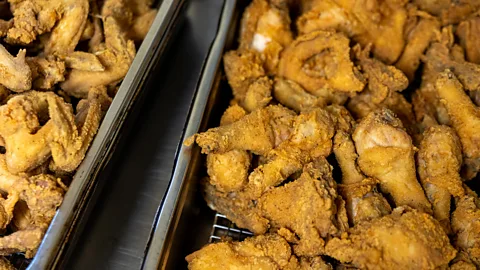
The 1947 Old-Fashioned Fried Chicken has been on the menu since its inception; the fried green tomatoes and pulled pork are local favourites. Over time, Paschal's plating and kitchens have modernised, but changing the recipes has never been an option.
"The seasoning can't be 'almost right'," said Oliver. "The fried chicken must taste like Paschal's fried chicken. The mac and cheese must feel like Sunday dinner. The greens must be cooked with care, not just heat."
Over in Vine City is The Busy Bee Cafe, also founded in 1947 and frequented by civil rights leaders. Originally helmed by "Mama Lucy" Jackson, the beloved eatery stays true to its roots. Diners love the catfish sandwich, candied yams, smothered turkey wings and crunchy fried okra.
"[Soul food] is the way collard greens are cooked low and slow with purpose," said Browne. "The way fried chicken is seasoned before it ever hits the grease. It's recipes passed down orally, not measured in teaspoons but in memory."
 Lynsey Weatherspoon
Soul food's new guard
Nonetheless, the old guard acknowledges that times – and cities – change.
"Atlanta has always been a city that evolves," said Browne. "It makes sense that our food does too."
Immigrant communities from the Caribbean, Latin America, Vietnam and Korea have brought new flavours; Black chefs now also incorporate African elements and ingredients in their meals, like cowpeas and West African sauces. Virgil's Gullah Kitchen & Bar in College Park serves modernised Gullah Geechee food, while Roc South Cuisine & Cocktail offers elevated takes on Southern dishes like lobster and grits. The traditionally meat-rich cuisine also embraces vegans; in West End, The New Soul Veg has served vegan takes on traditional soul food classics since 1979.
But is peach cobbler soul food if it's made without butter?
"Soul food is more than a recipe," cautioned Browne. "It's memory, migration and survival on a plate. You can modernise the presentation, but if you strip away the story, the intention and the cultural roots, it becomes something else."
 Lynsey Weatherspoon
Oliver added: "The soul has to stay in the food. That part cannot be updated."
Nonetheless, Browne respects the new guard: "That kind of creativity keeps the cuisine alive. The newer interpretations reflect Atlanta's growth. We are a city of creatives, transplants, entrepreneurs and global influence. The food scene mirrors that energy."
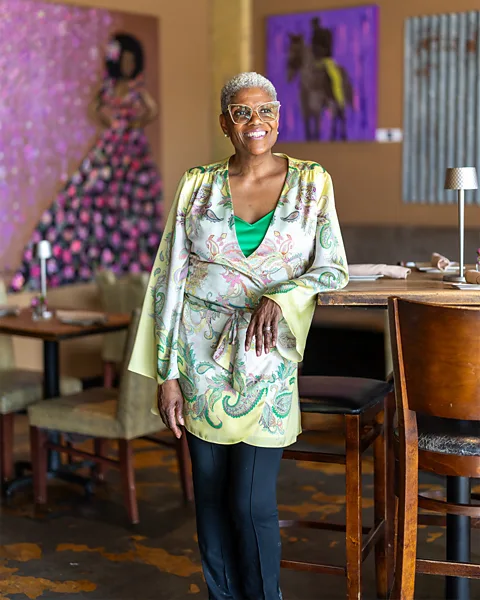
At Midtown Atlanta's Michelin-acclaimed Twisted Soul Cookhouse & Pours, Chef Deborah VanTrece approaches soul food as inheritance.
"Soul food is my first language and foundation," said the James Beard-nominated chef. "[Our] relationship is very personal and also evolutionary. It's never been something I'm trying to escape, but something I'm expanding."
 Lynsey Weatherspoon
When VanTrece first experimented with soul food, diners were wary. But "once people tasted, they understood that the flavours were familiar even when the presentation was new. Eventually, it created a sense of pride for many of my older guests, seeing me honour tradition with respect and refinement."
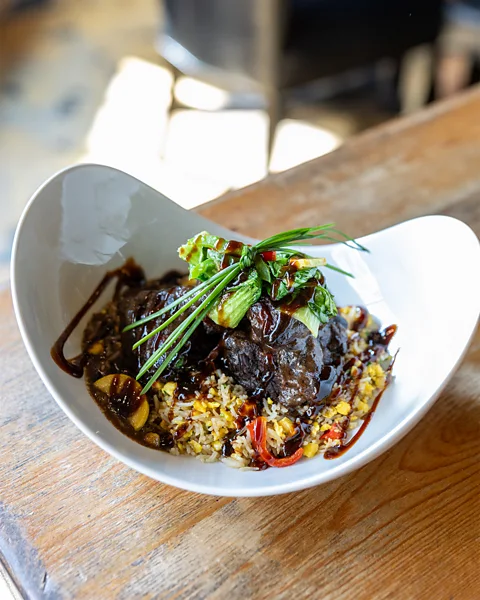
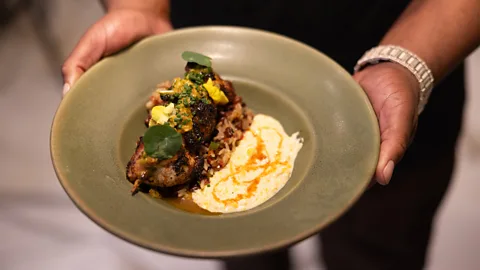
Apart from Southern-marinated fried chicken with three cheese mac and sweet potato apple chutney, VanTrece's menu features hoisin sauce-glazed oxtails and turkey leg osso buco with saffron rice middlins. Her pork neckbone is simmered au vin.
Despite her penchant for global flavours, VanTrece loves the classic ingredients. "Smoke, acid, spice and depth were key elements of cooking learned from my ancestors. Beans, grits, greens, sorghum, rice, sweet potatoes and inexpensive cuts of meats are things I may present differently… [but] I honour heritage by preserving the emotional core of the dish while allowing myself the freedom to express it through my own experiences and perspective."
Multicultural, cosmopolitan Atlanta gives her that space: "It's a city rooted in Black excellence and entrepreneurship. Diners here are curious and want to see their culture grow."
 Lynsey Weatherspoon
Moving ever forward
Historically, soul food has been undervalued because of its association with enslavement. Now it appears in contemporary dining rooms, prepared with premium ingredients.
VanTrece believes that shift is overdue.
"The work that goes into this cuisine is not easy," she said. "It deserves the same reverence as any other culture's food."
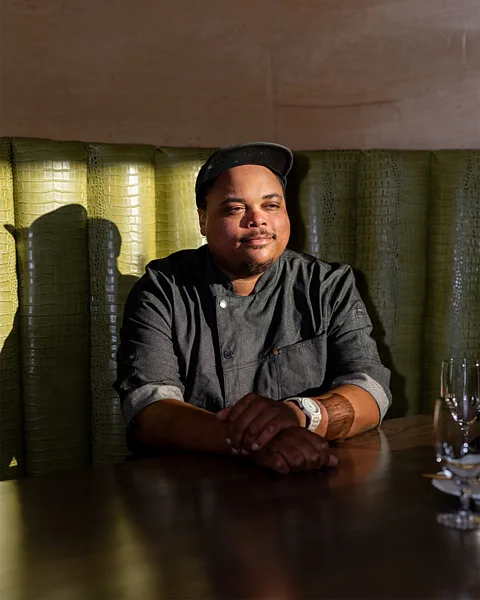
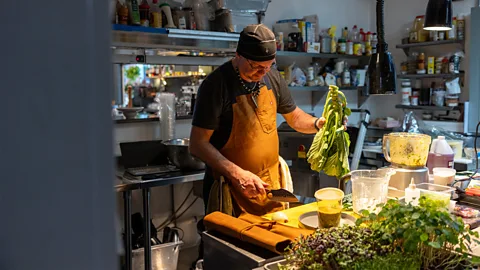
Chef Robert Butts helms Auburn Angel; a Southern fine-dining restaurant found in Sweet Auburn.
 Lynsey Weatherspoon
"You can taste the roots of the South," he said. "Almost like your grandma is cooking in the back."
Almost: Butts' menu offers fumeé sumac chicken, served with succotash emulsion and red pea Hoppin John. His chicken fried veal comes with pomme puree, sawmill gravy and confit vegetables. His customers love it, he says. "They get excited whenever the menu changes or [there's] something special they want to see and taste more."
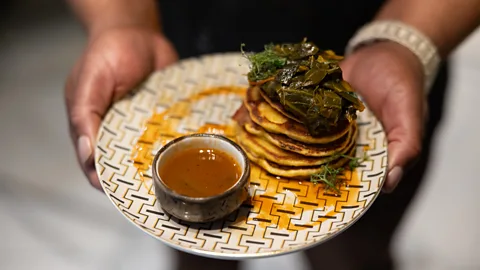
Butts doesn't believe he's redefining soul food, rather bringing it forward. One of his more nostalgic dishes, hoecakes and potlikker (cornmeal cakes served with the jus from braised collard greens) evokes his memory of greens soaking into cornbread. "Let's elevate soul food," he says. "But don't forget what grandma was doing in that kitchen."
 Lynsey Weatherspoon
Still, operating soul food-rooted restaurants comes with challenges. Butts believes soul food is often reduced to cafeteria trays, not recognised as a skilled cuisine built on intention.
Browne identifies other challenge – rising costs, which impact smaller, family-owned restaurants – and perception. "Soul food is sometimes boxed into stereotypes about being unhealthy or outdated without acknowledgment of its cultural depth or the fact that many chefs are adapting recipes to modern tastes and dietary needs."
There's also the risk of cultural dilution: "As soul food gains wider recognition, it can be reinterpreted in ways that remove its Black American origins. Protecting the story is just as important as protecting the recipes."
 Lynsey Weatherspoon
True to their roots, Atlanta's chefs persevere; through The New South ATL, an Atlanta-based collective of Black chefs, Butts collaborates on dinners and cultural events celebrating the African diaspora and the American South.
More like this:
"This city stands on deep-rooted traditions," he said. "You can feel why it's the mecca of Black culture."
Across Atlanta, diners arrive at soul food restaurants – old guard and new – seeking comfort and connection. What has emerged is not one definition, but a living culinary heritage.
"At its core, soul food survives because it's tied to community," said Browne. "As long as there are families, churches, celebrations and Sunday dinners, soul food will continue to evolve and endure."
--
If you liked this story, sign up for The Essential List newsletter – a handpicked selection of features, videos and can't-miss news, delivered to your inbox twice a week.
