Harry Potter to Eyes Wide Shut: 12 of the best alternative festive films - as chosen by BBC journalists

 Alamy
AlamyFancy a change from The Muppet Christmas Carol? BBC journalists pick the films that get them in the holiday mood.
 Alamy
AlamyEyes Wide Shut (1999)
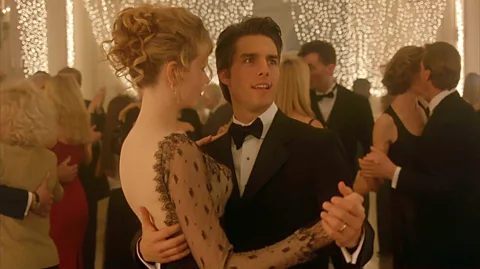
Stanley Kubrick's final film is about many things. It's about a bizarre and deviant world of elites. It's about men who can't handle women's sexuality. And it's about the holidays. Christmas may be the last thing on your mind when you think of Eyes Wide Shut, but the constant glow of twinkling lights is more than just a setting. We're all pressured to feel happy in the last weeks of December, but sometimes, less jolly Christmases bring the sting of disappointment instead. You can learn to accept that – or, like Tom Cruise's protagonist, you can try to force the world to obey your fantasies, and watch as things spin out of control. (Thomas Germain)
 Alamy
AlamyFather Christmas (1991)
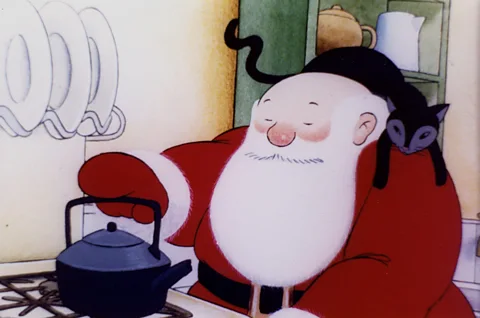
Most of us are familiar with The Snowman, the cartoon based on Raymond Briggs's picture book: it debuted on the UK's Channel 4 in 1982, and its musical centrepiece, Walking in the Air, has been trilled by choristers ever since. But fewer people have seen another Briggs adaptation, Father Christmas, which was made nine years later. It's a much funnier and ruder short film, in that it imagines Father Christmas (voiced by Mel Smith) to be a curmudgeonly loner who lives in an English town, moans about the "blooming weather", and likes a strong drink or two. Still, who can blame him, considering that he doesn't have any elves to help him or a Mrs Claus to keep him company? In its own cheeky way, this flawless half-hour is just as magical as The Snowman, and its hard-working hero is lovably caring at heart. Watching it with my children every Christmas Eve, without fail, is blooming marvellous. (Nicholas Barber)
 Courtesy of Cannes Film Festival
Pillion (2025)
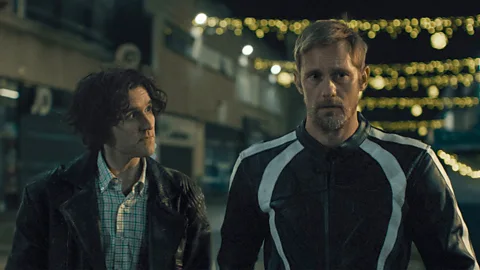
Harry Lighton's Pillion depicts the romantic awakening of shy Colin (Harry Melling), a traffic warden with little luck in love – but not many heartwarming festive romances begin with a haphazard sexual encounter in a dank South London side street on Christmas Day. After a chance meeting with the imposing leather-clad biker Ray (Alexander Skarsgård), Colin's life starts hurtling down a different road, and Ray wastes no time unlocking previously unexplored elements of Colin's sexuality. Tackling themes of grief and belonging, Pillion takes in the kinky paraphernalia of harnesses, wrestling and revving engines while never losing sight of its emotional core: two people working out an unconventional romantic path. Pillion is sure to become an alternative Christmas classic – but it may not be one for all the family. (Martha Henriques)
 Twentieth Century Fox/ Alamy
Die Hard 2 (1990)
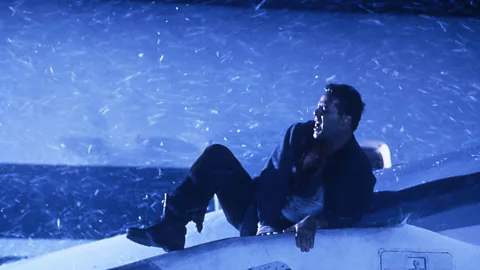
The original Die Hard is much debated as a Christmas film, but what is often overlooked is that its sequel is undoubtedly one. While Bruce Willis's first outing as tired cop John McClane is set at that most perilous of festive gatherings, an office Christmas party, the sequel takes place at one of the few locations even more stressful – a busy airport on Christmas Eve. We know the date because Willis mentions it in the first minute of dialogue, with the word "Christmas" cropping up a further nine times through the film. Along with the twinkly lights, tinsel, festive music and machine guns swathed in wrapping paper, there is snow this time, too. And a high-speed chase on snowmobiles. What could be more Christmassy than that? By the time Let it Snow starts playing and the credits roll, I'm ready to hang up my stocking. (Richard Gray)
 Twentieth Century Fox/ Alamy
Pride (2014)
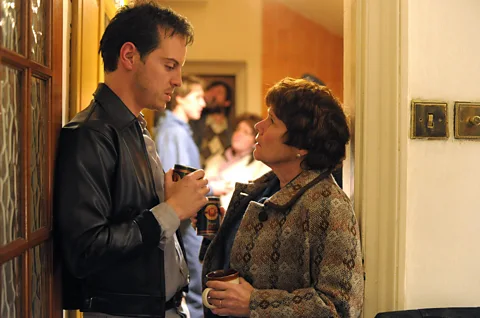
In Pride, love is all around – but isn't always welcome. The film is set in 1980s Britain, when the policies of Margaret Thatcher's Conservative government are about to unite the most unlikely political bedfellows: striking miners and gay-rights activists. The miners in question can be conservative about certain things, so when a band of flamboyantly merry gay men (and vegan lesbians) from London take it upon themselves to become their saviours, chaos ensues. Based on astonishing real-life people, the characters raise money and spirits, and rewrite the meaning of "solidarity" – in a way that changes history and makes me weep as the credits roll. The subject of "belonging" is a Christmas theme if ever there was one, especially when the setting is snow-swept Wales. And Imelda Staunton wishes Andrew Scott "Merry Christmas" in Welsh, so Pride is officially a festive film. (India Bourke)
 Paramount/ Alamy
Wonder Boys (2000)
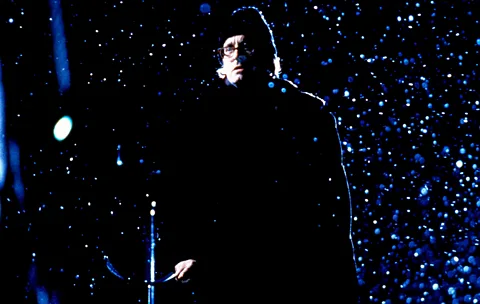
Set in a snowy Pittsburgh, Pennsylvania, Wonder Boys unfolds over a chaotic winter weekend. At its centre is Grady Tripp (Michael Douglas), a dishevelled English literature professor who spends much of the film in a pink bathrobe, seemingly dazed by his love affair with marijuana while struggling to put his personal life in order. He's married, but in love with the university chancellor (Frances McDormand), who happens to be the wife of the English department's chairman. Meanwhile, the manuscript of his latest novel keeps growing – by page 2611, we realise his problem isn't writer's block but his inability to stop. Packed with quirky twists – a dead dog, a stolen jacket and a wild car ride with Grady's candid editor (Robert Downey Jr) and his oddest student (Tobey Maguire) – Wonder Boys embraces change, new beginnings, and true love, making this film an unconventional Christmas classic you'll want to revisit every year. (Natalia Guerrero)
 Alamy
AlamyMerry Christmas, Mr. Lawrence (1983)
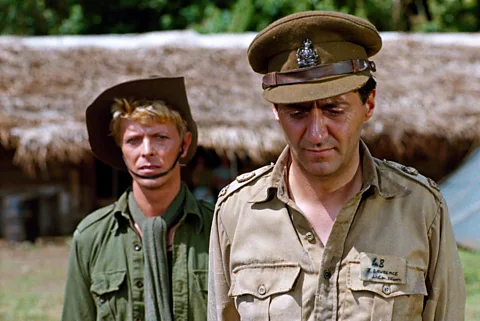
It may be set in a prison camp, but Merry Christmas, Mr. Lawrence is a festive masterpiece. Directed by new-wave auteur Nagisa Ōshima and scored by Ryuichi Sakamoto (who also has an acting role), the film features David Bowie as Major Jack Celliers and Tom Conti as the titular translator, John Lawrence. Arriving in the camp in 1942, Bowie's blond rebel quickly becomes a symbol of hope, stealing flowers for a funeral, food for the prisoners to eat, and a radio for them to listen to music. Seeing a prisoner about to be executed by Sakamoto's Captain Yonoi, Bowie walks up and kisses the executioner on both cheeks (needless to say, it does not end well for David). But it is Conti's doe-eyed translator who is the beating heart of the film, a Father Christmas figure who gives the gifts of gentle words and small acts of kindness in a war-torn, inhuman place. (Robert Freeman)
 Alamy
AlamyA Grand Day Out (1998)
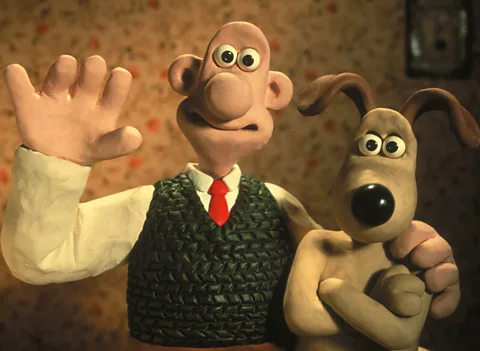
Way before the feature-length Wallace and Gromit films of more recent decades, my family would tune in each Christmas to the BBC reruns of Aardman's original 1980s and 90s claymation classics. Today, the cosy, tea-and-toast-on-the-sofa feeling of them still perfectly encapsulates the festive season for me. My favourite is the first, A Grand Day Out, which despite running for under 25 minutes somehow fits in piles of exuberant storytelling. After all, why shouldn't you build a rocket to fly to the moon for cheese if you happened to find your cupboard bare of it? And surely few moments in film history (or Christmas film history, at least) can compare to Wallace's dramatic last-minute realisation during the countdown to lift-off: "No crackers, Gromit! We've forgotten the crackers!" (Jocelyn Timperley)
 Focus Features
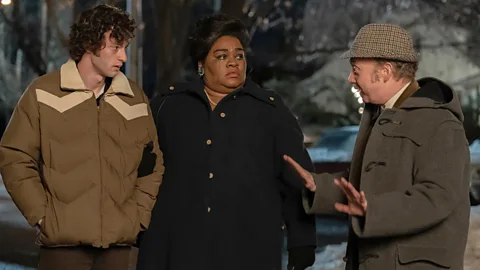
The Holdovers (2023)
"You can't even dream a whole dream, can you?" is the line of dialogue that epitomises the quiet poignance of Alexander Payne's recent festive classic. At a snowy, all-boys boarding school in early-1970s New England, grouchy classics teacher Paul Hunham (Paul Giamatti) stays over the winter holidays to supervise one frustrated student abandoned by his parents, Angus Tulley (Dominic Sessa), with newly bereaved head cook Mary (Da'Vine Joy Randolph) for company. As the unlikely trio gain a deeper understanding of one another, they begin to find pockets of joy in each other's company – particularly after a trip to Boston, which leads to clouds of self-doubt clearing. With sparkles of sharp wit and hope, and a perfect soundtrack featuring the likes of Labi Siffre and Shocking Blue, The Holdovers is as much a comforting Christmas film as a moving coming-of-age story. (Molly Gorman)
 Daniel Martinez/ El Deseo
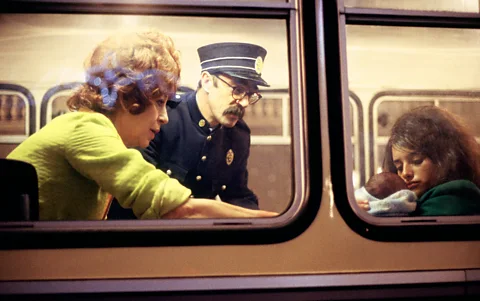
Live Flesh (1997)
Pedro Almodóvar's Live Flesh opens and closes with two unexpected nativity scenes, between which there are 25 years and a lot of drugs, sex and violence. A close-up of the star of Bethlehem from the Madrid Christmas lights opens the film. We then hear the screams of a young sex worker (Penélope Cruz), who is having a baby on a public bus with the help of her madame (Pilar Bardem). The scene, an ingenious mix of drama and comedy, hints at what's going to come in the film – and beyond. Years later, Cruz referred to that scene as a "rehearsal for life", as Bardem (Javier Bardem's mother) would become grandmother to Cruz's children. Live Flesh also marked Almodóvar's departure from high camp melodramas towards a more mature, darker and often sourer cinema. It's a film about love, death, birth, longing, and redemption, sandwiched between two scenes showing the Christmases of its outcast characters. And it is, perhaps, a prelude to the Spanish master's upcoming film: Bitter Christmas. (Javier Hirschfeld)
 Alamy
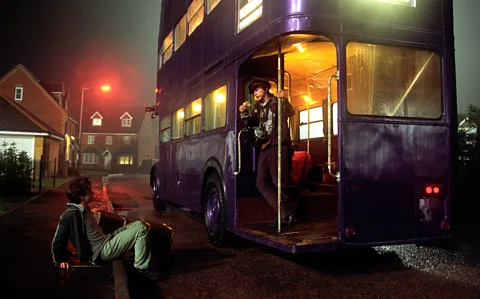
AlamyHarry Potter and the Prisoner of Azkaban (2004)
If you're looking to watch a Harry Potter film over the festive period, any of them is likely to fill you with those warm, nostalgic feels. But Harry Potter and the Prisoner of Azkaban might take the biscuit (or should it be chocolate frog?) for one particularly Christmassy scene in Hogsmeade involving a snowball fight and, naturally, an invisibility cloak. Are there themes of death and revenge? You can bet your galleons on it. But there are also great banqueting halls packed with elaborately prepared food, and fantastic performances from the likes of Gary Oldman, Timothy Spall and David Thewlis. With Alfonso Cuarón directing, the third instalment of the franchise gets darker as the three main characters grow out of childhood. But then, the best Christmas stories always have a dash of darkness in their cauldrons. And who needs Santa's sleigh when you've got the opening "Knight Bus" sequence, one of the most memorable in the Potter universe? (Cal Byrne)
 Alamy
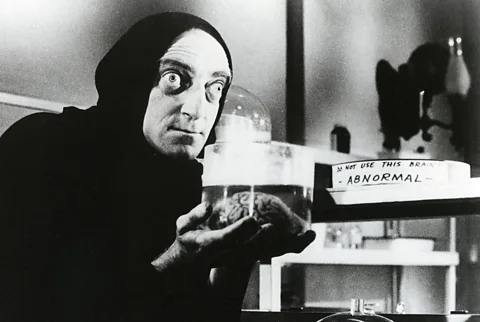
AlamyYoung Frankenstein (1974)
My family used to spend the holidays in the Dolomites, in a small apartment on the ground floor of a house by the woods. After a day on the slopes, we would ski back home through the pines, jumping over a narrow stream. Our living room was full – friends and family sitting on the sofa, around the table, and on the rug. Young Frankenstein was on TV: in Italy, they would run Mel Brooks's horror homage every Christmas. It was inexplicably renamed Frankenstein Jr, and dubbed in Italian. Nonsensical translations of lines like "Werewolf? There wolf!" made it even sillier. Other jokes didn't need words: the movable hump, Igor's eye, Frau Blücher's horses. We'd eat panettone, tangerines, chocolate, and nougat. If I wasn't alert, my brother would throw his fetid ski socks in my face. I would retaliate later, squeezing a tangerine peel in his eye. I believe that Young Frankenstein is Christmas for me because it's pure fun and mischief – like childhood. (Anna Bressanin)
--
If you liked this story, sign up for The Essential List newsletter – a handpicked selection of features, videos and can't-miss news, delivered to your inbox twice a week.
For more Culture stories from the BBC, follow us on Facebookand Instagram.
