A 65km hike into Norway's vanishing rural past

 Harry Taylor
The Stølstruta offers hikers a responsible, respectful way to witness a pastoral tradition that has disappeared almost everywhere else in Europe.
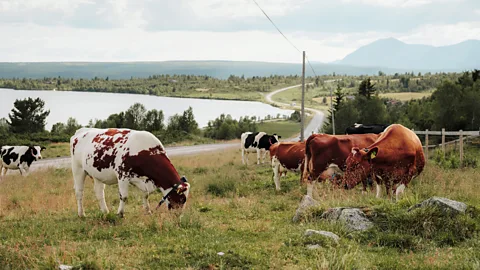
The Sun, descending from its lofty midsummer perch, soaked the valley in ochre. Rolling drumlins, lakes and birch forest glowed in the warm evening light, and the stillness of a remote Norwegian fell was broken only by a song: somewhere in the distance, a farmer was singing to her cows.
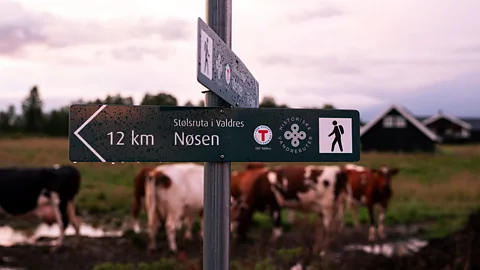
It was my third day on the Stølsruta, Norway's historical summer farming route, which traces the age-old rhythm of seterdrift – a seasonal agricultural practice dating to the 12th Century where cattle are driven from the lowlands to mountain pastures, roaming freely through alpine valleys, open grasslands and forests.
Deeply woven into the country's rural culture, seterdrift was added to Unesco's list of Intangible Cultural Heritage in 2024, recognising the musical, culinary and storytelling traditions that grew out of summer farming over the centuries – and its enduring role in Norway's folklore and cuisine.
Just three hours north of Oslo, the 65km route winds across the Stølsvidda plateau, home to Norway's largest remaining network of summer farms. It runs through open hills draped in heather and wildflower-rich pastures, soundtracked by cowbells and, at day's end, the echoing calls of kulning – traditional herding songs developed in Scandinavia centuries ago and still used to sing cattle home across the fells. Along the way, some stalls sell the rustic summer farm produce that embodies Norway's kosemat (comfort food), like brunost (rich brown cheese) and risrøt (sweet rice porridge). With limited accommodation en route, the Stølsruta is deliberately low impact, offering a select number of hikers a window onto a time when seasonal migration shaped everyday life.
 Harry Taylor
I departed the bus in Tisleidalen village, joined the trailhead and began climbing towards the plateau. The path was soon swallowed by deep forest – signposted as "grazing land" – and populated with sheep, cows and goats who, left to seemingly endless woodland, nonetheless return home each evening for milking.
After two hours, I emerged from beneath the forest canopy and the valley ahead suddenly opened up, framed by the imposing facade of Svenskeknippa, the trail's highest point. Smoke drifted up from the scattered farmsteads below, marking the first night's refuge: the quiet farming hamlet of Tyrishølt.
Støls – simple wooden lodgings and barns surrounded by grazing land – date back to at least the 7th Century when farmers began moving livestock uphill each summer to free lowland fields for vital crop cultivation ahead of the long Nordic winters. Some evidence suggests the practice may be far older.
"The first signs of grazing animals here date back around 4,000 years, when Norway had a Sun-worshipping culture," said Katharina Sparstad, a local farmer and head of the Norwegian Mountain Farming Culture Board (Norsk Seterkultur) who helped to campaign for the 2024 Unesco recognition. "People have discovered Bronze Age stone carvings where butter was likely melted as an offering to the Sun, and these are often found in summer farming areas."
 Harry Taylor
By the 12th Century, seterdrift was firmly embedded in Norwegian society. "The first written laws of Norway – Gulatingslova – describe summer farming in detail," Sparstad explained. "So we know that it had been established for many years before this."
As Norway's population grew in the 19th Century, summer farms became central to national food production. But by the turn of the century, emigration and the rise of modern farming rendered many støls unprofitable or abandoned.
"A hundred years ago, there were 100,000 summer farms," said Sparstad. "Now, there are fewer than 1,000."
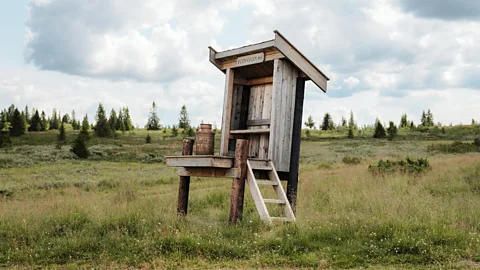
Reminders of the tradition lie all along the trail, from the faint clang of cowbells in the woods to the countless mjølkerampe lining the path – wooden milk stalls where farmers once loaded dairy goods bound for towns and villages below.
"Cheese and butter from summer farms were essential for survival in remote, marginalised areas," said Sparstad. "That's why summer farming is still so potent in people's minds, because it was so fundamentally important for survival."
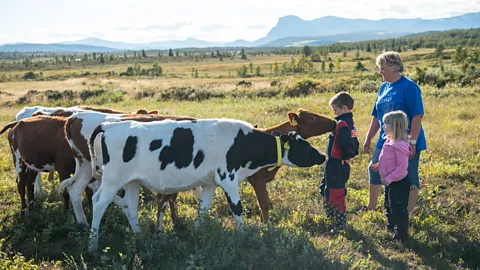
As the trail dropped back towards the tree line, sheets of wildflowers rose up, goats picking their way through them with quick, sure-footed steps. This freedom to roam and graze – one of the main principles of seterdrift – is what farmers here say produces both the rich milk and fragrant cheeses for which summer farms across Norway are known.
 Scanout.com
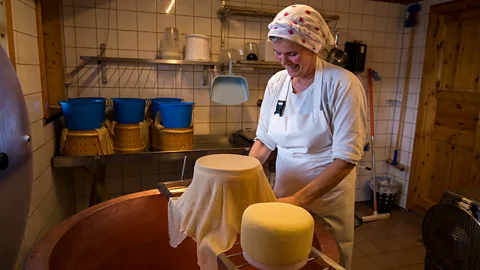
For generations, the work was overseen by women – dairymaids and wives who spent the summer months in the mountains to milk herds, churn butter and make cheese while their husbands stayed behind to tend the fields. In the solitude of the uplands, they formed close-knit, independent communities defined by deep care for their animals.
Plan your trip:
Getting there: The Stølsruta is best accessed from the town of Fagernes, reached from Oslo by coach. From there, take a local bus to the village of Tisleidalen, the starting point of the hike.
When to go: Summer farming along the Stølsruta runs from early May to mid-September, with the best weather from late June to August.
Where to stay: The local tourism board's website lists all accommodation and booking options.
Must see: Jaslangen, a small hamlet on day three of the hike, hosts the annual Jørn Hilme convention, Norway's oldest folk music festival, each summer.
"It's always been a female culture, and a very caring one," Sparstad told me. "Here the cows roam like wild animals, choosing the best grass, herbs and berries wherever they grow."
I stopped at Lena Lisjordet's farm, open to visitors during summer afternoons, where I was greeted with pancakes and brunost – a hallmark of resourceful støl kitchens.
"Summer farming has brought together a whole range of traditions – the music, the food, the storytelling," Lisjordet said. "And the respect we have for the land comes from our stories." She recalled old mountain tales that have been passed down through generations; legends of huldrefolk and vetter, spirits said to inhabit the Norwegian wilderness.
Some customs are still in practice today. "When we first arrive at the start of summer, we come up and clean, but first we must knock on the door to let the house spirits know we're back. And if we've been washing and throw out the water, we always say 'watch out!' to warn whoever might be passing by, unseen."
She smiled. "Of course, these are only stories. But they remind us that we are guests here – that we have a duty to care for this land and to never take it for granted."
 Scanout.com
Today, the low-impact model allows hikers to access the Stølsruta while carefully respecting seterdrift's fragile traditions. Accommodation must be booked in advance, and hikers are encouraged to follow the "Cattle Code" and the principles of Leave No Trace, keeping distance from livestock and using designated waste stations.
More like this:
• The controversial sweet that fuels Norwegians
• The 'cool Camino': Why hikers are heading north
• Norway's simple answer to greener, cleaner living
"I can see the change," said Lisjordet, discussing the increased interest in summer farming and nostalgia for older, simpler ways of food production. "People are coming here in search of something natural, to get an idea of how we used to farm."
"Many Norwegians have a connection to summer farming somehow," added Sparstad. "Even if they live in cities… it's a part of our shared culture."
Setting off later that afternoon, a tub of fresh yoghurt stuffed into the side of my backpack, I felt fortunate to have witnessed it as a visitor – both a landscape and a culture which, as with all of the very best hikes, unfolds gradually as you move at the pace of the land, just like people and their animals here have done for centuries.
--
If you liked this story, sign up for The Essential List newsletter – a handpicked selection of features, videos and can't-miss news, delivered to your inbox twice a week.
For more Travel stories from the BBC, follow us on Facebook and Instagram.
