Ireland's mysterious non-boozy football drink

 Johnny Lennox
Donegal's Football Special has been north-western Ireland's favourite underground non-alcoholic drink since the 1960s. And now the top-secret recipe is taking the nation by storm.
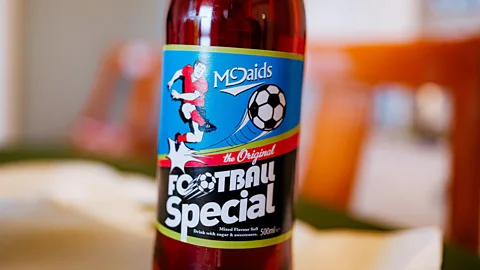
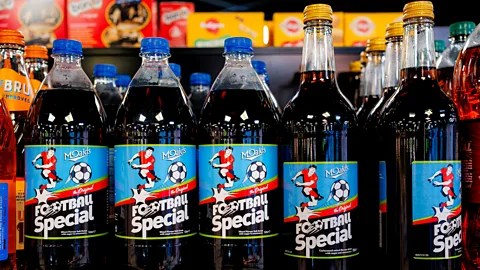
I'm at a cafe in Ramelton, Donegal – a tiny town in Ireland's northernmost county – and I have no earthly clue what I'm drinking. The taste of vanilla hits first, then caramel. Or is it ginger? Liquorice, perhaps? I scan the bottle. The only thing it tells me is its name.
This is Football Special, Donegal's beloved football drink, and its flavour is a deliberate mystery. Only two people in the world know its top-secret recipe – father and son Edward and Seamus McDaid, scions of the McDaid's & Sons soft drink company that created the refreshment 60 years ago.
Mystery aside, the "mixed-flavour soft drink" (as it's officially billed) has been wildly popular since its inception – and equally inescapable in the county's pubs and restaurants. "You always get it, no matter where you go," said Katie McCallum, receptionist at Mulroy Woods Hotel on the outskirts of Ramelton.
Despite its popularity, Football Special has remained Donegal's delicious secret, available only in remote north-western Ireland – until now.
The baffling concoction is seeing a surge in popularity across the country, with sales of Football Special doubling in five years, according to the company.
"Did we expect this?" said Edward. "Did we what?! No. We didn't."
 Johnny Lennox
A booze-less victory
As a Dubliner, I only first came across Football Special while holidaying near County Donegal's Slieve League cliffs. Its football branding piqued my curiosity; then so did its taste.
"I wouldn't even know how to describe it," said Ramelton bartender Jordan McDaid. "[It's like] cola, but there's a sweeter taste to it."
The legend of Football Special dates to the 1960s; a heady time in Ramelton history when its football club Swilly Rovers FC scored two Football Association of Ireland Junior Cup wins. In those days, it was Irish custom to celebrate football victories by pouring booze into trophies and drinking communally from the cup.
"My grandfather and his brothers were all heavily involved in the Swilly Rovers," said Seamus. Because the siblings felt that sobriety bred better athletes, "they wanted to create a product they could 'fill the cup' with that was non-alcoholic".
Football Special was a hit throughout Ramelton, soon filling pubs and shops across the county beyond footy season.
At his home on the fringes of Ramelton, Edward showed me a book of McDaid's 1960s drink recipes, handwritten by his father, James. One is an early formula for Football Special, then known as "Football Cup".
"I won't let you see the recipe," he said. "Sorry, I'd have to kill you!"
 Johnny Lennox
What the McDaids will say is that Football Special is comprised of seven undisclosed flavours, and that when it was invented, the company avoided disclosing formulas to protect them from replication. "Lots of people did imitate it from a flavour point of view," said Edward, "[but they] could never really crack it to the same extent."
Eventually, the mysterious ingredients "became a fun quirk of the product", said Seamus. "If there's a mixed element to it… it makes more sense to be secret."
Edward gave Seamus, now in his mid-30s, the recipe without fanfare, passing it on to him a few years ago while they were developing a Football Special-flavoured ice cream.
The duo takes the task of guardianship seriously. "My wife doesn't even know the recipe," said Seamus. He added: "Myself and my dad are not allowed to travel in the same aeroplane now." It's a joke. Maybe.
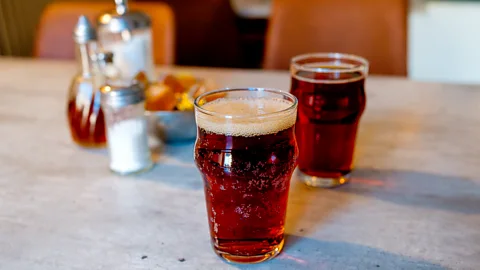
The McDaid brothers deliberately formulated Football Special to resemble beer, adding a heading agent to create a thick foam. "I like to say now we were the original zero-alcohol beer long before anybody else thought of it," said Seamus.
 McDaid's & Sons
Survival of the fittest
However unique, Football Special was just part of a wave of soft drinks developed in mid-20th-Century Ireland, often called "minerals" for their spring water content. The boom stemmed from a trend of teetotalism, said Dr Máirtín Mac Con Iomaire, co-editor of the book, Irish Food History: A Companion. "We had a huge number of pioneers in Ireland at that time". Mac Con Iomaire noted that Rock Shandy – an orange and lemon soda – was created in Dublin's O'Rourke's pub during the same era, while cider brand Bulmers launched apple drink Cidona.
By the 1980s, Football Special had become a top seller for McDaid's & Sons. Demand for their orange, lemonade and cola offerings dropped as global brands like Coca-Cola began to dominate the market for generic flavours. Irish competitors such as Cavan Cola and Dwan's Soft Drinks also fell by the wayside.
"That's why [we've] survived," said Seamus. "There's nothing else that tastes like Football Special."
The forgotten drink
Donegal has historically been referred to as Ireland's "forgotten county" due to its geographical remoteness, said Lyndsey Reynolds of Food Coast Donegal. But Seamus believes the drink's Donegal roots are central to its success. "The locals in Donegal are very proud and are very loyal customers."
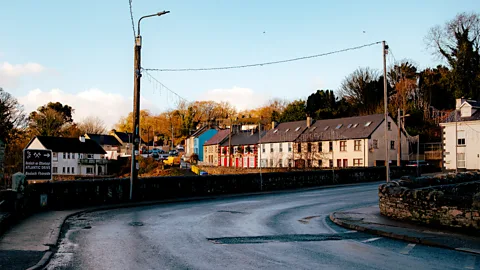
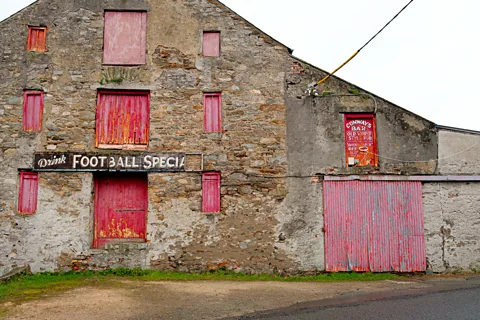
Ramelton is found on Donegal's rugged Fanad Peninsula. Located on the banks of the River Lennon, the town is characterised by handsome Georgian architecture, built during the heyday of its linen-bleaching and maritime industry. Football Special is everywhere, from the butchers to the pubs. A weathered sign hangs on the Victorian port buildings, encouraging passersby to "Drink Football Special".
 Johnny Lennox
Every local resident has a memory. "For special occasions… it was always Football Special that was drank," said Shauna Toland. It reminds Áine Friel of her grandfather's pub: "Every time we went in, we would always get the Football Special." McCallum remembers bringing it to university in Limerick. "It's like another connection to home, to Donegal."
Swilly Rovers players still pour it into the trophy after wins, added Anna McFadden, manager of the senior women's team. "It's usually done in the pub once the game is all wrapped up."
"It's a drink that is part of the fabric of the county," said Reynolds. It explains the drink's tagline: "World Famous in Donegal."
World famous in Ireland
Facing lagging sales, McDaid's & Sons bolstered its marketing strategy in 2020, building advertising campaigns around the drink's heritage and creating merchandise like branded "retro" jerseys. It worked: consumers throughout Ireland began seeking out the brand.
Mac Con Iomaire suspects the drink's wave of national popularity is part of a wider movement, with consumers favouring Irish brands as "a reaction to the globalisation process where people want to feel in touch with the local heritage, be it language, music, food or indeed Football Special". Case in point: in 2020 McDaid's & Sons sold 13,000 cases of Football Special. In 2025, they sold 27,000.
Many new devotees remark that Football Special reminds them of soft drinks they enjoyed in childhood. "People are nostalgic for Football Special who've never actually had Football Special," said Seamus.
 Johnny Lennox
Jason Corrigan, who owns Corrigan's Butchers in Dublin, was introduced to the drink by a former employee. "It's lovely," he said. "It just reminds me of my youth… sitting at home, having lemonade with ice cream thrown in on top of it."
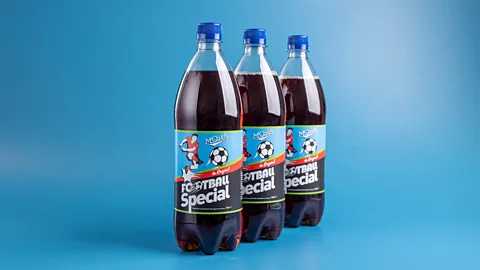
Having stocked Football Special ever since he first tried it, Corrigan reports that his customers buy two-litre bottles to take home with them.
Dubliner Rob Keogh discovered it in Bang Bang cafe in the city's Phibsborough district. "I like the idea of supporting a local soft drink producer, rather than the big multinational companies we generally associate with the sector," he said. "It tastes unique too, with hints of cola and cream soda and god knows what."
While football is integral to the drink's origin story, nowadays it has little bearing on how people drink it (aside from Swilly Rovers' post-match celebrations). "I would just drink it for the flavour," said McCallum. The mystery of its recipe is "part of its appeal", she suspects. "You can't really describe what it is to someone until they have to try it as well because it's such an unusual flavour."
More like this:
• The controversial sweet that fuels Norwegians
• Noche Buena: the Mexican beer you can only buy at Christmas
That this unique flavour is spreading nationwide is a source of pride for Donegal residents. "Everyone's probably really proud of it," McCallum said. "It's definitely a good thing for Ramelton and for Donegal."
Limited runs with supermarket giant Lidl are bringing Football Special across the Emerald Isle and beyond. Belfast's The Reporter bar now serves it, and you can have it with pizza at The Dough Bros in Galway. It's sold in stores in Glasgow and the US's East Coast, popular among members of the Irish diaspora. "Multiple generations are drinking it," said Isobel Williams, the company's marketing coordinator.
Its rise in popularity coincides with dropping alcohol consumption rates across Ireland. A report by Drinks Ireland found that non-alcoholic beer sales in Ireland shot up by 25% in 2024 and there has been a widely reported trend in eschewing alcohol among Ireland's Gen Z cohort.
"[It's] a good alternative to alcoholic drinks when you're out, definitely," said McCallum, herself a Gen Zedder. "If you're a designated driver, it is something you'd be more inclined to reach for." Ramelton bartender McDaid agrees: "It would be commonly drunk in the bar. Especially for people outside of the county, they come up to try Football Special.”
But wherever you sip that maddeningly elusive flavour, the best place to enjoy Football Special is still in Donegal; the wild and beautiful county that has sustained this drink over generations.
--
If you liked this story, sign up for The Essential List newsletter – a handpicked selection of features, videos and can't-miss news, delivered to your inbox twice a week.
For more Travel stories from the BBC, follow us on Facebook and Instagram.
