Noche Buena: The Mexican beer you can only buy at Christmas

 Heineken Mexico
Mexico is the world's largest exporter of beers. But one of its most beloved brews is only found inside the country and traditionally available for just a few weeks each year.
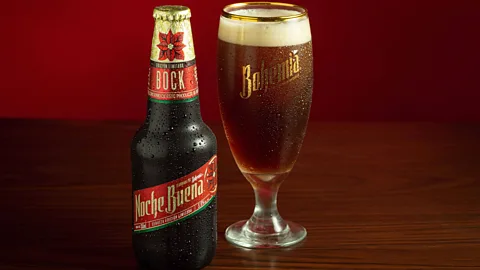
Many countries are known for their indulgent Christmas libations. Puerto Rico has its creamy, sweet coquito. In Germany, market stalls offer up spiced, warming Glühwein (mulled wine). And Mexico has a malty Bock-style beer called Noche Buena. Meaning "holy night" or "Christmas Eve", this beloved brew has traditionally only been sold for just a few weeks leading up to the holidays and is only available within the country.
Each winter From Merida to Monterrey to Mexico City, when the deep-red Noche Buena boxes hit the supermarket shelves it's "the unofficial start of the holidays – the moment when the Christmas season really begins", says Marie Sarita Gaytán, author of the book, ¡Tequila!: Distilling the Spirit of Mexico.
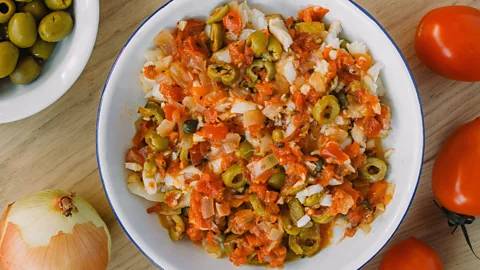
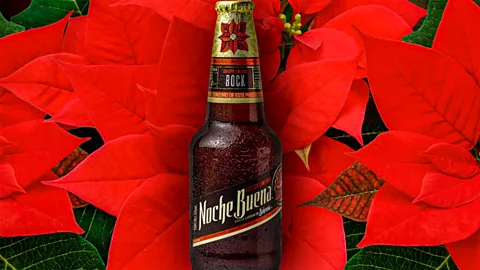
With its caramelly, burnt-coffee notes and robust 5.9% ABV, the dark-brown brew differs from many of Mexico's better known lighter beers. While a Pacifico pilsner might pair well with fish tacos in sunny Baja California, and a cold Modelo Especial is a welcome thirst-quencher for any grilled-meat alambres, Noche Buena's bittersweet flavour profile perfectly complements Mexico's seasonal staples like turkey, dark-green romeritos (wild herbs steepedin mole) or salty bacalao (codfish) – making it an ideal part of the country's classic Christmas meals.
 Alamy
Alamy"Its structure and body elevates the spiced flavours of Mexican cuisine," says Karla González, brand manager at Heineken Mexico, which now owns the Moctezuma brewery where Noche Buena was first created. In recent years, the bottler has extended the sales window from the end of October to the start of January.
For Mexican beer sommelier Guillermo Ysusi, Noche Buena has meant Christmas for as long as he remembers. "It's a very traditional beverage during those December weeks," he says.
But to understand how a full-bodied, bold beer with German origins became Mexico's de facto Christmas tipple, you have to understand the country's unique relationship to beer itself.
The origins of a yuletide tipple
Since 2010, Mexico has been the largest beer exporter on the planet. Its $6.8bn annual international sales are more than the second-, third-, fourth- and fifth-biggest beer-exporting nations combined. Mexicans drink a lot of it, too: downing an average of 65 litres per person each year.
 Alamy
AlamyYet, Mexico's love affair with beer only blossomed within the last 100 years. During the late 19th- and early 20th-Centuries, industrialisation devastated artisanal breweries in Germany, Europe's leading producer of beer. Scores of displaced beermakers subsequently embarked on something of a beer-making crusade, "[travelling] the world setting up breweries", explains Jeffrey Pilcher, author of the book Hopped Up: How Travel, Trade and Taste Made Beer a Global Commodity. "One such place was Mexico."
Small-scale breweries founded by Europeans opened all across Mexico, mostly producing top-fermenting ales. In 1875, Swiss brewer Santiago Graf introduced lager, effectively kick-starting Mexico's industrial beer production. His Toluca brewery began producing a variety of different beers, including Victoria in 1906, which is now Mexico's oldest continuously brewed beer.
Just before the turn of the 20th Century, the hoppy beverage was already popular among Mexico's new bourgeois, and drinking beer signified one's cosmopolitan status.
But its large-scale production would soon bring the drink to the masses. Other industrial breweries were established, notably the massive Cervecería Cuauhtémoc in Monterrey and Cervecería Moctezuma in Orizaba, Veracruz – which would become home to Noche Buena.
 Heineken Mexico
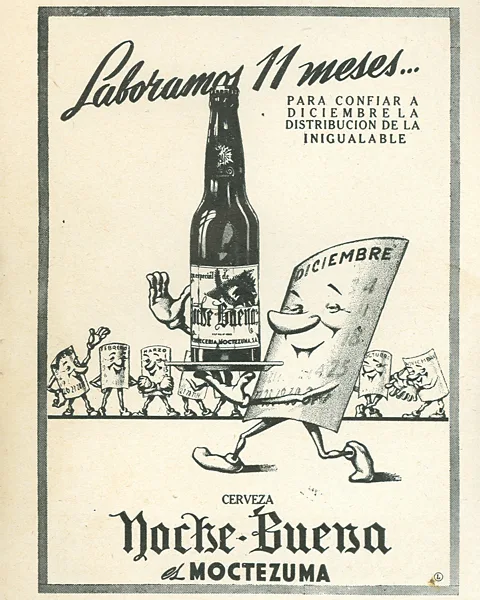
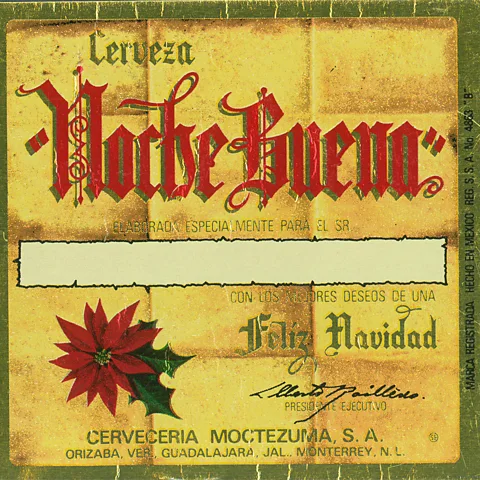
The possibly apocryphal legend of Noche Buena goes that, in 1924, German master brewer Otto Neumaier created the beer as a special Christmas house reserve in Veracruz for him and his friends before eventually sharing it with coworkers and family, in the European yule tradition.
This was Mexico's very first Bock, and word of its intense and unusual flavours spread. In 1938, the Orizaba brewery decided to release Noche Buena to the public as a seasonal specialty for the holidays – hence, its Christmas-themed name – and the tradition has stuck ever since.
More like this:
• Is Santa Claus buried in Ireland?
• The surprising wellness trend based on beer
• The European nation pioneering 'beer diplomacy'
According to Susan Gauss, professor of Latin American and Iberian Studies at the University of Massachusetts, a confluence of factors made Noche Buena even more appealing when it was eventually released to the public in 1938.
"More people had the discretionary income to purchase luxury items [compared to the preceding decades]," Gauss says. At this time, brewers and even the government promoted beer as a healthier alternative to liquor, claiming the drink was an essential part of a nutritious diet and healthy social life. Meanwhile, the agave-based pulque that had been so popular in Mexico previously was demonised, and beer would shortly replace it to become the nation's most popular alcoholic drink.
 Heineken Mexico
Between the drink's chocolatey, red-fruit aromas and toasted-malt flavours, the seasonal advertising worked. What's more, its limited Christmastime availability created a sense of mystique and desirability, and the limited run led to a new tradition that continues to this day: snapping up the beer as soon as it appeared on shelves.
Noche Buena today
According to Ysusi, during the Christmas season it's become a common tradition for Mexicans to buy Noche Buena by the crateload and offer it to friends and loved ones in their home.
Guille Gutiérrez, of the Adelitas Cerveceras Mexicanas national women's beer collective, remembers that when she was at university in the late 1990s, she and her friends would eagerly await the appearance of Noche Buena, and whoever first saw it would let the others know. "We'd rush to the nearest store and make sure we got them before they disappeared," she says.
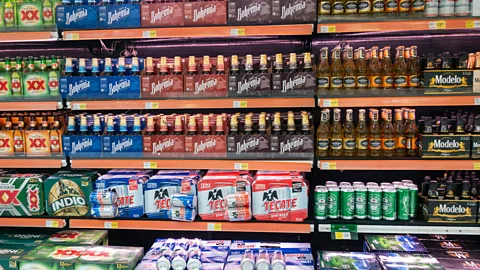
These days, as Mexican families and friends gather for Christmastime, you'll often see children swinging bats at festive piñatas while adults crack open a cold, wintry Noche Buena. Travellers curious to see what all the buzz is about can find Noche Buena at local cantinas, bars and stocked at the many Oxxo convenience stores across the country.
 Heineken Mexico
Today, anyone looking for the brew outside of Mexico will be out of luck. Even though Gaytán says that Noche Buena "means a great deal to the Mexican diaspora, not just in the US but all over the world", Heineken briefly exported the beer to the US beginning in 2011 but stopped in 2018, citing a lack of demand. "Growing up in Los Angeles, I still check grocery stores every year, just in case it makes a comeback," she says.
Perhaps this is why Heineken's main rival, Modelo-owner Anheuser-Busch, made its own Noche Buena competitor available in the US:Noche Especial, a high-strength amber lager similarly marketed for the holiday season.
But back in Mexico, as families lay their tables for feasts and the nine-night posada celebrations that wind their way through the streets with music, sparklers and fireworks, it's bottles of Noche Buena that will be toasted under the starry night's sky.
--
If you liked this story, sign up for The Essential List newsletter – a handpicked selection of features, videos and can't-miss news, delivered to your inbox twice a week.
For more Travel stories from the BBC, follow us on Facebook and Instagram.
