Italy's new nun-mapped pilgrim trail

 Alamy
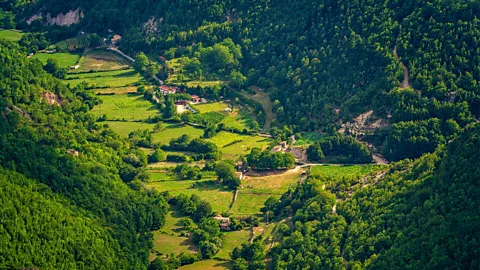
AlamyAs Italy grapples with overtourism, a series of ancient trails resurrected by nuns winds through the forgotten landscapes where Benedictine monasticism shaped medieval Europe.
Under a pale autumn sky, I set out to meet my old friend, Sister Katherine Adams; a Franciscan nun who lives in the village of Vallepietra on the outskirts of Rome. She had invited me on the Cammino della Santissima Trinità, an ecclesiastical pilgrimage through the forested landscapes of Lazio and Abruzzo where Benedictine monasticism first emerged in the 6th Century.
The network of four walking trails spans 18km and winds past pivotal, yet largely untouristed, Catholic sites of worship. Since the pilgrimage launched three years ago, more than 10,000 devotees have plodded these paths, and as I grabbed a coffee-filled thermos, a rose-scented rosary and a map, I, too, embarked on Italy's newest pilgrimage.
A sister act of love
Though these trails have existed for centuries, the santo cammino (holy trail) itself only came to life in September 2022, when Italy's strict pandemic restrictions were finally easing. Just as the nation prepared to brace for a new onslaught of overtourism in its cities and at many of its iconic religious monuments, Adams and her fellow nuns mapped the trails to offer young people an adventurous way to avoid the crowds while exploring some of Italy's lesser-known spiritual sites; rediscovering prayer and community along the way.
"Visitors rarely know what a sanctuary trail experience in Subiaco or Vallepietra means," Adams told me. "When they land in Rome, it's all about crumbling aqueducts, grand piazzas and Renaissance abbeys. But it's right here that a wealth of sacred relics and challenging hiking experiences converge."
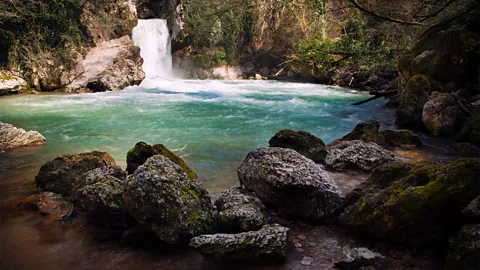
Unlike other modern pilgrimages, apps can't help you on this adventure. This network of trails is only partially signposted, forcing you to trust your instincts or locals who know the land by heart. Steep gorges require caution, reminding you to slow down. "People arrive exhausted by everyday life," Adams told me. "But here, their gaze changes. Their approach becomes quieter. They start bonding with others while singing litanies."
 Maria Salvati
The cradle of medieval Europe
Though the official starting point of the santo cammino is the Vallepietra Santissima Trinità – a sanctuary perched 1,373m high in the mountains – Adams suggested I begin my trek along the Cammino delle Abbazie, a moderately difficult 7km (4.3 miles) trail running from the town of Subiaco through the Monti Simbruini Regional Park to the Monte Cassino hilltop.
Plan your trip:
When to go: The Cammino della Santissima Trinità is open year-round but visit in late spring or early autumn for less crowds. Tackle the trails independently or by joining periodically-held tours run by local parishes and the Monti Simbruini Regional Park.
Getting there: From Rome, take the A24 highway to Subiaco or the "Roma-Subiaco" bus to Subiaco Piazza Falcone for the Cammino delle Abbazie and the Tourist Trail ST2. The SU19A bus to Vallepietra-Simbrivio leads to the Sentiero dei Pellegrini. Shuttles for Cappadocia are arranged via the local parish and depart from the car park above Santissima Trinità Sanctuary. It's two hours from Rome to Subiaco, so leave before 08:00 to avoid traffic.
Stay: Near Santissima Trinità Sanctuary, the Agriturismo Colle Tocci offers rooms, a garden and a family-run trattoria; try the traditional strozzapreti pasta and the cherry tart. Book at least a month in advance.
I arrived in Subiaco at first light; mist still hanging over the valley as I passed a group of hikers singing pastoral songs, followed by the echo of blackbirds.
Today, travellers come to Subiaco to raft the River Aniene and explore its medieval ruins. Yet, its role as the epicentre of Western monasticism is rarely acknowledged.
This sprawling countryside of ancient stone villas and chestnut woods is where Saint Benedict of Nursia founded his first monastic communities and where his new order of monks withdrew into a world of prayer, labour and discipline. Benedictine monasteries soon became centres of culture, crucial for preserving ancient knowledge – from Latin to theology – and nurturing the arts and architecture while pioneering the medicinal, agricultural and culinary techniques that shaped medieval Europe.
Along the trail is also the majestic 6th-Century Santa Scolastica monastery, a tribute to Saint Benedict of Nursia's sister; the founder of Benedictine monastic life for women. After immersing myself in its ancient library, I reached the end of the Cammino delle Abbazie, which segues into the 1.9km (1.1 miles) Tourist Trail ST2 leading to the 6th-Century Sacro Speco monastery.
Cars arrived in these remote hills in the 20th Century, but this trail is still the most evocative way to reach the monastic community; one of Italy's holiest sites for Benedictine spirituality. Built into a sheer limestone cliff, the monastery takes its name from the "holy cave" where Saint Benedict of Nursia is believed to have lived in a state of penitence. I followed the trail just like shepherds, hermits and nuns once did while carrying candles and provisions. The trail climbs steadily above Lake San Benedetto, as its cobblestone steps lead past views of ravines down below.
 Alamy
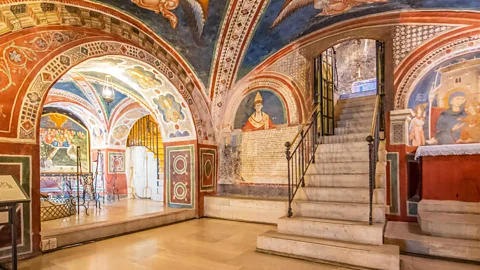
Alamy"Traces of spirituality are everywhere, from the old mule tracks anciently used to ferry supplies up and down the valley to the small apothecary room filled with handmade lavender soaps and glass bottles holding tinctures. This place is the result of a long tradition shaped by history and the Benedictine principle of ora et labora, literally 'pray and work,'" said Friar Maurizio Osb, who guides pilgrims through the medieval labyrinthine frescoed corridors and cloister. At Sacro Speco, monks spend a part of their day gardening, as they have done for centuries. Each plant is conserved to prepare their herbal products, now sold at the monastic apothecary filled with organic deodorants, peppermint sweets and their famous amaro benedettino, a bitter digestif made from gentian and wild fennel.
In the footsteps of ancient pilgrims
After four hours immersed in Subiaco's spiritual world, I took the local bus from Piazza Falcone to the Simbrivio Dam. There, I crossed stretches of low juniper scrub for a kilometre and finally arrived in Vallepietra, an 11th-Century village with 300 inhabitants. Its main square overlooks the lush Simbrivio valley, mirroring the Santissima Trinità Sanctuary carved high into the cliff on the opposite side of the stream.
I stopped for a plate of fettuccine with hearty lamb ragù and a board of local cheeses at the osteria "La Brace" da Pietro and followed the Sentiero dei Pellegrini (Pilgrims' Path) for another 5km (3.1 miles). This itinerary has long linked Vallepietra to the Santissima Trinità sanctuary and is now part of the newly mapped pilgrimage.
In the centre of the sanctuary lies the open-air altar that has been the fulcrum of the Sentiero dei Pellegrini since the 5th Century. Admiring the hagiographic frescoes etched into the ancient stone walls, I followed Adams and Sister Mary Ricci, a nun who has lived in the convent for more than 30 years, to the neoclassical Chapel of San Giuseppe; home to ecclesiastic masterpieces depicting St Bernardino of Siena and St John of Capistrano. I was spellbound by the central fresco of the Holy Trinity, which dates back to the 12th Century, famous for its Byzantine-influenced iconography thought to reflect early Eastern monastic symbolism.
"Symbolism is part of this hiking journey," Ricci says. "Step by step, you encounter simple wooden crosses carved with messages from pilgrims or candles lit in hope for a miracle."
 Alamy
AlamyA sweet return to the simple life
On my walk back to the trail's starting point, I passed locals selling cured meats and nutty mountain cheeses before boarding a shuttle to the village of Cappadocia; home to the fourth and final trail of the santo cammino.
Cappadocia is known as "the gateway to inland Abruzzo" and its historical 12th-Century centre is filled with stone houses and terraced pastures. Its slopes explode with Apennine edelweiss and orchids; paths are lined with wild strawberries, bilberry bushes and hawthorn.
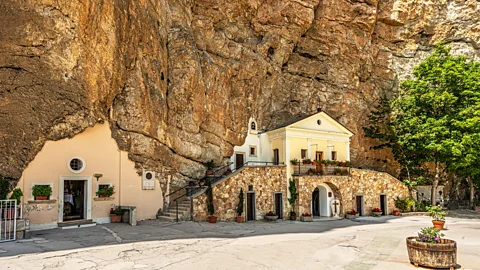
Once in the village, I embarked on the Madonna dell'Oriente; a short but steady 4km (2.5 miles) path that brings visitors to the eponymous white chapel perched on a grassy rise. It's a modest sanctuary, yet a reminder that devotion is woven into ordinary life as personal offerings, from ribbons to family photographs.
More like this:
• The 'cool Camino': Why hikers are heading North
Three years after the initiative's inception, Adams reflected on its impact: "I created the [santo cammino] when I saw many parents praying for their children. They seemed lost and struggled with the anxiety brought by life's demands", she said. "I'm happy to see that, in my own way, I contributed to make these young people happier. They often come back, for a walk or for advice. Along the way, multiple friendships and love were born."
As Italy continues to modernise, these ancient nun-mapped trails can teach us to embrace the sweetness of slowing down, the curative powers of nature and the simplicity of walking.
--
If you liked this story, sign up for The Essential List newsletter – a handpicked selection of features, videos and can't-miss news, delivered to your inbox twice a week.
For more Travel stories from the BBC, follow us on Facebook and Instagram.
