Mould alert over damp wall panels at new Aberdeen hospital

 BBC
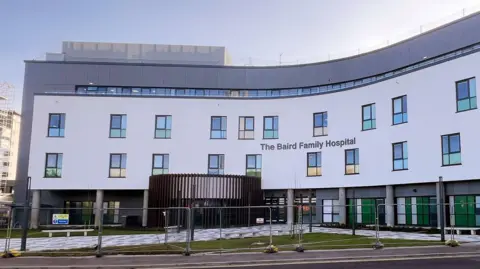
BBCWall panels and insulation at two new Aberdeen hospital facilities have had to be ripped out because of mould before the buildings receive their first patients.
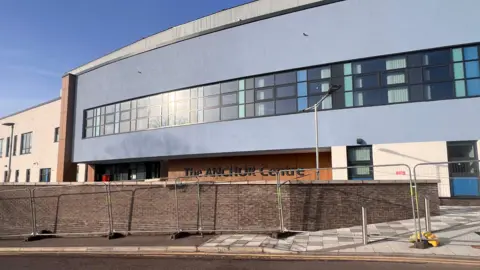
Infection control teams sounded the alarm at the Baird Family Hospital and The Anchor Centre cancer unit after construction materials were allowed to get wet, BBC Scotland News has learned.
The experts warned that dormant mould spores could reactivate when the overbudget and delayed facilities finally open, posing a health hazard for the lifetime of the buildings.
NHS Grampian said all the mouldy materials have now been removed and it was confident patient safety would not be compromised.
The new maternity hospital and cancer treatment centre were originally meant to open in 2020, but construction did not start until 2021, and costs have risen from £134m to more than £438m.
The Anchor Centre is currently scheduled to open in July, while the Baird Family Hospital is due to start receiving patients in June next year.
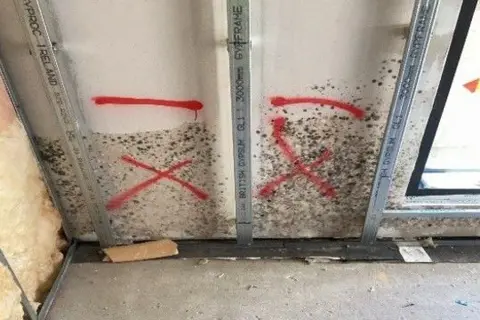

Problems with mould were first identified by infection control teams more than three years ago when they spotted that plasterboard panels had been fitted or stored in the buildings before they were fully watertight.
Inspections revealed that some panels were already mouldy and there was a risk that any materials that had got wet could be harbouring fungal spores, according to internal reports seen by BBC News.
Testing revealed the most common species was penicillium chrysogenum.
It is used to produce the penicillin antibiotic but it can cause allergic reactions or infections in people with compromised immune systems.
Particular concern was raised about the potential harms for cancer patients, babies in the maternity hospital's neo-natal unit and operating theatres.
The infection control experts recommended that any materials that had previously got wet be identified and replaced before the facilities start treating patients.
Will the new facilities be approved to open?
NHS Grampian's director of infrastructure, Alan Wilson, apologised for the delay in the opening of the two health facilities.
He said there had been water ingress at various stages during construction but they had set up a working group to look at the problems and sought advice from an independent expert, Prof Malcolm Richardson.
"All the work that was agreed has been carried out, and there's no further work to be done," he said.
Wilson said he was confident the infection control team would agree "once everything is in position" that the new facilities were safe to open.
The buildings will also have to be signed off by NHS Assure, a national body set up to improve the safety of healthcare facilities, he added.
The mould problem is one of a number of infection risk issues identified during construction of the new hospital buildings in Aberdeen. Others include:
- The cold water system - a chilled recirculating system - has been installed for the full building when guidance states this should only be considered for specialist units.
- There is a lack of guidance over design and maintenance for such systems in healthcare settings.
- The first floor treatment section of the Anchor Centre does not comply across all areas with ventilation standards for immune compromised patients.
- This treatment area originally allowed patient access to an open balcony, potentially allowing contaminated air to enter. Doors to this space will now have to be accessible to maintenance staff only.
Wilson said some changes had been made to the cold water system or "will be instructed" to allow the facilities to open on time.
He said a lot of remedial work had been done on the ventilation system, and it had now been signed off by the ventilation safety group.
Whistleblowing investigation
Problems with mould, water systems and ventilation have previously affected Glasgow's Queen Elizabeth University Hospital campus.
The NHS Greater Glasgow and Clyde health board is currently planning to rebuild an adult bone marrow transplant ward after water ingress and mould were found.
NHS Grampian has previously suggested that delays and overspends in the projects were due to having to apply lessons from the Scottish Hospitals Inquiry, which has been looking at water and ventilation issues in Glasgow and Edinburgh.
At First Minister's Questions on Thursday, John Swinney said the delays were because the same "cautionary approach taken in Edinburgh" was now being taken in Aberdeen.
However, a recent independent investigation into a whistleblowing complaint found that many of the mistakes in Aberdeen were due to failures to follow a long- established system for checking that hospital designs comply with infection control guidelines.
The investigation concluded that public money was wasted and patient safety was "negatively impacted" because a checklist-based system known as HAI-Scribe was not used properly in the early stages of the project.
"Implementing stage 2 HAI-Scribe at the design stage would have reduced overall project costs by preventing redesign and remedial works," it found.
The report also found that concerns were raised by the infection control team but these "were consistently downplayed, and there remain individuals who continue to minimise infection prevention risks."
Staff concerns 'ignored'
Scottish Conservative MSP Alexander Burnett claimed staff concerns had been dismissed and findings from a whistleblower investigation had been restricted.
"My understanding was these concerns had been raised by the infection control team, ignored, and had only subsequently have these been recognised," he told BBC Radio Scotland Breakfast.
"The concerns I have are the concerns being brought to me by working in the project who feel they are not being listened to.
"It goes beyond the mould, it's also about water treatment and ventilation, all of which are the same problems we have seen from the Queen Elizabeth Hospital."
Burnett, who represents Aberdeenshire West, said he hoped the timescale to open the Anchor Centre in July was feasible and would be achieved.
The Scottish government said it was in close contact with NHS Grampian and receiving regular updates.
A spokesperson said: "As the first minister has made clear, there is a delay to the Baird and the Anchor because we are prioritising patient safety and taking a cautious approach.
"We established NHS Assure to ensure any new capital projects in our NHS meet the safety standards we expect and ministers will only sign off once NHS Assure is content with the site."
