Flagship hospital bids to rebuild ward after mould and defects

 BBC
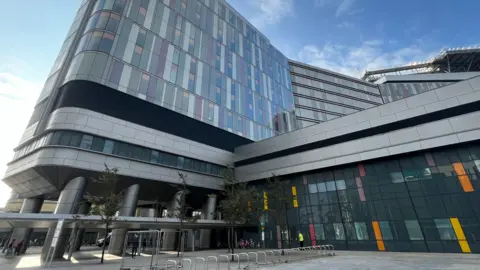
BBCNHS Greater Glasgow and Clyde is hoping to rebuild a cancer ward at Scotland's largest hospital after issues with mould and water problems.
The health board said the proposal was "necessary" for Glasgow's Queen Elizabeth University Hospital (QEUH) after ongoing defects disrupted the running of the adult bone marrow transplant unit.
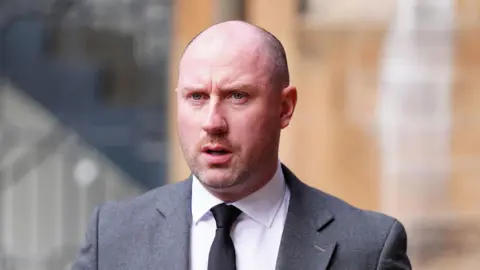
Health Secretary Neil Gray said the Scottish government would work with the health board on the plans.
The scandal-hit hospital is subject to a national inquiry which was ordered in 2019 after concerns about unusual infections and the deaths of four patients.
The probe examined mistakes made in the planning, design and construction of the QEUH campus, which includes the Royal Hospital for Children.
In January, NHSGGC admitted to the Scottish Hospitals Inquiry that infections of some child cancer patients were probably linked to a hospital water system.
A NHSGGC spokeswoman said the health board was now "confident of the water quality in the ward", however the ventilation system did not fully comply with NHS guidance.
She said exemptions were previously agreed in 2017 and ongoing risk mitigations continue to be applied as the ward remains open.
The spokeswoman added: "Patient safety remains central to everything we do.
"Due to ongoing infrastructure defects, we have closed a number of rooms in recent weeks to undertake both planned refurbishment as well as responding to a number of defects."
The health board said it was "necessary" to develop a proposal for a new unit which would be more resilient, fully compliant with legal guidance and provide greater patient, staff and public confidence.
"This project will take significant time and investment. However, we are now commencing this important work," the spokeswoman added.
"In the meantime, we continue to assess and take actions as necessary to maintain this vital national service."
Timeline of the hospitals controversy
The health secretary said the government would work with NHSGGC as it developed the plans "to ensure patient safety and high-quality service are at the forefront of the proposal".
He added: "It is reassuring that NHSGGC have proactively approached ARHAI (Antimicrobial Resistance & Healthcare Associated Infection Scotland) and NHS Scotland Assure colleagues for support with an options appraisal around the unit as a precautionary measure."
The health board previously told the Scottish Hospitals Inquiry that it accepts many aspects of the design, build and commissioning of the hospital campus were flawed.
It said there was legal action against the main building contractor Multiplex to try to recover £90m.
"NHSGGC did not receive the building it asked or paid for," it added.
Multiplex has previously said in evidence that infection problems arose because of design choices by the health board or poor maintenance.
NHSGGC accepts there was poor supervision of contractors and a lack of in-house expertise, including at board level, for a project of such complexity.
 PA Media
On Thursday, Gray told the Scottish Parliament that mould had been found in one of the closed rooms in the ward.
And earlier this month, First Minister John Swinney confirmed that a red alert had been issued for one of the wards at the hospital.
He said the Scottish government was first told of an amber alert on the ward on 26 February.
It was escalated to a red warning on 5 March before returning to amber.
However he said the rise in alerts are primarily due to media interest in the hospital rather than a direct threat.
Last month, NHSGGC announced a new oversight group to boost public confidence in the safety of the QEUH.
And in January it emerged Scotland's independent prosecution and deaths investigation service was investigating seven deaths for potential links to the hospital environment at the QEUH.
