Superhuman efforts saved Welsh NHS from collapse - Covid inquiry finds

 PA Media
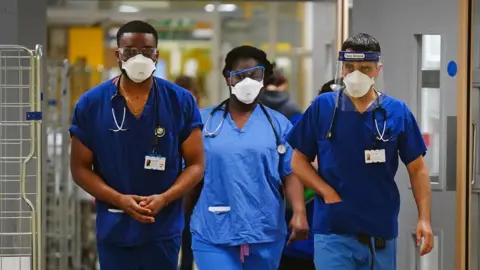
The Welsh NHS came "close to collapse" during the pandemic, according to the Covid-19 public inquiry, as healthcare systems across the UK "coped, but only just".
The inquiry's chairwoman, Baroness Hallett, said "on a number of occasions they teetered on the brink of collapse and only coped thanks to the almost superhuman efforts of healthcare workers".
The report, which looks at the impact the pandemic had on the NHS in all parts of the UK,recommended capacity be increased in urgent and emergency care in Wales.
The findings come as the latest waiting times figures for Wales showed a record drop, but remain 54% higher than they were pre-pandemic.
The inquiry added there had been "wide variation" across the UK in addressing the treatment backlog.
The report said that Wales, as well as Northern Ireland, was "clearly struggling" with "very substantial waiting lists" because all parts of the UK paused non-emergency care during the pandemic.
The report added that where post-pandemic waiting times were more than one year in England and more than two years in parts of Scotland, they were "consistently over two years" across Wales and Northern Ireland.
Figures out on Thursday show just over 5,200 pathways were waiting more than two years in Wales.
The inquiry heard from Wales' Chief Medical Officer at the time of the pandemic, Sir Frank Atherton, who said the NHS had not had "enough capacity to be able to respond in a way that we needed it to".
He also said Wales had been "behind the curve on digital records", making it more difficult to identify vulnerable people.
Baroness Hallett's third report also found that:
- There were concerns around availability of personal protective equipment (PPE) for NHS staff in Wales in early 2020, with one consultant telling the inquiry "no PPE was provided"
- Letters advising vulnerable people to shield were delayed by two weeks due to IT limitations, 13,000 letters were sent to wrong addresses, children with Down's syndrome received letters by mistake
- The Welsh government should have clarified visiting rules for fathers and birthing partners "much earlier"
- In December 2020 Merthyr Tydfil's Prince Charles Hospital came close to declaring the highest level of pressure
- One critical care doctor in Wales said some patients who otherwise may have been admitted to intensive care were not, as there was "not enough space to 'give people a go' who had a very remote chance of getting better"
 PA
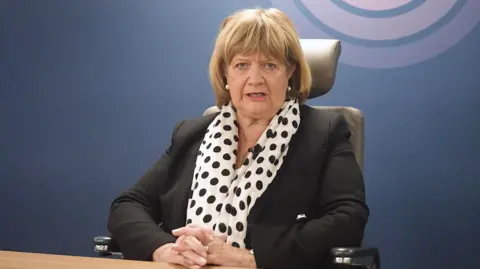
PAAccording to Baroness Hallett, the UK entered the pandemic "ill-prepared and with its healthcare systems in a parlous state".
"The healthcare systems coped with the pandemic, but only just.
"On a number of occasions, they teetered on the brink of collapse and only coped thanks to the almost superhuman efforts of healthcare workers and all the staff who support them," she said.
"Despite these efforts, some patients did not get the level of care they would usually receive.
"The enormous strain placed upon the healthcare systems was unprecedented."
The report makes a total of 10 key recommendations including "increasing capacity in urgent and emergency care and ensuring that hospitals have the ability to implement surge capacity".
First Minister Eluned Morgan welcomed the report and said: "The pandemic placed significant pressures on health and care services in Wales and across the UK.
"We acknowledge the considerable impact this had on patients, staff, the wider workforce and families affected by Covid-19."
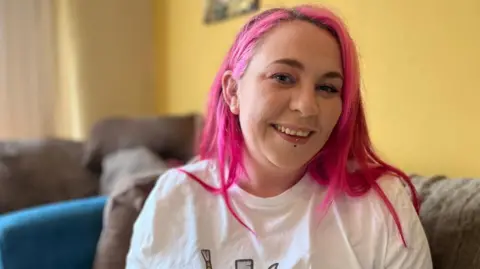
Jenny Hughes-Cooke said she waited 13 years for exploratory surgery to confirm suspicions she had endometriosis.
She was given the go-ahead for that surgery in November 2019.
Then there were more than 26,000 women waiting to see a specialist in gynaecology in Wales and she was told to expect a six-month wait.
The pandemic meant in reality her wait was 28 months.
"I didn't really consider how the pandemic would have an effect on gynaecology - it's a totally different discipline."
She finally had surgery in March 2022, but by then, she said, her symptoms had spiralled.
She said: "I was in pain every single day and it was exhausting. I couldn't be there for my son or partner like I wanted to.
"It was really, really difficult to manage being a mum, a partner, having a career and being me."
The number of women referred to gynaecology in Wales peaked in November 2024 at almost 53,000 - double when Hughes-Cooke was first diagnosed.
They have fallen, but were still at 46,289 in January.
'Exhausting'
Hughes-Cooke said her pain affected her ability to work and she went through three or four jobs while waiting for surgery.
When she was finally given a surgery date, she was told to self-isolate for eight weeks beforehand, which put "a huge strain" on her relationship with her area manager.
"Two days after my surgery I had a phone call to say they couldn't justify me having any more time off," she said.
She was in a probation period, said she had to leave.
Hughes-Cooke needed more surgery in January 2026, and said the effects of the pandemic were still felt, as follow-up appointments, scans and treatments all meant joining another waiting list.
Three years after being referred for pain management, she is yet to start treatment, she said, adding it was a common theme among the Endometriosis UK support group she runs in west Wales.
The Royal College of Surgeons Wales' director, Prof Jon Barry, said the system was still under pressure.
"We've got very high numbers of patients waiting at home hoping to be called in for surgery and these patients are in pain," he said.
"They're at the end of their tether, they want things to happen more quickly and unfortunately we're not delivering that."
He acknowledged the pandemic had a "massive" influence on the NHS across the UK, but said: "Waiting lists were high before the pandemic."
But he added: "If we don't act more ambitiously here, the waiting lists are only going to get worse."
Pre-pandemic figures from February 2020 showed there were 463,402 patient pathways waiting for NHS treatment in Wales.
At their peak in the autumn of 2024 they rose to more than 800,000, but latest figures out on Thursday showed they have since dropped to 713,048 (January 2026).
He welcomed the downward trend but said "we need to be more ambitious".
"My concern is that if we don't act more ambitiously here, the waiting lists are only going to get worse.
"If we don't introduce surgical hubs and look at our surgical workforce - and across the NHS - that waiting list will deteriorate."
Families 'vindicated and deeply frustrated'
Covid Bereaved Families for Justice Cymru's Catherine Griffiths said: "We welcome this report and feel vindicated that the failures we have consistently raised have now been formally recognised.
"While it is important to see our experiences acknowledged as unacceptable, we are disappointed that the recommendations lack strength and urgency."
The group's Sam Smith-Higgins said: "This report will leave our bereaved families feeling both vindicated and deeply frustrated."
A Wales-specific Covid inquiry, he said, was essential.
"There must be a deeper dive into what went wrong in Wales so that meaningful accountability and change can follow," he said.
What is the response from political parties?
The Welsh Conservatives said a Wales-specific inquiry was the only way to learn proper lessons about the pandemic.
Their leader, Darren Millar, suggested many people believed ministers in Wales made different decisions to other parts of the UK for the sake of difference.
Plaid Cymru backtracked on its commitment to a Wales-specific Covid inquiry if it wins May's Senedd election.
The pledge was made in the party's 2024 general election manifesto and repeated in the Welsh Parliament in 2025.
Party finance spokeswoman, Heledd Fychan, said an investigation was proposed, but not a full inquiry.
Welsh Liberal Democrats leader Jane Dodds said the party continued to call for a Wales-specific inquiry.
"Families in Wales who lost loved ones and those who still to this day are suffering the effects of long Covid deserve to know what lessons have been learned by the Welsh government."
Reform's James Evans said: "The Welsh public were badly let down by the Welsh Labour government during Covid.
"It is clear that excessively bureaucratic NHS structures and poor data-sharing meant that the Welsh government was slow to inform those identified as vulnerable and even then, over 10,000 people's letters were sent to the wrong address."
Wales Green party spokesperson for health and social care, Ian Chandler, said the report showed healthcare systems across the UK were" ill-prepared and over stretched".
"We see that as too many years of austerity that has been imposed on public services across the UK.
"We need greater investment in our social and healthcare systems so that we can recover from the austerity years and the pandemic."
