Summary

  • The NHS came close to collapse during the height of the pandemic but narrowly avoided it due to the efforts of healthcare staff, the Covid inquiry finds

  • Staff put themselves at exceptional risk because of a lack of suitable personal protective equipment, the report says

  • Both Covid patients and those needing care for other conditions were failed, the report finds, with people deterred from accessing healthcare in order to ease the pressure on the NHS

  • Visiting restrictions meant some patients died without loved ones and very vulnerable patients were left without support, including children in mental health units, women using maternity services and people with dementia

  • The inquiry's chair, Baroness Heather Hallett, summarises the report's findings as: "We coped, but only just"

  • It follows emotional testimony from dozens of healthcare workers about how Covid affected them and their patients - and the agonising decisions they faced as the virus spread

  • Almost 227,000 people died in the UK from Covid between March 2020 and May 2023, when the World Health Organization said the "global health emergency" was over

  1. Hallett: Hospitals had to ration supplies of vital equipment, including oxygenpublished at 12:37 GMT

    Beyond a shortage of staff, many hospitals faced shortages of vital equipment, Hallett says next.

    Some hospitals "nearly ran out" of oxygen and had to ration supplies, while others needed more ventilators and kidney dialysis machines for critical care patients.

    Clinicians were "worried" about a lack of guidance on how to ration, and how to prioritise patient care if they entirely ran out of key equipment, she says.

    Despite poor health conditions, some people were not admitted to intensive care, which had "devastating consequences", she says.

    Many that did not come to hospital still needed medical advice, Hallett says. But the pressure on the 111 services led to "long delays" and "calls abandoned", and remote GP appointments "may have led to some conditions being missed" - particularly for those with additional needs, such as disabled or deaf people.

  2. NHS recruitment initiatives 'not enough' to bolster critical care staff - Hallettpublished at 12:29 GMT

    Hallett turns next to staffing pressures. That includes pressure on ambulance and 999 services.

    She says waiting times for even the most urgent calls grew and crews were unable to discharge patients until a place became available in a hospital department.

    With the pressure inside hospitals "so great", it could take many hours - putting crews and patients at increased risk.

    Hallett explains there were recruitment initiatives, and a campaign was also established encouraging retired staff to return where possible.

    But it was "not enough" to bolster the numbers of critical care staff.

    At the end of March 2020, she says, patient-staff ratios were reduced to the point where rather than one-to-one care, a single intensive care unit nurse could be responsible for up to four critically ill patients.

    One nurse told the inquiry all you had time to do was "manage the alarms", Hallett says.

  3. Paused cancer screenings led to missed diagnosis and loss of life, inquiry chair sayspublished at 12:23 GMT

    Cancer screening programmes in Scotland, Wales and Northern Ireland had to be paused because of the pandemic, says Baroness Hallett.

    She says she recognises "this was not a decision taken lightly" but it "came at a high cost".

    A lack of screening for colorectal cancer, for example, led to "missed and late diagnoses, longer waits for treatment and ultimately loss of life".

    The postponement of treatment for patients with life-threatening and life-changing conditions shows the "extreme pressure on the system", she says.

    Caring for Covid patients and preventing system collapse required "desperate measures", she adds.

  4. NHS 'overstretched and understaffed' before pandemic hit - Baroness Hallettpublished at 12:20 GMT

    Baroness Hallett continues her remarks, outlining that the message to stay at home, protect the NHS and save lives was designed to protect the healthcare system from becoming overwhelmed.

    However, she says that when the pandemic arrived, systems were already "overstretched and understaffed".

    She says this "fragility" had profound consequences as there was an increase in people seeking treatment for Covid.

    Extraordinary steps were taken, she continues, including delaying operations and discharging medically fit patients more quickly.

    She cites the example of those waiting for hip replacements, who had to live in constant pain with decreased mobility. For some, their condition deteriorated to the point where surgery was no longer an option.

  5. UK healthcare system 'coped, but only just', says inquiry chairpublished at 12:15 GMT
    Breaking

    The chair of the Covid inquiry, Baroness Heather Hallett, is now giving a statement.

    She says she can summarise the impact of the Covid pandemic on the UK healthcare system as "we coped, but only just."

    The pandemic came at a huge cost for patients, their families, as well as to non-Covid patients "who were not seen and treated", she says.

    "Collapse was only narrowly avoided" because of the efforts of healthcare workers, and some other patients "did not get the level of care they would normally have received".

  6. Hospital visiting restrictions were devastating and applied inconsistently, report sayspublished at 12:08 GMT
    Breaking

    Jim Reed
    Health reporter, reporting from the inquiry

    The report also talks about one of the most controversial policies of the pandemic - hospital visiting restrictions in lockdown.

    It says those rules meant some people died without the comfort of being surrounded by their loved ones, while other very vulnerable patients were left without vital support.

    That included some with dementia or a learning disability, and children in mental health units, as well as some women who needed baby scans or other maternity services.

    The report doesn’t pull its punches on this point saying it had a “devastating impact” on bereaved family members, as well as mothers who had to receive difficult news about pregnancy complications alone.

    What’s more it says that the visiting rules were sometimes applied inconsistently leaving many loved ones feeling that they had been unfairly treated when visits were refused.

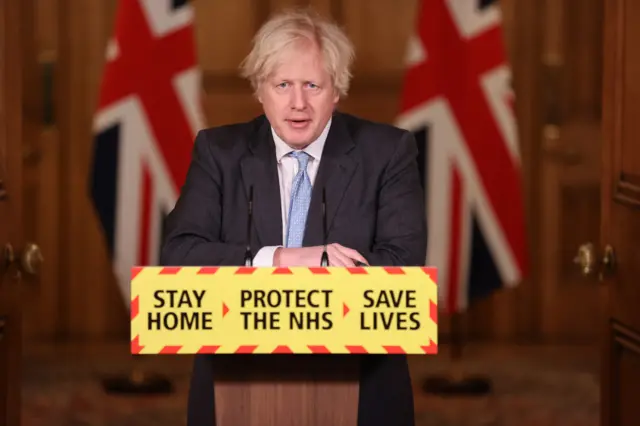
  7. 'Stay at home' advice suggested NHS was closed - with diagnoses missedpublished at 12:05 GMT

    Nick Triggle
    Health correspondent

    Boris Johnson in front of a sign saying 'stay home, protect the NHS, save lives'Image source, PA Media

    Stay Home, Protect the NHS, Save Lives was a powerful slogan in the early stages of the pandemic.

    But it came at a cost, the inquiry suggests, by inadvertently sending the message that health care was closed.

    The report notes there was a decline in attendances to A&E and other settings for emergencies, including heart attacks.

    People, it says, were deterred from accessing health care because they did not want to overburden the NHS.

    Disruption to cancer screening and a drop in people presenting with the signs of the disease meant there were missed and late diagnoses and increased death rates.

    Meanwhile, the cancellation of elective care - which includes things such as hip and knee replacements - had a “debilitating effect” on patients’ lives and mobility.

    In some cases, it led to such a deterioration that patients could no longer have surgery.

  8. Austerity left NHS in 'precarious position' as Covid hit - with not enough beds or staffpublished at 12:03 GMT

    Nick Triggle
    Health correspondent

    We're still looking through the Covid inquiry's report.

    In the decade leading up to the pandemic, the NHS had seen its budget squeezed on a historic level.

    Spending rose, but only just, despite fast-rising demand because of the ageing population and an increase in people with long-term health conditions.

    The inquiry says this meant the NHS entered the pandemic with not enough beds or staff. It was a precarious position as Covid hit, it says.

    The situation meant there was little room to expand and cope with the surge in Covid patients, particularly in the first wave, which led to huge demand for oxygen, ventilators and kidney dialysis.

    During the pandemic, intensive care staffing ratios were diluted, compromising care.

  9. NHS staff put themselves at risk, with PPE unsuitable for women and ethnic minoritiespublished at 12:01 GMT
    Breaking

    Nick Triggle
    Health correspondent

    The lack of protective equipment for staff was something that became clear in the early stages of the pandemic, the report says.

    Supply levels got “dangerously low” – the inquiry was told at one point the NHS was just days away from running out of key items, such as masks, gloves and gowns.

    The UK was not alone in this, the inquiry says, but it was critical of the approach taken, with specialist masks designed to fit certain face shapes, to the detriment of ethnic minority staff and women.

    It says staff had to work in inadequate and unsuitable PPE and put themselves at risk to care for patients.

  10. Hard-hitting report lays bare how NHS came close to collapse and patients were failedpublished at 12:00 GMT
    Breaking

    Nick Triggle
    Health correspondent

    The Covid inquiry’s third report covers a wide-range of issues in detail, but it has one clear conclusion – the NHS came close to collapse.

    The report says it “only just coped”, as it set out how overwhelmed the healthcare system was.

    It says both Covid patients and those needing care for other conditions were failed.

    It also criticises the lack of protective equipment for health workers and how an under-resourced NHS entered the pandemic with not enough beds or staff.

    Visiting rules were inconsistent, and it questions whether it was right women had to give birth alone and people with disabilities weren’t able to be supported by carers.

    Collapse was only narrowly avoided, it says, because of the extraordinary efforts of staff.

    We'll bring you more on this in the next few moments.

  11. 'No closure, no peace': Bereaved families torn apart by distancing rulespublished at 11:33 GMT

    More than 227,000 people died with Covid as a cause on their death certificate between March 2020 and May 2023, when the World Health Organization declared an end to the health emergency.

    In total, 42 relatives of those who lost their lives have given evidence since June 2023, with 12 chosen to testify over the final two days of the inquiry's hearings.

    The inquiry heard how families were "torn apart" by social distancing rules, which prevented them from being with their loved ones at the end of their lives.

    "My mum left in an ambulance and I never saw her again. The doors shut and that was it," said Glen Grundle from Col­eraine in Northern Ireland, whose mother Milda, 73, died in April 2020.

    "I have no closure and no peace over it."

    You can read more here from families who testified at the inquiry.

    A graph shows the spike in the number of people dying of covid between March 2020 and May 2023. Big spikes appear in March 2020 and then again in December 2020
  12. 'Did we protect the NHS? Did we save lives?' - the questions the inquiry hopes to answerpublished at 11:15 GMT

    Jim Reed
    Health reporter, reporting from the inquiry

    an ambulance drives past a poster saying 'stay home, protect the nhs, save lives'Image source, EPA

    The witness hearings for this part of the inquiry were held over 10 weeks in the autumn of 2024.

    Ninety-five people gave evidence in west London from hospital cleaners, to doctors working in Covid wards, to scientists and government ministers.

    At the start, lead counsel Jacqueline Carey KC said the focus would be on that well-known phrase from the pandemic: Stay at Home, Protect the NHS, Save Lives.

    “Did we protect the NHS? Did we save lives? And perhaps as importantly, why did we need to protect the NHS and at what cost?” she said.

    “What cost, for example, to those people who did not have Covid, but rely on healthcare systems to treat other conditions?

    “And what cost to the families of all those patients and healthcare workers who died?”

  13. 'A scene from hell, not captured in data or news bulletins'published at 10:59 GMT

    Jim Reed
    Health reporter, reporting from the inquiry

    Many hours of testimony to the Covid inquiry in autumn 2024 offered our clearest understanding yet of what was really going on at the height of the pandemic.

    I was at the inquiry the day Prof Kevin Fong calmly talked through more than 40 visits he led to intensive care units, his voice cracking at times.

    What he discovered at the hospitals he visited could not be found in the official NHS data or the main evening news bulletins at the time, he said.

    “It really was like nothing else I’ve ever seen,” Prof Fong said. “These people were used to seeing death but not on that scale, and not like that.”

    In late 2020, for example, he was sent to a midsize district hospital somewhere in England that was “bursting at the seams”.

    One night, Prof Fong and his team helped to transfer 17 critically ill patients to other NHS sites – an emergency measure unheard of outside the pandemic.

    “It is the closest I have ever seen a hospital to being in a state of operational collapse,” he said.

    “It was just a scene from hell.”

    You can read more about the testimony provided to the inquiry here.

  14. PPE, cancelled operations and pressure on hospitals - what will today's report cover?published at 10:57 GMT

    Jim Reed
    Health reporter, reporting from the inquiry

    a doctor stands in the corridor of ealing hospital, west london. nurses and other practitioners can also be seen looking at documents and reviewing a monitor.Image source, PA Media

    This third report from the inquiry will look at what happened to the NHS and health services as the virus spread around the country.

    At one point more than 6,000 intensive care beds were full across the UK, well above the pre-Covid capacity of 3,848.

    It will examine the pressure on hospitals, and how close the NHS system came to falling over.

    It will ask how well-protected doctors and nurses were at the time and whether the masks, gowns and gloves they were given were fit for purpose.

    It will look at how Covid patients were treated, particularly those with learning disabilities or mental health conditions.

    And it will investigate the impact on other hospital patients who had operations cancelled, or who had to give birth alone in lockdown with visitors banned at the time.

  15. After much emotional testimony, the Covid inquiry will soon set out the pandemic's impact on NHS and patientspublished at 10:54 GMT

    Jenna Moon
    Live editor, reporting from the inquiry

    You join us today at the Covid inquiry in west London, where a report into the pandemic's impact on the healthcare sector will be published in just over an hour.

    It's the third report from the inquiry - the first two were extremely critical of the government's preparations and political decision-making across the UK.

    This report follows testimony from dozens of healthcare workers, from cleaning staff, to Covid ward doctors and ministers.

    Healthcare staff described staff shortages and being "thrown into the deep end", often in roles that they did not normally have exposure to.

    The inquiry heard that nurses in critical care who used to look after patients on a one-to-one basis were forced to care for as many as six people at once.

    I'm at the inquiry with health correspondent Nick Triggle and health reporter Jim Reed to look through the report's findings. As soon as we know more, we'll bring updates to you right here.