Horse abuse fears as hay prices double

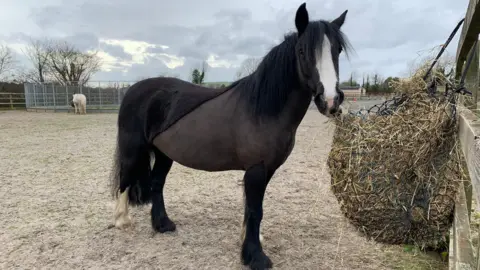 HorseWorld
More horses could be abandoned or abused amid the soaring cost of hay, a charity chief has warned.
Jo Coombs, CEO of Bristol-based charity HorseWorld which looks after rescued horses, ponies and donkeys, told the BBC a shortage has seen the cost of hay double, with an average bale rising from about £4.50 to £10.
She said the percentage of horses signed over to the charity by "desperate owners" unable to afford to keep them had risen from 53% of all the horses rescued in 2024 to 67% in 2025.
"We're here for the horses who are abused, abandoned, neglected and my fear is that we'll see a bit more of that because people just can't afford to feed the horses what they should," Coombs said.
Coombs added high temperatures and low rainfall throughout the summer of 2025 meant yields of hay - essential for feeding livestock like horses through the winter - were down about 75%.
"There's a lot of individuals struggling with the cost of keeping their own horses this year," she said.
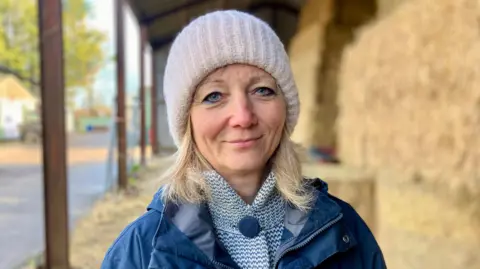
"Since November we have received 17 calls from people who just can't afford to keep their horses any more. We don't know if that is one horse or multiple horses and we are currently at capacity."
The charity is now having to fundraise in an effort to subsidise the "massive shortage", with their annual feed bill predicted to reach £25,000.
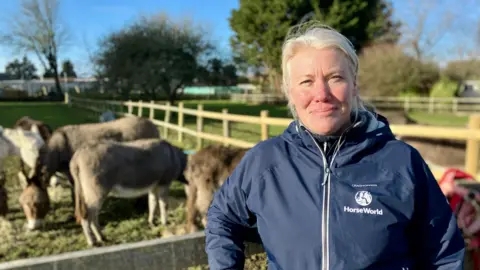
Sarah Hollister, head of equine welfare at HorseWorld, explained horses would naturally eat for up to 18 hours per day, with most of this grazed in fields.
"We can't skimp on food, we can't cut corners," she said.
"The horses are already vulnerable, they've been rescued, so it's such a fundamental part of their health to keep their bellies full and to keep them happy."
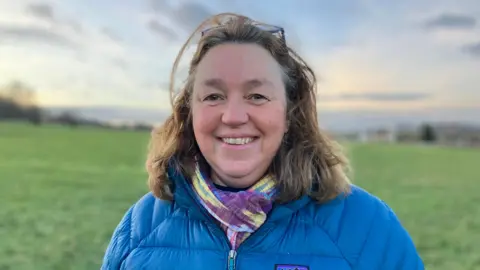
Professor Nicola Cannon, professor of agriculture at the Royal Agricultural University, said the impact of extreme weather on feed supply had been felt across the agricultural industry.
"In the agricultural sector some farmers sold beef animals early because the prices were quite good but also because they were looking forward to the winter period and realising they were going to have a shortfall in the amount of forage they have," she said.
"With climate change we kind of appreciate we're going to have hotter, drier summers and the real challenge for farmers is how they adapt, how they make their farms more resilient."
Follow BBC Bristol on Facebook, X and Instagram. Send your story ideas to us on email or via WhatsApp on 0800 313 4630.
