Robot assisted surgery reaches 10k procedures

 BBC
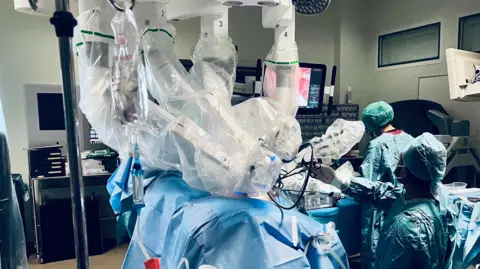
BBCA hospital has carried out its 10,000th procedure using a specialist robotic arm.
The equipment has been used at Southmead Hospital in Bristol since 2008, when it became one of the first places in the UK to start using a robot for prostate cancer surgery.
Over the next ten years, NHS England expects to use the technology to carry out half a million procedures, including hysterectomies and bladder surgery, to help cut waiting times.
Patient Lisa Brittain underwent a procedure at Southmead, and told the BBC she "had images of R2-D2", a character from Star Wars, before having surgery.
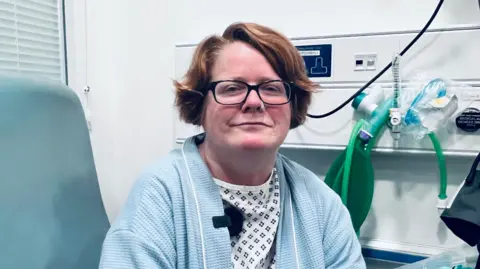
"It doesn't make a difference to me, how I feel [knowing it's a robot]. I completely trust what's going on, it's quite amazing really," she added.
During operations, the robotic arm is controlled by the surgeon at a console using a 3D camera, giving them precise control of their instruments.
NHS England said those undergoing robotic surgery are normally able to recover quicker and be discharged sooner.
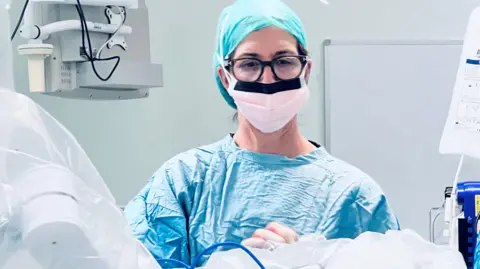
Caroline Burt, a consultant colorectal surgeon at Southmead Hospital, said: "It's 100% the surgeon doing the operation. Nothing moves without the main surgeon moving and dissecting, so there's no automatic movements in it at all."
However, Burt said one of the "huge differences" was compared to a long-straight instrument, robotic instruments can rotate and twist, allowing surgeons to be "incredibly dextrous and accurate".
Burt also said the equipment can be adjusted and allowed her to stitch "much more easily".
NHS Chief Executive, Sir Jim Mackey, said the use of new technology such as robotic surgery will play a "huge part" in the challenge to shorten waiting times by 2029.
"We are using every tool at our disposal to ensure patients get the best possible treatment," he said.
"Not only does it speed up the number of procedures the NHS can do, but it also means better outcomes, a faster recovery and shorter hospital stays for patients," he added.
Follow BBC Bristol on Facebook, X and Instagram. Send your story ideas to us on email or via WhatsApp on 0800 313 4630.
