Nappies, food and clothes damage recycling effort

 BBC
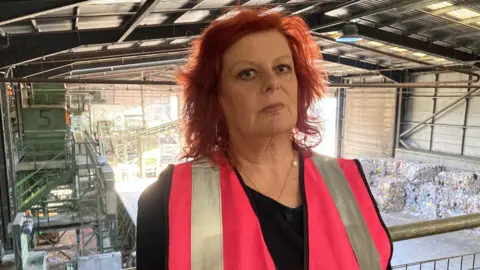
BBCPeople are putting items like nappies, food and clothing in their recycling bins, and waste officials have urged them to do better.
Up to a fifth of all the recycling sent to a processing centre near Worcester has to be diverted to an incinerator instead.
Worcestershire County Council said entire batches of recyclable waste from green bins often had to be rejected, because it was covered in food.
Emma Stuart, waste prevention manager, said: "Some people end up doing what we call 'wish-cycling' - they put things in their green bin that shouldn't be there."
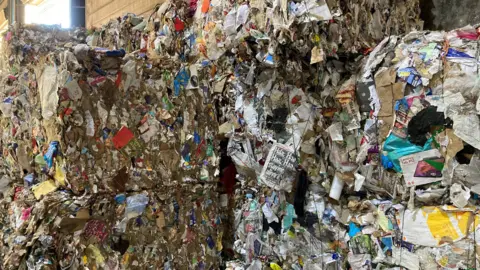
Green bin waste from across Herefordshire and Worcestershire gets sent to a recycling plant called EnviroSort in Norton.
The site processes around 82,000 tonnes of rubbish a year, most of which gets processed and sent to companies to turn into items like recycled paper, cardboard, drinks bottles, flower pots and bicycle frames.
Stuart said: "It's things like wood, metal, clothing, toys and garden items that also end up in the green bins - items like that can easily be recycled at the household recycling centres.
"But the two biggest contaminators are nappies and food - we think people put them in there because they haven't got enough room in their black bin.
"It makes life difficult for the people at EnviroSort. If you throw your half-eaten tin of baked beans in there, it means all the recycling around it gets rejected.
"I do think people try and do the right thing - it's just about thinking about it a bit more and educating themselves on it."
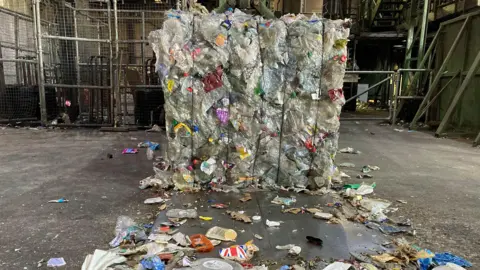
What can - and cannot - go in the green bin
- Food tins, drink cans, glass bottles and jars, and plastic tubs/bottles can go in the green bin
- Paper, cartons and cardboard can also be recycled - see here for the full guide
- No foil pouches, coffee pods, sweet wrappers or crisp packets
- No nail varnish bottles, plastic bags, or hard plastics like children's toys
- And certainly no hard metals like saucepans or cutlery - or food waste or nappies - if in doubt see here
Bosses at the site regularly invite groups of school children in for a tour, in the hope it will create a passion for recycling and influence their parents.
Michael Hornby, senior operations manager at Severn Waste Services, which runs the plant, said: "Between 18 and 20% of what we receive is contaminated.
"In many cases either someone's black bin is full, or they haven't educated themselves on what should be in the green bin and it ends up in here.
"It has a huge impact on us - it slows the process down because we have to try and get the contaminated stuff out."
Follow BBC Hereford & Worcester on BBC Sounds, Facebook, X and Instagram.
