Food bins: An eco-fix or just too icky for families?

 BBC
BBCFor some households, separating leftovers is simple, but for others, it is a chore they choose not to do.
Regardless, from April, the government wants every home in England to get a weekly food waste collection from their local council.
It is hoped the move will reduce discarded food, but families' experiences suggest varying enthusiasm and practical challenges may make that hard to achieve.
Despite the national requirement, first pledged under the last government in 2023, many councils are on track to miss the deadline - some by several years.
We spoke to families having two very different experiences from their local authorities.
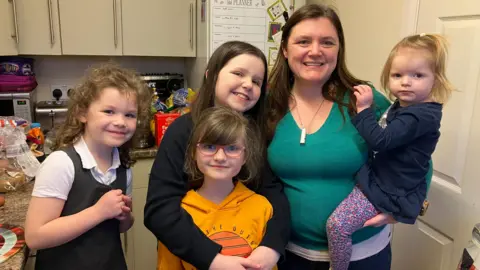
"It's just a lot of extra waste that could be disposed of in a greener way," said Patricia, from Worcester.
A mum to four young daughters, she finds leftover food a big headache.
Despite being made available in other parts of England, Worcester households still do not have separate food waste collections.
Even after careful meal-planning and composting raw vegetables, food such as meat, bread and uneaten meals still ends up in the family's black bin for residual waste.
"I mean, we try not to waste food," she said. "But even if we're just chopping up vegetables… or we have little bits of leftover chicken, which we can't actually eat because it's like gristly… that all goes in the bin," Patricia said.
"So it ends up being quite lot, because we're a family of six.
"They have to incinerate all of it… it's just not a very environmentally-friendly way."
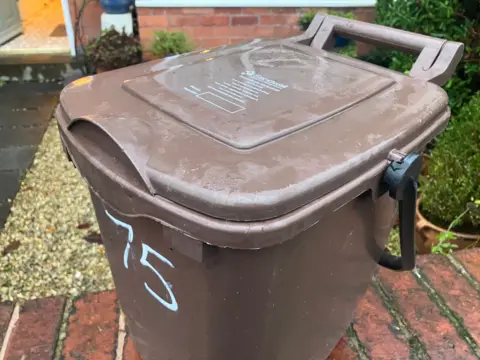
Having previously lived in Kent, where the bins are long established, Patricia is convinced they would help her family and others reduce the amount of rubbish they produce.
That's a view the current government agrees with, as it looks to reform what it calls a "muddled and confusing patchwork of approaches to bin collections".
But Worcester City Council is one of many local authorities that admits it isn't ready to roll out a food waste collection, from the start of April.
Local politicians have blamed the delay on a lack of clarity over government funding, which they say has left hundreds of councils racing against each other to secure the new trucks and bins needed.
A service is currently due to start in the city in early 2027, and for Patricia that's frustrating.
"When areas with fewer resources managed to do it years ago, it's hard to understand why we're waiting until 2027," she said.
On the terraced streets of Bearwood in Sandwell, West Midlands, Friday is brown bin day.
Food caddies full of decomposing dinners in biodegradable bags are waiting to be collected.
Sandwell Council has run a food waste collection in one form or another for over a decade. Since 2022, it's been a free weekly scheme residents can opt into.
This contrasts with the situation in neighbouring Birmingham, where bin workers have been on strike for almost a year.
Despite the ongoing industrial action, new bins, including ones for food waste, will be delivered later this year after pilots in a few areas.
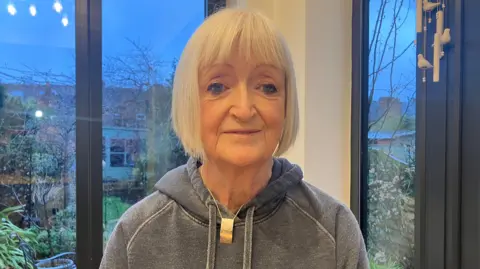
"We definitely feel we are doing something towards the environment," said Bearwood resident Jo James.
She and partner Martin put all leftover food - cooked and raw - into a compostable bag-lined kitchen caddy before transferring it to their outdoor brown bin.
"We both find it very useful. It doesn't take a lot of time," she said, adding that separating food has reduced the smell of their general waste bin.
"We know that the food waste goes to an aerobic digester and it's converted into fertiliser and into biogas," she said.
But along Jo's street, many homes don't have similar brown food caddies waiting outside to be emptied.
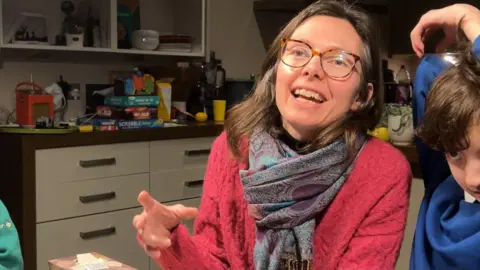
"People don't seem to like to segregate the food waste… I don't think there's been a lot of uptake going on," said mum-of-three Natalie, who lives a few streets away.
A consistent separator of scraps, Natalie argued it was necessary to get good quality recycling.
"I know it can be a pain – and for people that don't have much space in their house it means another thing in their kitchen. But if you were putting everything all in together then it's very hard to separate at the other end," she said.
"Personally I just hate bins. The smell of bins, the look of bins," said Lindsey, Natalie's mother-in-law, who was visiting from Sussex.
"Even if you put it in these eco bags I just can't cope with the rotting cooked food."
With very little waste, and a strong desire to compost at home, she said she avoided using the food waste service.
Since January, Natalie's own family has also not taken part, after their food bin went missing in the middle of the night. She said they were still waiting for a free replacement to arrive.
Sandwell Council said it was currently facing delays in supplying new food waste caddies, as local authorities across the country prepared their own services to meet the new Simpler Recycling regulations.
But it said more and more residents were choosing to take part, with registrations growing from about 9,000 households in June last year to more than 25,000.
An average of 200 tonnes of food waste is currently collected across the borough each month.
Follow BBC Hereford & Worcester on BBC Sounds, Facebook, X and Instagram.
