Beaten-up swan that was shot in face ‘recovering’

 The Waterfowl Sanctuary
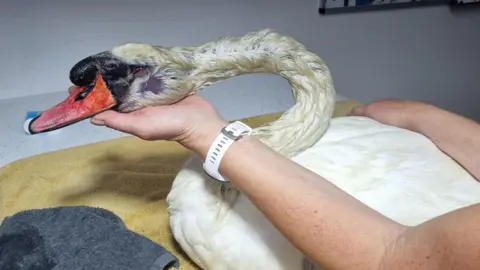
A wildlife centre that rescued a swan after it was attacked by another swan discovered the bird had previously been shot in the face.
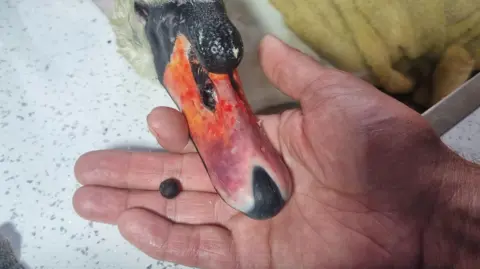
The Waterfowl Sanctuary in Godmanchester, Cambridgeshire, was treating the swan’s wounds when they noticed a blockage in its nostrils.
It turned out to be a metal ball bearing which was "heavily corroded".
In a Facebook post, the team said: "Those that love animals will never understand how someone can fire a damaging projectile at such creatures - especially at the face!"
 The Wildfowl Sanctuary
The swan had been brought in on Monday after suffering "a colossal beating from a territorial swan" along the river Cam in Cambridge.
The sanctuary said the "bulk of his injuries" came from the other swan, and that the corrosion suggested the ball bearing had been lodged in his airway for "some time".
A scan revealed no further metal in the swan’s body.
Chair of Trustees Graham Porter described the situation as “shocking”, and said: "We don't see much evidence of vile acts such as catapults and shootings compared to our friends in the south and the north of the country."
 The Waterfowl Sanctuary
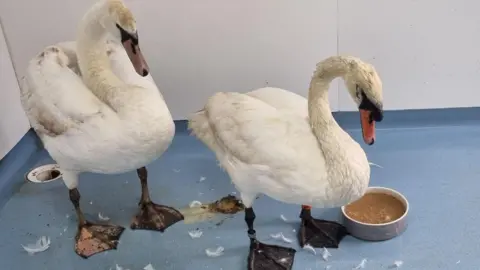
The swan was treated with medication and kept in a warm room to convalesce.
"He looked much brighter the next day, eyes open and slightly alert," Mr Porter added.
"Five days on and the swan is looking great. Wounds are healing and he stands tall, preens and eats, so is very much recovering well."
Follow Cambridgeshire news on Facebook, Instagram and X. Got a story? Email eastofenglandnews@bbc.co.uk or WhatsApp us on 0800 169 1830
