The disabled traveller market represents billions in untapped revenue

 M Gober/Trentino for All
Across the globe, some destinations are realising disabled tourists are a major, underserved segment. They're adjusting their business plans to accommodate them.
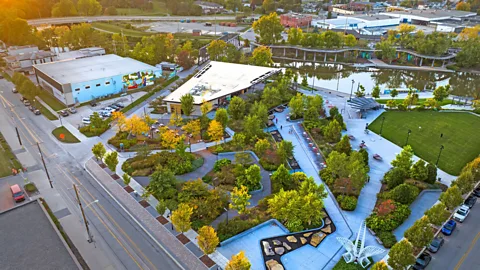
Hours had passed since Julie Larame and her family arrived at Promenade Park, in Fort Wayne, Indiana, US. Her seven-year-old son, Vine – who was born with spina bifida, and uses a wheelchair – was still playing on the splash pad with other children.
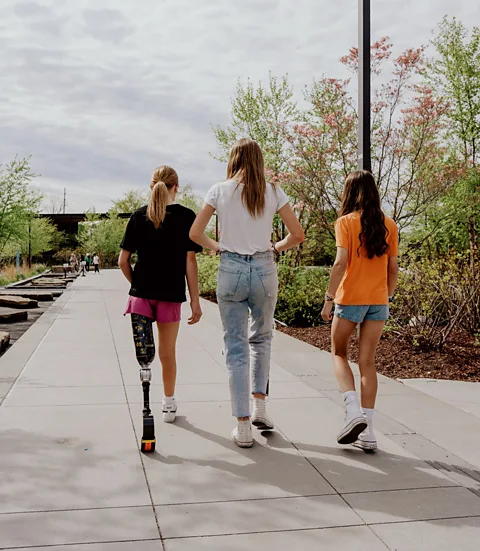
The experience was exactly what she'd hoped for when the family planned their trip, specifically selecting the destination so Vine could take advantage of its disability-friendly attractions. Their visits to other recreation areas were usually short, since most facilities have limited opportunities for disabled people. Promenade Park, however, has multiple accessible features, and has even won several awards for inclusive design.
According to the World Health Organization (WHO), one in six people worldwide live with a significant disability. This classification includes not only mobility issues, but also a range of invisible conditions: visual and hearing impairments; cognitive challenges and neurodivergence, such as autism; sensory and emotional disabilities; and mental illness. TravelAbility, an American organisation that works within the tourism industry to improve the travel experience for disabled people, characterised this group as "the largest underserved minority in the country".
"It's a minority that every single person in the world, at any moment in life, can join," says Patti Hays, CEO of the Fort Wayne, Indiana-based AWS Foundation, a group that advocates for disability inclusion. "Likely, we will all be part of it at some point in our lives."
Along with Promenade Park, Fort Wayne has invested in several other accessible initiatives for years. City leaders are also focused on upgrading other tourist attractions, including a $120m (£94m) accessibility-focused renovation to its 1941-built airport, which includes wheelchair-height counters, family bathrooms, cane trails and an FM loop for flight announcements.
 John McGauley for Visit Fort Wayne
Across the world, many destinations are making substantial investments in accessible attractions and programming. By taking part in a social movement toward inclusion, they're also positioning themselves to reap the financial benefits of tapping into an underserved community of travellers.
Brooke Hansen, associate professor in the Muma College of Business at the University of South Florida, and a sustainable tourism expert, says, "Disabled travellers represent a $58 billion-dollar industry. There are huge implications for business."
Addressing the range of disability
Disabled-friendly venues and experiences have existed for nearly 30 years, largely to coincide with the introductions of the Americans with Disabilities Act and the European Accessibility Act. But prior to the past decade, they were mostly limited to wheelchair-accessible ramps and elevators. Along with social movements for more wide-spread inclusion, travel destinations have also recognised the business potential of accessible tourism.
"Maybe ten years ago, it was a little too early [for these kinds of programmes]," says Stefania Clemente, project manager for Trentino for All, an organisation that plans inclusive programming in Trentino, Italy. "Now everyone, especially our local community, wants to welcome people with different needs."
 A Polla/Trentino for All
Trentino isn't as widely touristed as Tuscany or Sicily, but with fine dining, mountainous views, winter sports and even a medieval castle, it already has much to offer visitors. Trentino for All aims to make the province's experiences accessible for as many people as possible – and simultaneously create a popular, revenue-driving destination for inclusive tourism.
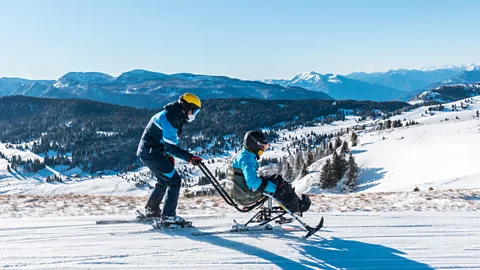
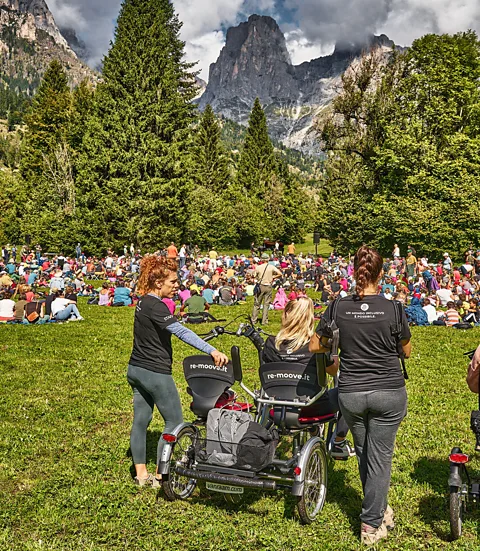
Trentino for All is using a $1.2m (£950,000) grant, from Italy's Ministry of Disabilities, to attract visitors to the comparatively quiet Italian province. The approach is to create experiences for people with mobility challenges, those with no or low vision, hearing impairments and cognitive challenges. They are currently making upgrades to the Sound of the Dolomites, a 30-year-old open-air concert series, that will make the it the first outdoor music festival to loan hearing-impaired concertgoers backpack-like devices from electronics manufacturer Subpac that vibrate along with the music.
So far, says Clemente, the organisation has invested about half of the grant money to create accessible websites and communication programs, plus adaptive activities such as skiing and mountain biking. The next phase will tackle inclusive upgrades to accommodations, and preparations for hosting some of the events for the 2026 Olympics and Paralympics.
 Prefeitura Municipal de Curitiba
Clemente says making Trentino an accessible and inclusive destination is an ongoing process – one that will continue when they've exhausted government funds and after the Olympic games leave the city.
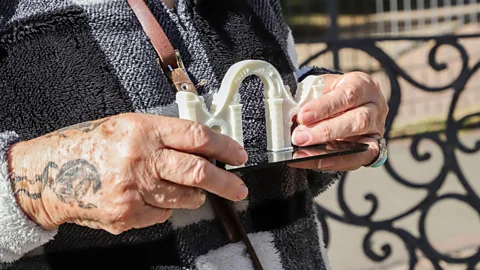
Not all projects have to be costly to be impactful, says Tatiana Turra Korman, tourism secretary of Curitiba, the capital of the southern Brazilian state of Paraná. The city has prioritised opening tourism experiences to a range of disabilities, focused primarily on programming for the visually and cognitively impaired. This year, her department created 3D-printed plastic miniatures of the city's tourist attractions, which vision-impaired visitors can carry in a tote bag during guided tours, and feel with their hands to better understand the scale and shapes of different buildings. The miniatures were printed "almost for free" according to Turra Korman, using the help of students in a public maker's space.
To date, they have spent $4m (£3.2m) on inclusive projects. Inside the city's main Botanical Garden, a Garden of Sensations caters to the vision impaired, with braille signs and plants that can be explored through touch. Meanwhile, the Museu Oscar Niemeyer, Latin America's largest art museum, has reached a 100% accessibility goal, with ramps, audio guides, braille signage and quiet rooms for those with autism and sensory challenges.
 Luke Menard for Visit Fort Wayne
Making upgrades that increase the bottom line
The social good of accessible tourism is a given, says Laurent Roffé, principal of Accessio Consulting, a California-based advisory service on accessible travel programs – and often, it's what many destination managers point to when discussing their upgrades, rather than revenue figures.
But the business potential can't be ignored, even if it's not the loudest narrative.
"We don't need to convince anyone to do it anymore," says Roffé. "It's become part of the mainstream. The argument now is business. The [destinations] that have embraced it are doing it because of the economic return."
He points to a pair of surveys verified by the Open Doors Organization, an Illinois, US-based disability-services organisation. In 2015, disabled travellers represented a $35bn (£27.4bn) market. In 2020, the number jumped by 63%. For 2023, he says, the industry is poised to break the $60bn (£47bn) mark. Based on this trend, and on studies conducted among the disabled business traveller community, Roffé estimates a year-over-year revenue increase of about 12%.
The surge, he says, is driven by travellers themselves. "Travellers with disabilities used to put up with a lot of discomfort," he says. "They've become very demanding of equally good service, and aren't afraid to exercise the power of the purse. They're saying, 'either you do what you need to in order to satisfy our needs, or we'll go someplace else'."
