Dusking: The Dutch twilight ritual helping people slow down

 Getty Images
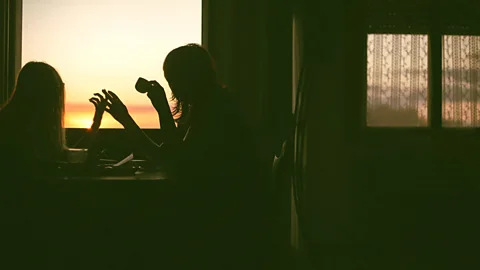
Revived by a Dutch writer, the simple ritual of "dusking" – quietly watching the transition from day to night – is spreading beyond the Netherlands as a way to reconnect with the natural world.
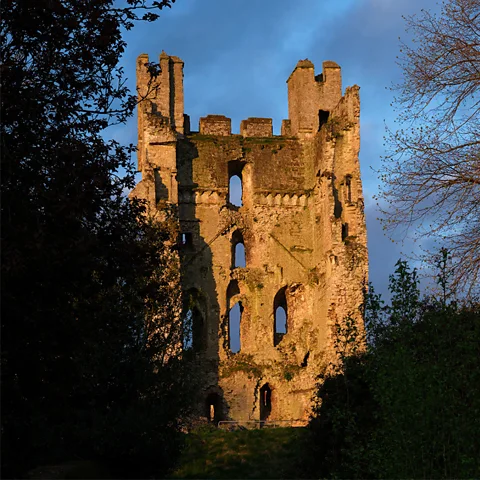
Sitting cocooned under a thick blanket in a plant-filled orangery, I look through its large glass windows onto the 900-year-old stone walls of Helmsley Castle in North Yorkshire. I'm in a room full of people, yet a gentle stillness hangs in the air. Outside the sun is setting. Inside we are doing… absolutely nothing.
Or at least it looks that way. What we are actually experiencing – as a soft voice in the background reminds us – is the Dutch ritual of dusking.
"Noticing twilight requires a persistent kind of attention. It's like a shy, rare animal. You have to take your time. Stay focused," the speaker instructs. "The day lingers like a drunken guest that doesn't want to leave the party. But slowly, slowly it is leaving. Just look up. There. See?"
The voice belongs to writer and night-sky enthusiast Marjolijn van Heemstra, who is working to revive this simple custom of pausing to watch the day fade into darkness. The idea came to her unexpectedly while leading a night walk in her home city of Amsterdam.
"An old lady told me that it reminded her of the dusking she used to do at a farm where she grew up," she explains.
"In Dutch we have a word for dusk – de schemer – but I had never heard it used as the verb. That triggered me to start asking around. I found that quite a lot of people had memories of their grandparents or parents doing it."
 Alamy
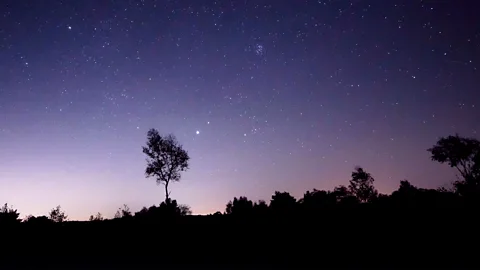
AlamyVan Heemstra started researching the custom and discovered dusking had once been common in the Netherlands, with mentions of it in newspapers during the first half of the 20th Century. Traditionally it was done by farming families to mark the end of the working day. They would often gather in the kitchen to look outside and observe the day turn to night, before lighting a candle and having dinner. By the 1960s and 70s, however, articles were already noting the ritual's disappearance as modern life accelerated.
"I even found an article where someone wrote down how to do it, because [the writer] was worried that people had lost the practice," she says. "So I thought it would be nice to try and bring it back because it's a very accessible thing. You don't need anything, except for the world around you – and maybe a chair. You just sit and watch the world go dark."
While dusking can be practiced anywhere, Van Heemstra believes it works best as a shared experience. She now hosts dusking events across the Netherlands and recently brought the idea to the UK's market town of Helmsley as part of the North York Moors National Park Dark Skies Festival.
As I sit in the orangery, watching the sky flatten through a Pantone chart of greys, a calmness settles over me. The outlines of the castle walls begin to smudge into the sky's inky brushstrokes. In the background a soundscape recorded by Van Heemstra combines music and narration, reflecting on twilight as a calming constant in a world filled with light and noise. She suggests that embracing the dark – and allowing ourselves to be unproductive – can be a small act of resistance in a culture obsessed with efficiency.
 Alamy
AlamyBeing inefficient is something I am yet to master. As a self-employed mother of two, I always feel as though an extra drop of work or life admin can be squeezed out of the day. Yet welcoming dusk is a meaningful ritual in many cultures. In Japan, the yūyake song observes twilight. The Balinese tradition of matahari terbenam marks a moment of sunset contemplation; while in Sweden, the concept of kvällsro reflects the peaceful calm of evening.
Gradually darkness settles over the garden. A thin lick of crescent moon hangs in the sky. No one in the room wants to break the magic as we step outside into the castle's historic walled garden. I fill my lungs with icy breaths, reluctant to disrupt the stillness.
For Van Heemstra, the ritual is about restoring attention to the world around us. "In many places we have a crisis of attention," she says. "People have a lot of problems focusing on things because there's so much happening at once. But the crisis is much bigger for the world around us. If you don't know a tree, even if it's in front of your house, because you never take the time to look at it, you don't mind it being cut. So, it's about seeing things and trying to establish a relationship with them and then maybe caring for them.
Dusking, she believes, can help rebuild that connection with nature while also reshaping how we think about the night. It is apt then that its UK launch took place at the Dark Skies Festival. Inspired, my family and I head up there and spend the week exploring the landscape where I grew up – an area more commonly associated with bucket-and-spade beach holidays along its 26-mile coastline – in an entirely different way.
More like this:
We scan the night sky for Jupiter, discover fungi glowing under ultraviolet lights and follow footpaths into darkness on a night hike. Instead of longing for the return of long summer days, we are learning to embrace the night.
"Dusking is such a simple art, to just look outside and watch the world go dark," says Vicky Burton, marketing officer for the park. "But it's really good for your well-being. It changes your perception of how you should see night-time coming."
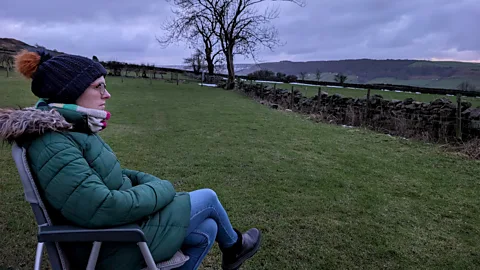
A few days later I try the ritual again. This time I carry a chair across a quiet campsite in the village of Danby and sit alone, fixing my gaze on a gnarled tree in a distant field. The campsite lies within an International Dark Sky Reserve, close to the recently opened Dark Skies Station at Danby Lodge National Park Centre.
 Emily-Ann Elliott
My mind wanders over the day before settling back on the tree. I trace its leafless branches reaching to the sky; it seems impossible that they will disappear into the night. My ears tune in to the last bird song of the day. A wood pigeon coos in the gloom and a blackbird flies low across the field. There is a final burst of chaotic chatter. Until suddenly, silence.
The hills in the distance start to soften first. Patchwork fields and their stone wall boundaries blend together. Once I blink and feel as though the lights were dimmed in the miniscule moment my eyes were closed. But my tree remains a stark outline against the smoky sky.
Eventually pinpricks of light appear in the windows of a farmhouse across the valley. Humanity's quiet resistance to darkness has begun. As I watch, the tree starts to blur around its edges in the growing gloom. Suddenly it appears to merge with a bush behind. Dusk seemed to be happening so gradually – and then all at once, I almost missed it.
Slowly, the darkness creeps in until finally the view is simply land and sky. Finally the night envelops me, but it doesn't feel frightening to sit here alone. After all, I saw it coming.
--
If you liked this story, sign up for The Essential List newsletter – a handpicked selection of features, videos and can't-miss news, delivered to your inbox twice a week.
