Climate change to identity: The vital lessons in Metamorphoses, Ovid's 2,000-year-old poem

 Alamy
AlamyYou might think that Ovid's Metamorphoses, an ancient compendium of the greatest Greek myths, would hold little relevance today. But its tales of desire and deceit reveal surprising parallels with contemporary concerns, from climate change and the refugee crisis to gender-based violence and identity.
Ovid's Metamorphoses isn't simply a collection of myths and legends – it is the collection of myths and legends. Taken largely from Greek sources, but written in Latin around AD8, it contains the most famous versions of the stories we're familiar with, from Perseus slaying Medusa to the vain Narcissus falling in love with his reflection.
Its tales of desire, jealousy, cunning and deceit have offered endless inspiration for artists and writers over the centuries – and still feel surprisingly relevant.
"The Metamorphoses is an extraordinarily contemporary text," Fiona Cox, professor and author of Ovid's Presence in Contemporary Women's Fiction, tells the BBC. "Ovid's obsession with fluidity, plasticity and change enabled him to explore the limitations of bodies, the boundaries of gender and of sexuality, and the relationship between humans and the Earth as well as the animal kingdom," she says.
The shapeshifting nature of the myths themselves means that "each generation can use them for their own purpose. They are about universal values [and] the human condition. They confront us with the desires, the passions, the emotions that we all have," Frits Scholten tells the BBC. He is the curator of Metamorphoses, a new exhibition at The Rijksmuseum that explores the work's influence on art over the centuries.
Whether you go back to Ovid’s original telling of the myths, read one of their many contemporary reinterpretations, or explore the numerous artworks they have inspired, you will find these ancient tales have a striking amount to say about the world we live in today.
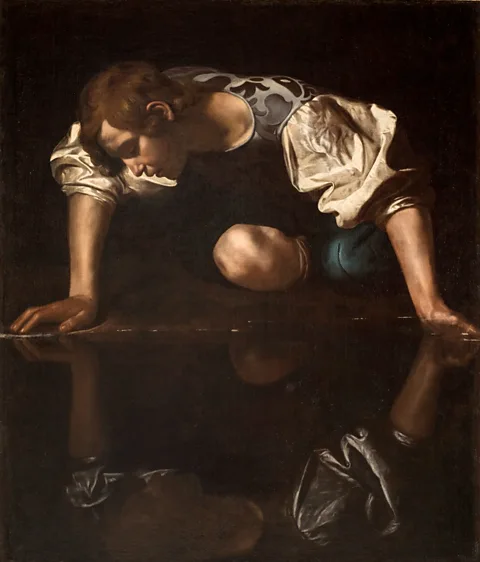
For Scholten, the dangers of human vanity and pride are ever present in Ovid. The myth of Narcissus falling in love with his reflection has long been used by artists such as Caravaggio to caution against such vanity. The story can't help but draw parallels with contemporary self-promotion on social media. "We have fallen in love with ourselves and forgotten what's going on around us," Scholten says.
 Palazzo Barberini, Rome
But if we look at the reality behind our filtered selfies and snaps of the latest overcrowded Instagram hotspot, we'll find, Scholten says, as Narcissus did, that "in the end it's just a reflection and an illusion that did not bring us what we hoped for".
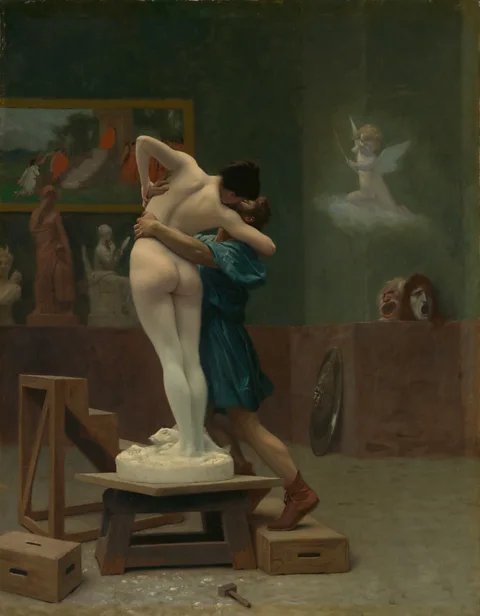
Pygmalion's love for the statue of a woman he has created has long appealed to artists like Rodin, who have used the story as an excuse to celebrate their own skill. However, for Scholten, Pygmalion's belief that his creation is superior to all the real women around him has echoes of humankind's misplaced faith in its own invention, AI. "We human beings think we can control everything and have solutions for everything," he says.
But this arrogance has consequences. At least in George Bernard Shaw's retelling of the myth, later adapted into the hit 1964 film My Fair Lady, the Pygmalion character, Henry Higgins, finds that his "creation", Eliza, eventually develops a mind of her own. Should the same happen with AI, the results could be far less pleasing.
 The Metropolitan Museum of Art
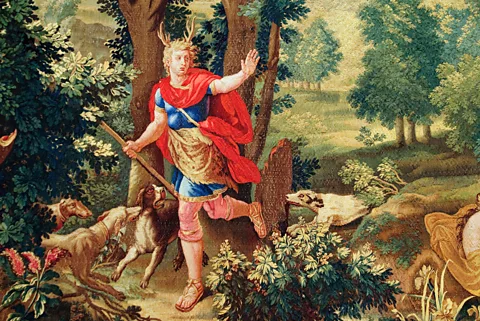
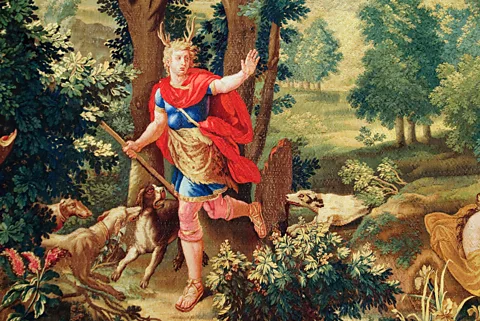
Those arrogant leaders currently in positions of power, be they tech giants or oligarchs, presidents or prime ministers, would do well to heed the story of the hunter Actaeon. When he spied Artemis bathing with her nymphs, the goddess was so furious that she transformed him into a stag who was then devoured by his own hounds. "All those world leaders so full of pride should be aware that things can change around," says Scholten.
Metamorphoses isn't all bleak warnings, however. In the story of the lovestruck Salmacis and Hermaphroditus, whose bodies, male and female, become united, we can see an ancient representation of gender fluidity. For Scholten, this is a suggestion that "we should take everyone as unique human beings and not deviations of the norm. The ambiguity that is in nature itself is in Ovid".
'A surge of interest in Ovid'
Although Ovid's influence has waxed and waned over the centuries, Cox points to Marina Warner's observation in her book Fantastic Metamorphoses, Other Worlds, that renewed interest in Ovid can often be seen at crossing points and thresholds. "It is, perhaps, unsurprising that the insecurity and upheaval of contemporary times should coincide with a surge of interest in Ovid," says Cox.
Warner herself drew on the myth of Leto, fated to wander the Earth endlessly with her children, to explore the difficulties facing refugees in her 2001 novel The Leto Bundle. "A sense of exile, of homelessness, is never far away in Ovid… there are many myths in which people are driven into exile or end up far from home," says Cox. "It's interesting that since Warner published this book, other writers have explored the plight of refugees through references to Ovid." She points to the French author Marie NDiaye, whose 2009 novel Three Strong Women was about exile and displacement in France and Senegal.
 Alamy
AlamyScottish author Ali Smith has been inspired by Ovid in numerous ways, most notably in her 2007 novella Girl Meets Boy, a contemporary retelling of the myth of Ianthe and Iphis, who was born female and raised as a male, set in Scotland. Their story "allows Smith to explore the anguish experienced by those who have felt the need to disguise their gender, as well as to celebrate same-sex relationships several years before same-sex marriages became legal in England and Scotland," says Cox.
The disturbing rise of misogyny and gender-based violence is uncomfortably reflected in the multiple assaults suffered by female characters within The Metamorphoses. But while Ovid himself is often dismissive of these experiences, several female writers have recently sought to reclaim the narrative for their own ends.
Although Marie Darrieussecq denies Ovid was an influence for her international best-selling 1996 novel Pig Tales, its story of a young woman working at a dubious Parisian massage parlour who is gradually transformed into a sow, is widely seen as Ovidian. "In its exploration of sexual violence and its creation of a woman who eventually fights back, it anticipates Ovid's appearance within the #MeToo movement. More and more writers are exploring the rapes within the Metamorphoses from the perspective of the victim," says Cox.
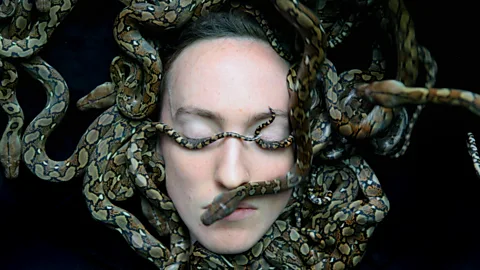
Natalie Haynes did just that with her powerful reimagining of the story of Medusa in Stone Blind (2022). "By far the longest version of the story of Medusa is in Ovid's Metamorphoses," Haynes tells the BBC. But it is a version that left Haynes furious. Ovid recounts how Medusa was once a beautiful maiden, but after she was raped by Neptune in the temple of Minerva, the goddess chose to punish Medusa rather than her rapist by turning her into a monster with snakes for hair. To add insult to injury, her story is told from a male perspective – that of Perseus.
 Courtesy of Juul Kraijer Studio
Although Haynes was certainly not going to use his version, she drew on elements of it to bring home the full horror of the abuse Medusa suffered, in particular a scene in which Perseus, having realised her head is valuable as a weapon, makes a bed of seaweed for it, as he does not want to put the severed neck on hard sand. "There is something so absolutely horrifying about the care he shows for her decapitated head relative to the care he showed for her as a living creature. I properly stole that moment in its entirety for Stone Blind," says Haynes.
Despite her fury at the way in which Medusa was treated, and how her myth has been so misunderstood, Haynes is gratified by recent changes in perspective. "Mostly she's become a symbol of survivors of sexual assault, and that is an extraordinary thing," she says. The very Ovidian transformation of Medusa from maligned monster to feminist heroine is evident in the changing way she has been portrayed in art. Where once she would have been a terrifying creature, SPAWN (2019) is a beautiful young woman seemingly contemplating her fate as snakes slither over her face.
More like this:
One lesser known, ultimately more positive myth, which Haynes believes is currently ripe for adaptation, is that of Philemon and Baucis.
"The gods come down from Olympus to test us – there's almost a fairytale element to it – and everyone turns them away from their doors except Philemon and Baucis. So they decide to punish everyone else by flooding the valley that they live in and drowning them, but Philemon and Baucis they take up to higher ground first." Having expressed a wish to eventually die together, when the time comes the gods transform them into trees and they grow together for the rest of time. "That feels to me so much like a fable for climate change," says Haynes.
Haynes's reading coincides with Scholten's view of the most vital message contained within The Metamorphoses. "Behind all these specific and more focused issues there is always this concern about the world and its future," he says. Although divine transformation is at the heart of the poem, the world is at threat if mere mortals "keep on looking at it as something we can change".
In order to protect our world and ourselves, perhaps we might learn to be more like Philemon and Baucis. As Haynes says, "a lot of their world does get destroyed, but they are not – they showed the correct humility in the face of forces they can't control. Which means they have an 'unexpected' afterlife, we might say, but not an unhappy one."
Metamorphoses is at the Rijksmuseum until 25 May.
--
If you liked this story, sign up for the Essential List newsletter – a handpicked selection of features, videos and can't-miss news, delivered to your inbox twice a week.
