'The highest pitch of refined emotion': The tragic romance hidden in a 19th-Century painting

 National Gallery of Ireland
How the devastating meaning of The Meeting on the Turret Stairs is unlocked by a medieval Danish ballad – and why the painting can only be viewed for two hours every week.
Forget Romeo and Juliet or Rose and Jack: Frederic William Burton's achingly beautiful depiction of Hellelil and Hildebrand's last moment together will stay with you forever. So say the painting's many new fans on social media, where it has been stratospherically popular. Though it dates back to the 19th Century, a surge of TikTok videos about viewing The Meeting on the Turret Stairs – both online and in real life – has gone viral, describing the painting as "a breathless moment" and "life changing".
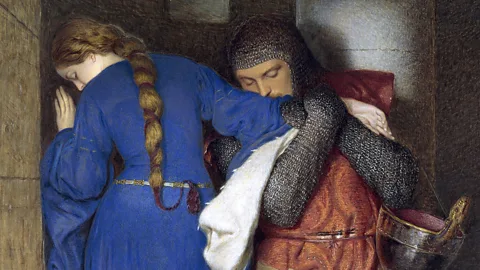
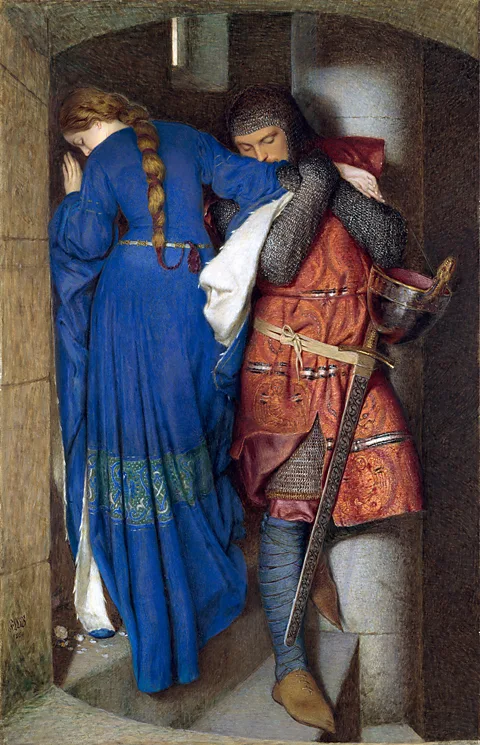
Painted in large, vivid swathes of red and blue, Burton's 1864 watercolour Hellelil and Hildebrand, The Meeting on the Turret Stairs boldly illustrates the couple's final tryst before Hildebrand's painful death. Here, the prince meets with the love of his life, Hellelil, for one last embrace before meeting his cruel fate – a demise orchestrated by her austere father.
 Alamy
AlamyIt's a love story as old as time: a bodyguard falls in love with the princess he's protecting, but ultimately they cannot be together. While viewers might not be aware of the sorrowful end that awaits these two, the strong emotions in both of their faces leave you wondering what's going on. The painting was inspired by a medieval Danish ballad translated by Burton's friend Whitley Stokes in 1855, in which Hellelil recounts the story of her love before succumbing to her own tragic end (more on that later).
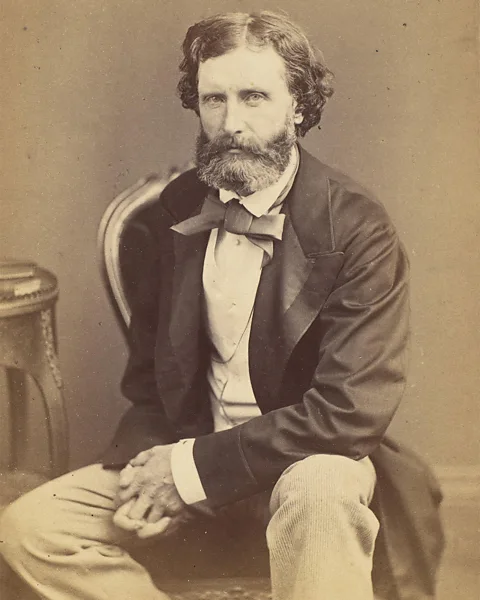
Burton (1816-1900) was born in Ireland and began his career as a painter of miniature portraits and ancient monuments. He then moved to London to make his living as a watercolour painter, and later became Director of the National Gallery. He was an admirer of the Pre-Raphaelite painters – a connection that is clear in his most famous painting.
Since its debut, The Meeting on the Turret Stairs has moved audiences with its unabashed depiction of love. George Eliot, famed novelist and a friend of Burton's at the time, commented on the painting, saying: "[It] might have been made the most vulgar thing in the world, [but] the artist has raised it to the highest pitch of refined emotion."
'The kiss is a sacrament'
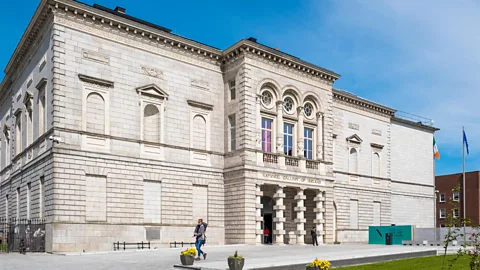
From that moment, the Meeting on the Turret Stairs continued to be extremely popular in Ireland, even winning the vote as the nation's favourite painting in 2012. Currently located in the National Gallery of Ireland in Dublin, the painting attracts thousands every week who queue up to get a glimpse.
 National Gallery of Ireland
Burton used gouache to create this piece, a type of water-soluble paint that gives the painting the vivid colours it is so well-known for. Gouache is also light-sensitive and prone to fading over time if exposed to direct sunlight or high UV light. Due to the sensitivity of the painting, the gallery's curators take several protective measures to preserve the quality of the work. To start with, the gallery only allows viewers to see the painting for just two hours per week. Secondly, the light level on the watercolour is dimmed low so that the work isn't overexposed. Lastly, a staff member returns the painting to a specially-designed cabinet once viewing hours are over in a meticulous, reverential ritual.
In both form and essence, The Meeting on the Turret Stairs encapsulates the power of love. George Eliot was especially struck by Hildebrand's expression in the painting, describing the prince as "a man to whom the kiss is a sacrament".
Despite how susceptible to damage the materials of the painting have always been, the colours remain as bold as the couple's love for each other, even 162 years later. Burton has included what appear to be crushed white petals near Hellelil's left foot. Dr Caroline Campbell, Director of the National Gallery of Ireland, tells the BBC that white roses symbolise purity and loyalty.
Dr Campbell holds a personal appreciation for the painting: "When I first saw it, I was struck by the dazzling blue of Hellelil's dress, the bright colours, and the intensity of the moment depicted, although Hildebrand and Hellelil don't look at each other," she says. "Hildebrand seems to kiss Hellelil's arm, but she turns away from him because she can't control the strong emotion she's feeling. I also loved the theatricality of waiting for the cabinet to be opened, and the 'big reveal', when I saw the real watercolour for the first time."
Hildebrand is moments away from death but in this moment, he is forever hers – and she his. By visually immortalising Hellelil and Hildebrand's last moment, Burton has enshrined their relationship. No matter what happens next in the original ballad, in the painting they are frozen in time, together forever, their love enduring through time.
Devastating outcome
From Hildebrand's tender embrace to the sensuality of their body language to Burton's vivid colour choice, there are several reasons why this painting has captivated many over the years.
In the original ballad, Hellelil's father orders her seven brothers to kill Hildebrand, but the prince ends up killing her father and six of the brothers. However, rather than focusing on the bloodshed, Burton decided to highlight the couple's romantic love, choosing to portray an imagined final, tender meeting on a turret staircase moments before the shocking outcome.
 Alamy
AlamyCampbell says that despite the story's devastating ending, many in Ireland see this masterpiece as deeply romantic. "Many people have got engaged in front of it," she says. "There's a copy in the main city registry office, so it's associated in many people's minds with love and marriage."
More like this:
• The masterpiece full of coded WW1 messages
• The tragedy of art's greatest supermodel
• 10 early photographic 'fakes' that trick the eye
Yale art history professor Tim Barringer first came across the iconic painting through postcards and prints, before visiting the artwork himself in Dublin 20 years ago. Barringer describes the painting to the BBC as timeless: "Visually gripping with a strong narrative component, [The Meeting on the Turret Stairs] is Victorian, medieval and modern." At the end of the story, Hellelil intervenes to save the life of the final brother, inadvertently distracting her lover for long enough for her remaining sibling to land a fatal blow. Hildebrand dies of his wounds and Hellelil subsequently also dies after recounting this story – from a broken heart.
The painting has been an emblem of unyielding romance for decades among art historians and the Irish, and now thanks to social media, a whole new generation of fans are discovering this 19th-Century painting for the first time. Amidst broken hook-up culture and transactional acts of love, Burton's unapologetic ode to romance harkens back to a time where declarations of love happened in person — and lovers were willing to risk it all for one last kiss. The Meeting on the Turret Stairsfeels simultaneously like a medieval time capsule from 1864 and very much what is needed in 2026.
Hellelil and Hildebrand, The Meeting on the Turret Stairs is available to view on Thursdays from 11:30-12:30 GMT, and Sundays from 14:00-15:00 GMT at the National Gallery of Ireland, Dublin.
--
If you liked this story, sign up for the Essential List newsletter – a handpicked selection of features, videos and can't-miss news, delivered to your inbox twice a week.
For more Culture stories from the BBC, follow us on Facebook and Instagram.
