The little-known 'Serengeti of South America'

 Simon Urwin
In the vast tropical grasslands of Los Llanos, visitors will find a stunning array of biodiversity, a proud cowboy culture and almost no other tourists.
"Fall in the water and you're a dead man," joked my guide, Andrés González, as we edged along the narrow banks of the River Suárez in eastern Colombia. "If one aquatic creature doesn't kill you, the next one will." He pointed to a school of piranhas, the submerged snout of an anaconda and, finally, a pair of electric eels – each capable of discharging more than 800 volts and knocking a human unconscious.
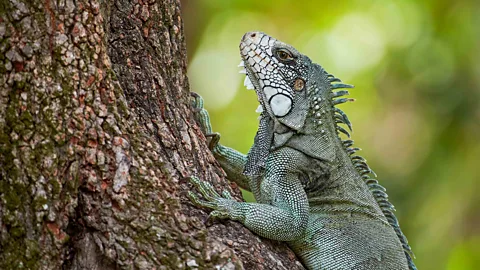
As we continued our safari into the surrounding forest, the wildlife above the waterline proved no less extraordinary. Minutes later, we spotted neon-green iguanas, a giant anteater probing for termites, a porcupine dozing in the branches and a squawking family of hoatzins – a species often described as a "living fossil" because of its wing claws, which allows it to climb trees like the bird-like dinosaur Archaeopteryx.
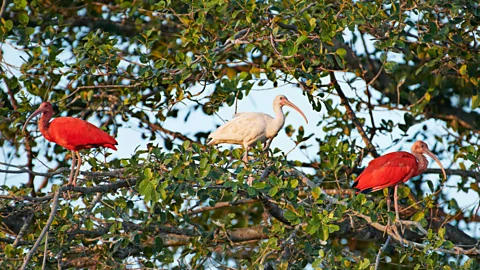
"This region, Los Llanos, is one of the most remarkable and biodiverse ecosystems on the continent," González said, as we emerged from the undergrowth and climbed into his 4x4. "Everywhere you look, there's an abundance of nature." As our vehicle fishtailed along a rough dirt track, even more wildlife came into view: herds of white-tailed deer, vibrantly coloured scarlet ibises and towering flocks of jabiru storks standing 1.5m tall. "It's no wonder they call it the 'Serengeti of South America'."
 Simon Urwin
Los Llanos (Spanish for "The Plains") is a vast, remote expanse of tropical grasslands, forests and wetlands covering more than a quarter of Colombia's landmass, as well as swathes of neighbouring Venezuela. Bordered by the Andes Mountains and the Amazon basin, the flora- and fauna-rich wilderness – roughly twice the size of the UK – is also Colombia's cowboy country, dotted with cattle ranches and shaped by a distinct llanero (horsemen and herders) culture, most evident in its musical traditions.
González, a proud llanero himself, told me that by virtue of its isolation, Los Llanos receives only a small fraction of the visitors that head to Colombia's colonial cities like Cartagena and Villa de Leyva, and its Caribbean coast. To help redress the balance, he founded his travel company Wild Llanos a decade ago to attract more travellers, and showcase the area's distinctive form of sustainable tourism.
One of the region's highlights is El Encanto de Guanapalo, a 9,000-hectare private nature reserve. Similar in status to a national park but privately run, the reserve comprises three working ranches, each offering food and lodgings as a base for wildlife excursions into the reserve's wilderness areas, as well as immersion in local cowboy culture.
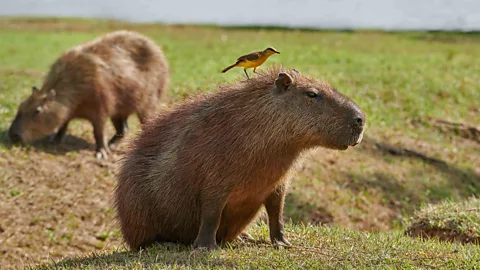
I was staying at the Mata de Palma ranch, and after the safari, sought immediate shelter from the tropical heat beneath a centuries-old mango tree strung with hammocks. All around me, herds of capybaras – the world's largest rodents – nibbled on the grass, while along the shoreline of the nearby lake, turtles basked in the sunshine amid a congregation of caimans.
 Simon Urwin
"The animals here don't scare easily," explained the reserve's owner-manager, Juan Carlos Vargas, arriving with a tray of refreshing guarapo (sugarcane and lime juice). "They're used to the cowboys and their horses; it's a rare form of co-existence between humans and wildlife. While many farmers see wild animals as pests and kill them, we choose to protect them. They have no reason to fear us."
Located 62 miles (100km) from the nearest town, Yopal, El Encanto de Guanapalo was established as a nature reserve in 2018, though Vargas told me that his family had been active in conserving the land for more than 100 years. Despite falling profits from raising cattle, he was always able to resist pressure to sell the land to destructive oil interests or industrial monoculture thanks to income gained from tourism.
"It's allowed us to maintain the native grasses and keep farming organically," he explained, noting that while the resulting yields are lower, preserving the ecosystem allows wildlife to flourish. Vargas added that the local community has benefitted too, since cowboys earn additional wages as guides and local women host and cook for guests. Interest from foreign travellers in cowboy culture had also sparked a growing desire among locals to preserve its authenticity.
"Here, it's real and alive – not, 'Quick, get dressed: here come the tourists!' It means that from the moment a visitor wakes up, they're living the true Los Llanos life," said Vargas.
 Simon Urwin
Early the next morning, I joined a group of llaneros warming themselves against the chill air with mugs of chocolate santafereño – a traditional, lightly spiced hot chocolate into which pieces of bread and cheese are dunked.
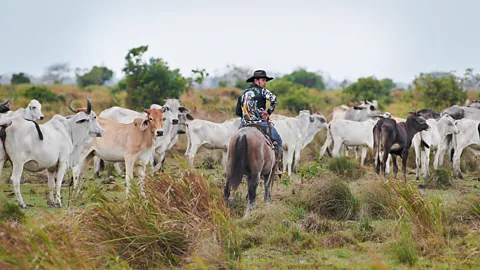
As the Sun rose and the birdsong swelled, the 12-strong group – which also included two llaneras (cowgirls) – gathered their sombreros and lassos, mounted their charges and set off deep into the grasslands. González and I followed in our vehicle, watching as the cattle round-up got underway.
How to visit:
Travellers can reserve ranch stays and guided safaris through the Wild Llanos website. Yopal is a one-hour flight from Colombia's capital, Bogotá. Los Llanos is accessible year-round, but the best season for wildlife spotting is December to July, when drier conditions encourage animals to gather at water sources.
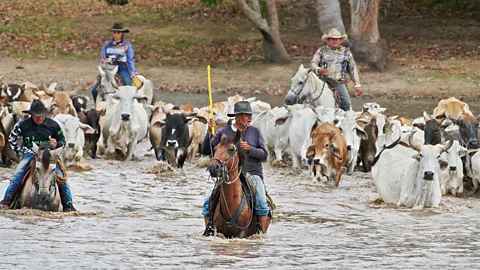
With cries and whistles, the llaneros and llaneras urged on their horses as they sped across the plains, bare feet in their stirrups as they steered them with ease. Over two exhilarating hours, they corralled the disparate herd of 150 humpbacked cattle into a central holding circle, while any escapees were quickly chased down, lassoed and returned to the group. Then, to settle the herd, the llanero leader broke into a traditional a cappella cattle song.
María Paula Pérez, a llanera guarding the outer perimeter, explained that the cattle in Los Llanos are semi-wild and can be highly aggressive, so the best way to calm them is with cantos de vaquería (cattle-work songs) – a centuries-old form of cowboy music inscribed on Unesco's List of Intangible Cultural Heritage in Need of Urgent Safeguarding. "We have different songs for different types of work: to calm them, for milking and for driving them over long distances," she said. "The cattle recognise the voices, so it works very well."
 Simon Urwin
With the herd at ease, the singing cowboy turned to lead them back toward Mata de Palma ranch and switched to a different tune. "Get in line, little cattle; follow the footprints of the cowboy leader," he sang in Spanish. "Put love into the path, and forget about your feeding area." The singing continued as the cattle were slowly manoeuvred across a series of lagoon-covered plains all the way to a corral, where the female calves were laboriously separated from the older bulls for fattening and breeding.
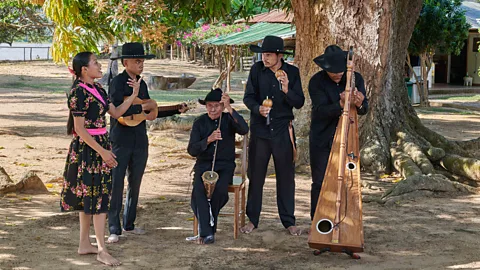
In Los Llanos, music doesn't end with the workday. To celebrate the completion of such arduous tasks, a livelyjoropo band arrived at the farmstead. The singer, Karen Ortíz Lombana, pointed out the various instruments as they were unpacked from their cases. "The most common is the cuatro, a small, four-stringed guitar," she said. "We also have a harp, a furruco (a traditional friction drum) and maracas – often made with the fruits of the calabash tree."
The maracas player began shaking out a crescendo of rhythms that mimicked a horse's natural gaits, building from a trot to a canter and then a gallop. The rest of the band joined in, followed by Lombana, who powered through a repertoire of songs about the grandeur of the plains, the daily life of the llaneros, and the beauty of nature.
"Joropo is more than simple entertainment," González said, as the assembled ranch workers partnered up to dance. "It's a way to pass on our collective memory and to express our love of our culture."
 Simon Urwin
As dusk fell, dozens of bats began zipping through the air above our heads. "We can't afford to lose any of this – the nature, our llanero identity – it's all too precious," González said. "Los Llanos faces many threats, but places like El Encanto de Guanapalo provide us with a real sense of hope."
--
If you liked this story, sign up for The Essential List newsletter – a handpicked selection of features, videos and can't-miss news, delivered to your inbox twice a week.
