Why 'Viking wellness' is having a moment

 Alamy
AlamyThis year's fast-growing spa trend isn't about pampering and relaxation: it's about contrast therapy and elemental experiences. Enter the brave world of Viking wellness.
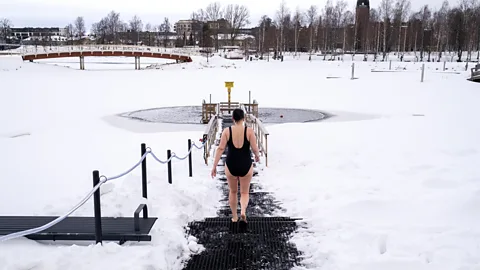
My body pulses with heat as I step out of the sauna and join the others clustered by a grey sea sloshing with icy slush. On this cold February afternoon, we are moving between extremes: a blast of dry heat scented with camomile, lavender and mint, followed by a freezing plunge in the sea.
Gripping an ice-encrusted metal ladder, I wait my turn and lower myself into a hole cut in the ice. I feel my whole body relax, and my mind becomes calm. For the rest of the day, I feel energised, braver, stronger. It's an addictive sensation.
I'm hardly the first to discover the benefits of this practice. Across northern Europe, alternating between heat and cold – often referred to as "contrast therapy" – has long been part of daily life. But in recent years these traditions have begun spreading far beyond the North Atlantic. Conde Nast Traveller even named "Viking wellness" one of its trends of 2026, citing rising interest in elemental bathing rituals rooted in Nordic cultures.
"Sweat culture is on the rise," says Sonal Uberoi, wellness expert and founder of hospitality consultancy Spa Balance. "It's certainly a trend, and it's one that's gaining momentum."
Broadly defined, the Viking wellness experience centres on saunas and cold immersion, often paired with nature-based practices such as barefoot walking, sea swimming, forest bathing or outdoor "forest gyms". Many experiences also incorporate Nordic-style communal dining or cooking over an open fire, bringing an element of social connection to the ritual.
 Kurhotel Skodsborg-Martin Kaufmann
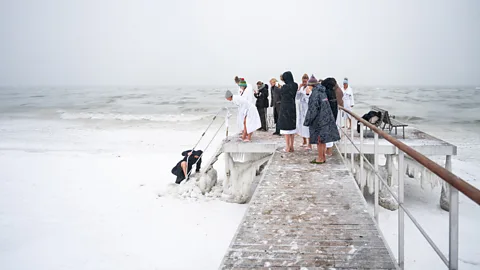
Beards and bulging biceps are optional, however: the "Viking" reference loosely nods to the practice's Nordic origins – though sometimes it can take a certain courage to participate.
For Uberoi, the appeal reflects a broader cultural shift. "It's connected to a rise in interest in mental and physical health among younger generations, a need for social connection in an increasingly digital world and a rise in subscription-based wellness models," she said.
These models, she explains, are taking wellness from a one-off experience such as a massage to an ongoing lifestyle choice. "People are tired of 'doing' wellness," she adds. "They just want to be well."
Ancient rituals, modern appeal
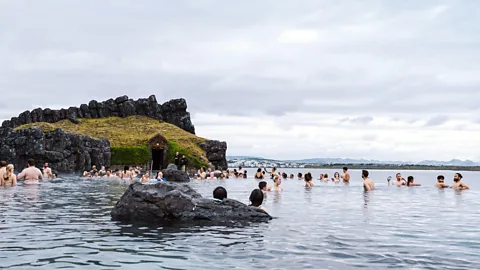
Sauna traditions are deeply embedded across the region, particularly in Finland, where most households have access to a sauna and weekly use is commonplace. Across Scandinavia, winter sea swimming clubs meet regularly along icy coastlines. In Iceland, arguably the birthplace of the Viking spa movement, hot and cold immersion is a national pastime with deep historical roots. For centuries, Icelanders have bathed in naturally heated geothermal pools scattered across the volcanic landscape.
 Alamy
AlamyBut as Helga María Albertsdóttir, managing director of Reykjavik's Sky Lagoon, explains, these practices originally had little to do with luxury.
"Bathing in early Iceland wasn't a wellness ritual – it was about survival," she said. "The tradition of hot and cold bathing for us began with people settling on this harsh island and finding pools of geothermal water that could keep us warm and, later, heat our houses."
Today, Sky Lagoon's spa ritual takes place in a turf-roofed house overlooking the North Atlantic. Guests move through geothermal pools heated to around 38-40C (100-104F) before plunging into cold water, followed by a sauna, cold mist room, Icelandic sea-salt scrub and steam room – an experience designed to mirror the dramatic contrasts of Iceland's landscape and weather.
"We designed it all to make it feel real," Albertsdóttir said. "All the elements are things we know from our culture. We are proud of these things and love to share them."
 Sky Lagoon
Elements of Viking wellness are also appearing in new Nordic hospitality projects. At Sibbjäns, a boutique farmstay on the Swedish island of Gotland, guests combine sauna bathing with hyper-seasonal dining, outdoor exercise and cold-water swimming. Alongside a yoga barn and natural pool, the team has built an open-air gym designed for year-round use – reflecting the Scandinavian approach to wellness centred on movement, nature and shared experiences.
From remote fjords to global cities
But Viking wellness isn't just exhilarating: a growing body of research suggests regular sauna use may be associated with improved cardiovascular health and reduced stress levels, while some studies into cold immersion indicate potential short-term mood and circulation benefits.
More like this:
But for many devotees, the appeal is as much about happiness as it is about physical health. And similar bathhouse concepts are now emerging well beyond Northern Europe.
 Slomo
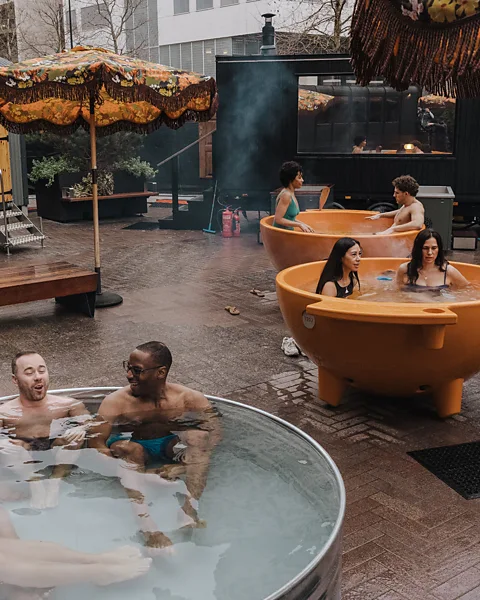
Slomo"Living longer has been a focus of the health and wellbeing community for many years," said Rob da Bank, co-founder of Slomo, a Nordic-inspired immersive sauna and cold plunge experience on the UK's Isle of Wight. "We're now thinking about how to live well as we live longer – there's no point living longer if we're miserable."
He added: "We look to the Nordics – the happiest countries in the world – to see how it is done."
Da Bank travelled across Estonia, Finland and Denmark while developing Slomo, studying sauna culture and working with Danish scientist Dr Susanna Søberg to inform his approach to contrast therapy. The result is a series of Nordic-inspired retreats and pop-up experiences across Europe, including London, Copenhagen and Ibiza.
"Customers have been craving this for some time," said Myles Farmer, co-founder of Othership, a Toronto-based bathhouse concept centred around sauna and cold plunge experiences. "Living in high-density, high-stress urban environments, people want an authentic place to relax, reset and connect with community."
Othership opened in 2022 and has since expanded across Toronto and New York City. Designed as a modern "third space" between home and work, the bathhouses have large communal saunas, ice baths and tea rooms intended to foster connection. While the urban settings may be far removed from a Nordic forest or Icelandic fjord, the rituals draw heavily on northern European bathing traditions. Sessions follow a Scandinavian Saunagus-inspired format, with music and essential oils introduced during the heat cycle. Afterwards, guests gather in tea rooms designed to recreate the community aspect of Nordic bathing culture.
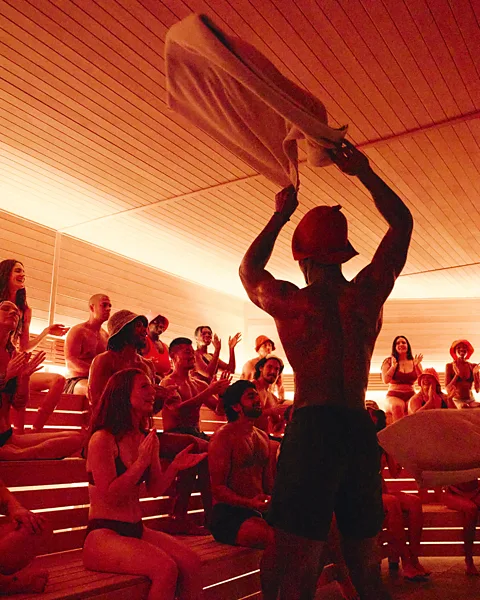 Othership US
"Sauna culture is still relatively early in North America compared with Europe, where it has much deeper roots," Farmer said. "But we're already seeing the health benefits resonate mainstream, along with a growing sense that this practice is something people want to incorporate into their day-to-day lives."
For da Bank, however, the resurgence is about more than wellness trends. It also reflects changing social habits. As drinking culture declines among younger generations, he believes people are seeking sober, shared rituals.
He put it simply: "The sauna is the new pub."
Laura Hall is a Copenhagen-based journalist and the author of the book The Year I Lay My Head in the Water, all about swimming in Scandinavia.
--
If you liked this story, sign up for The Essential List newsletter – a handpicked selection of features, videos and can't-miss news, delivered to your inbox twice a week.
