'A fascinating window into the past': The homes revealing how Tudor people really lived

 National Trust/ Mike Henton
A favourite at this weekend's Oscars, Hamnet has brought Tudor architecture and interiors to the fore. And there are plenty of houses around the UK still showcasing 16th-Century living.
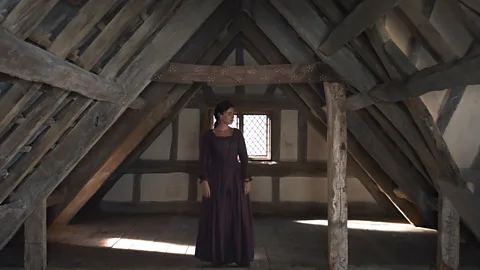
A domestic apothecary of dried herbs – rosemary, sage, mugwort, lavender and thyme – quivers prettily from the dark timber beams of a Tudor kitchen; grass is strewn across the floor, and a scarred, worn wooden table is home to a collection of earthenware bowls. This kitchen is not real but a set constructed for Hamnet, Chloe Zhao's 16th-Century drama – inspired by Shakespeare's family life in Tudor England, and based on Maggie O'Farrell's novel – which is one of the main contenders at this weekend's Oscars, with multiple nominations, including best picture, best director, and best actress.
The film's spare interiors and modest domestic world have resonated with audiences. The simple aesthetics of this era in English interiors – when furniture, fabrics and architecture were hand-made, locally sourced and practical – reveal a lifestyle in contrast to the mass-produced reality of the 21st-Century. "People had far fewer belongings than today, and they were made to last," Lucy Armstrong-Blair, cultural heritage curator at the National Trust, tells the BBC.
 Focus Features
Now a new book The House Rules showcases British period homes – among them Tudor and Jacobean – that have been lovingly restored and brought back to life. The UK boasts the oldest housing stock in Europe, and its historic buildings include not just grand piles of the landowning nobility, but humble stone cottages and thatched and timber homes.
In the US, too, there are some fascinating examples of Jacobean-era homes, notably The Fairbanks House, built in 1637 in Dedham, Massachusetts and Gedney House , built in 1665 in Salem. Meanwhile, South Orange, New Jersey, has The Stone House, built in 1680, and the town's oldest surviving building. Interestingly, there was then in the late 19th and early 20th Century a surge of stunning Tudor Revival homes built in the town and its surrounding area.
In England, the homes of the Tudor and Elizabethan eras reflected the superstitious preoccupations of the time, and the Jacobean period that followed saw a surge in witch-hunting, propelled by King James's paranoia and obsessions. Many homes of these periods featured witch-repelling "marks", carved into hearths and doorways.
 Focus Features
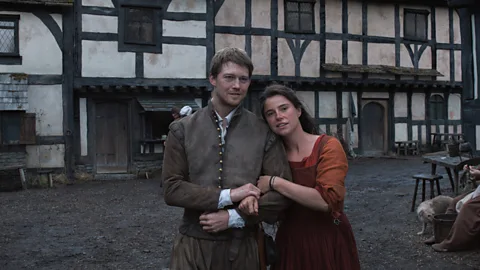
To step inside a Tudor home was to enter a world both practical and symbolic. Buildings were shaped by locally forested wood, often oak or elm – which was used to create sturdy timber frames – or stone, quarried locally. The walls were made from lime plaster mixed with horsehair, pressed onto wooden laths (strips) and sometimes adorned with painted textiles or decorative markings, as tapestries were too costly for the average Tudor.
More like this:
Many of these buildings, and their architectural details, survive to this day, altered, adapted and lived in centuries later. It is inside these dwellings that 16th- and 17th-Century history lives on.
Here are eight essential elements of the Tudor and Jacobean home that reveal how their inhabitants lived.
 The House Rules/ Andrew Montgomery
The working kitchen
"The building should have a say in what's done to it – how and why," interior designer and author of The House Rules, Patrick Williams, tells the BBC. "That doesn't mean that a 16th-Century building, for example, should be presented as a museum piece."
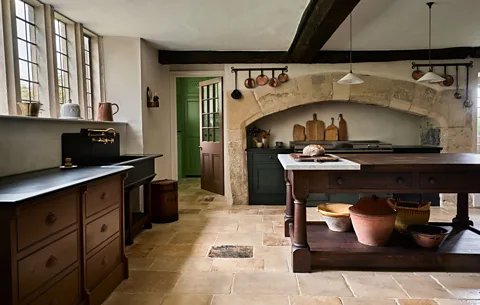
In this Cotswolds manor house, built in 1610, Williams has preserved the vast kitchen fireplace, where several spits would once have turned roasting meat. His pared-back design remains in keeping with the room's history, while also offering modernity: there's a dark timber island and a freestanding sink, now plumbed in, where in the 16th Century water would have been carried from a nearby stream or public well.
Williams has also deliberately introduced a pantry (out of sight here), reinstating a separate room, he tells the BBC, "to store food, equipment and appliances, and to allow the kitchen space to breathe – to be considered a proper room."
 Guy Goodfellow/ Robert Barber Photography
The great hall
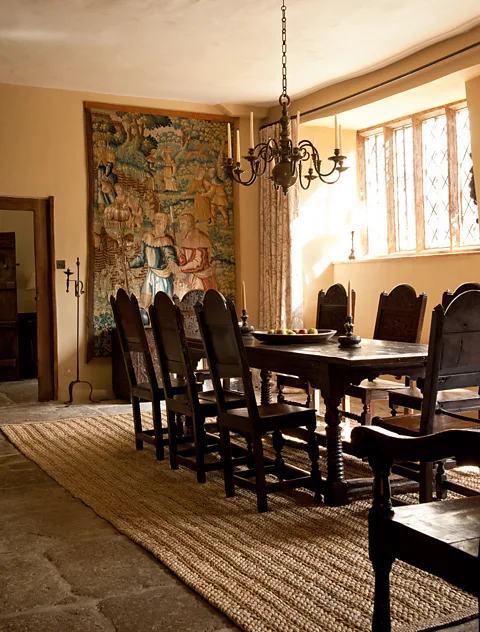
In the great hall or dining hall of affluent homes, a dais – or raised platform – was built in, where the merchant or nobleperson would sit. Then below them, two or three long tables would be set with benches for the wider household. In grander establishments, such as royal residences, meals were taken in shifts to accommodate the numbers.
"Windows were often set high," Caroline Knight, architectural historian and Fellow of the Society of Antiquaries of London, tells the BBC, "allowing rich tapestries – costly and reserved for the most luxurious houses, like the Great Hall at Hampton Court Palace – to hang below, insulating the space whilst also proclaiming wealth and power."
"There is an appeal to the simplicity of 16th-Century interiors and an honesty in the materials used," says interior and architectural designer Guy Goodfellow. "This simplicity did not re-emerge until the Arts and Crafts movement [of the late 19th Century], when it came as a relief after the heaviness of the Victorian period."
In a 16th-Century manor house on Dartmoor, Goodfellow has hung a tapestry on the wall, a nod to Tudor and Jacobean practice, when prized rugs were displayed vertically or draped over tables rather than slung underfoot. Floors, often simply packed earth or stone flags, were strewn with scented grasses gathered from surrounding meadows, which absorbed spillages and could be swept away and replaced. Known as threshes, they gave rise to the word "threshold". In Tudor and some Jacobean houses, a raised strip of wood in the doorway held the grasses in place as people passed through, explains Armstrong-Blair.
"A hall might simply have contained a large table, chairs and benches, and a cupboard to display silver or pewter dishes," says Armstrong-Blair. Chairs were a luxury, while stools and benches were ubiquitous.
 Max Rollit/ Schumacher/ Yavington Barn
The bedroom chamber
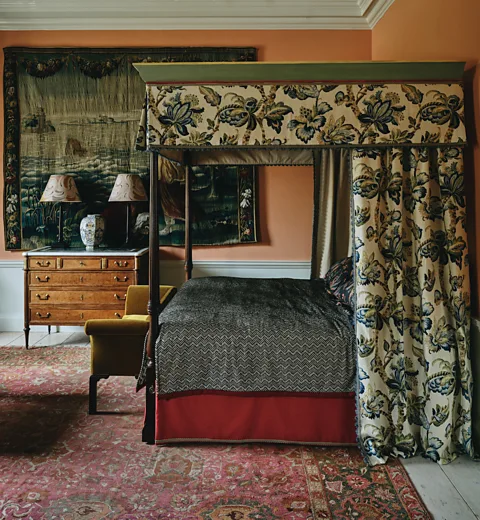
Four-poster beds, still popular with designers and homeowners today, were common, as bedrooms were shared with multiple people, and they offered both privacy and extra warmth. "Bed curtains," says Knight, "could be made from English wool, sometimes with crewel work, embroidered linen – or the wealthy would import expensive velvets or damasks from Italy." However, wardrobes weren't typical – instead clothes and bedding would be folded into wooden chests.
 Sarah Vanrenen/ Simon Brown
The great chamber
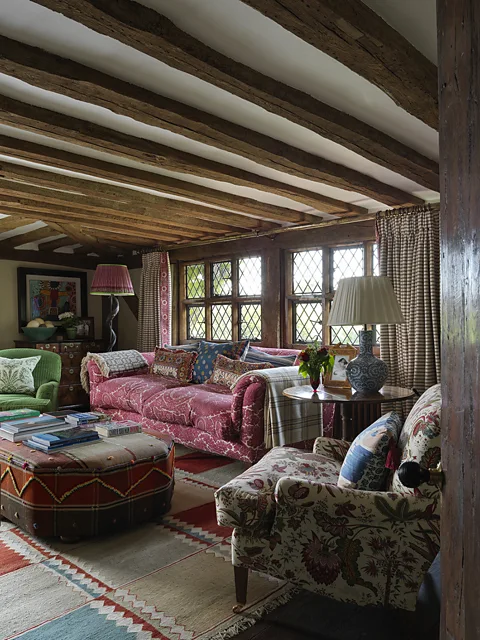
Sixteenth and 17th-Century homes placed kitchens and great halls on the ground floor. Upstairs, if a family could afford more than one storey, was the main reception room: the great chamber, "with panelled walls, a white-painted plaster ceiling and the most expensive furnishings and tapestries," explains Knight.
Interior designer Sarah Vanrenen restored Wealden Hall house in Kent, embracing its traditional features. "The original timber beams give so much unique character," she says. "We restored and exposed them, but in rooms where there were many dark beams, we chose to limewash some to keep the spaces feeling lighter."
 National Trust/ Mike Henton
Exterior timber-framed façades
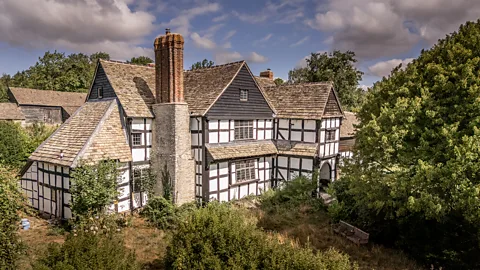
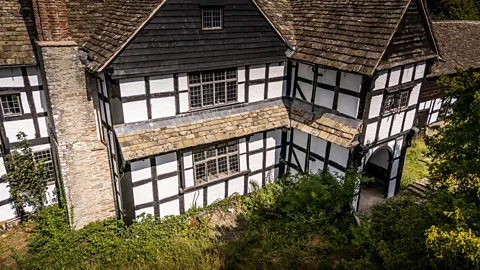
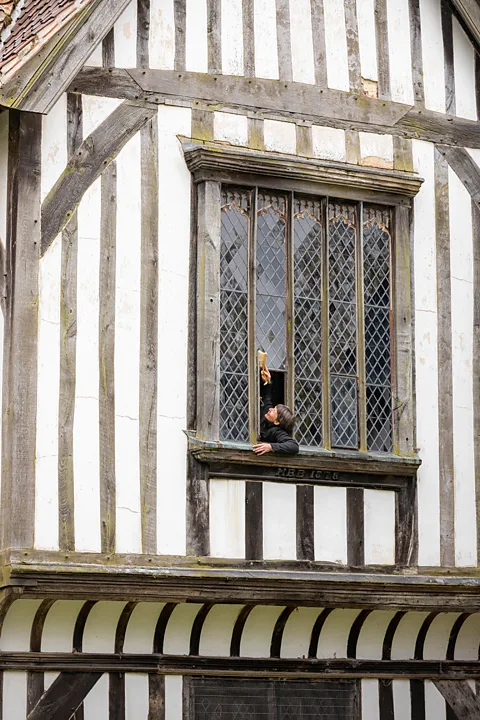
The wonky, black-and-white façades of Tudor and Jacobean houses are familiar in England and Wales, particularly in the counties of Herefordshire – where Hamnet was filmed – and Worcestershire, where timber-framed building was common due to the lack of local building stone. Cwmmau, above, the location in the film for the childhood home of Shakespeare's wife Agnes Hathaway, was originally built, says Armstrong-Blair, "as a boar-hunting lodge, although it soon became a farmhouse rather than a hunting retreat".
 Sarah Vanraven/ Simon Brown
Doors and panelling
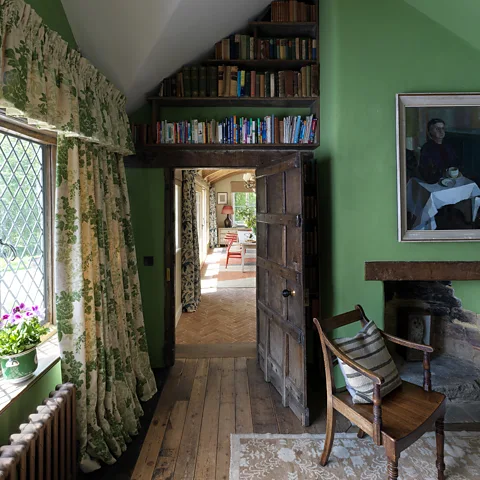
Corridors did not exist in the 16th Century, so where families could afford a staircase and extra storeys, upper rooms were smaller and interconnecting. Staircases were built of stone or timber. Doors were solid and heavy; some with locks, others adorned with simple wooden ledges or bars. Wall and door panelling signalled wealth, while adding another much-needed layer of insulation against the cold.
 Gainsborough
Mullioned windows
"Glass was expensive and only made in small pieces, so it was set into rectangular or lozenge-shaped leaded panes," explains Knight. For the peasantry, a hole in the wall sufficed. But, in grander houses, large windows would be a mark of status, though still composed of many small sections, with the lead frames mined in Derbyshire, Yorkshire and Northumberland.
Few original panes survive intact, but those that do are prized for their pleasing irregularity. "I am a huge fan of leaded windows," says Williams. "I love the patchwork of handmade glass panes, each with its varying distortion, set in an undulating, bowing or sagging grid. Inefficient and a maintenance nightmare as they are, I find them very romantic."
 Forter Castle/ Katharine Pooley
Fireplace and threshold markings
"Double, double toil and trouble; Fire burn and cauldron bubble…" The witches' chant from Macbeth, written around 1606 by Shakespeare, echoes the anxieties of an age where the boundaries between the visible and invisible worlds felt perilously slim.
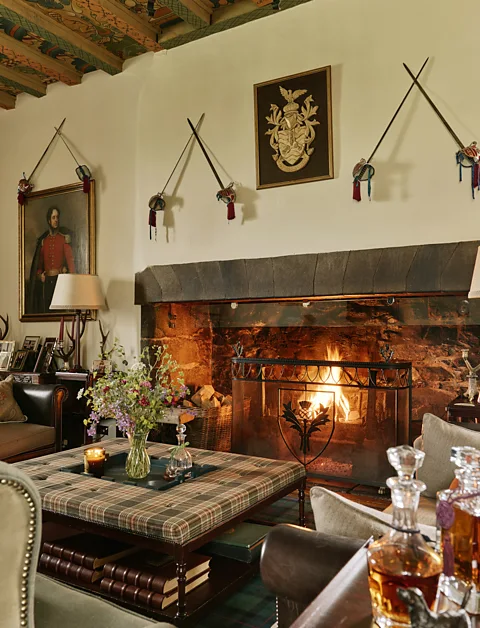
Many chimneypieces and entryways to Tudor and Jacobean-era homes still bear witches' marks – or apotropaic symbols (from the Greek for "to avert evil") – carved into stone or timber in order to guard against malevolent spirits, at a time when belief in the supernatural was woven into daily life. Daisy wheels, overlapping Vs, consecration crosses, pentangles and diagonal lines were also carved into fireplaces, chimneys, windows and doorways for the same protective purpose.
What endures in the Tudor and Jacobean houses of the 16th and 17th Centuries is not just their ancient beams, solid flagstone floors or imposing deep hearths but also, centuries later, a fascinating window into a past set of beliefs and way of living.
The House Rules by Patrick Williams is published this month by Hardie Grant/ Quadrille.
--
If you liked this story, sign up for the Essential List newsletter – a handpicked selection of features, videos and can't-miss news, delivered to your inbox twice a week.
