Sardinia's sacred Neolithic 'fairy houses'

 Andrea Cocco
Throughout Sardinia, these newly Unesco-inscribed stone necropolises tell the story of the island's pre-Roman funerary customs. But for locals, they're the enchanted homes of fairies.
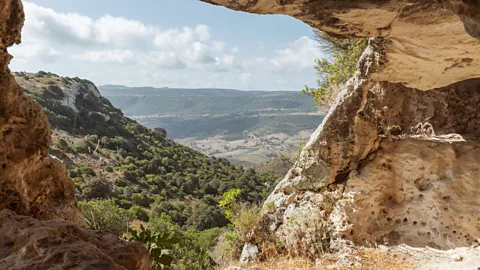
The remote and ruggedly beautiful Italian island of Sardinia is scattered with more than 7,000 beehive-shaped stone Bronze Age monuments known as nuraghi – rising from the Mediterranean scrub like silent sentinels of a shadowy pre-Roman past. But long before these iconically Sardinian structures were ever built, another series of Tolkien-esque monuments were hewn into the rocks: ancient necropolises called the domus de janas, or "fairy houses".
The domus de janas were erected by the Ozieri (3200-2800 BCE), Sardinia's first great Neolithic civilisation and one of the most sophisticated societies in the western Mediterranean. Settling on fertile plains and hilltops, the Ozieri believed death wasn't an end but the beginning of a new chapter. To embody this credence, they carved approximately 3,500 underground chambers to resemble earthly dwellings; 220 of which were decorated with red ochre and bull motifs, held to symbolise rebirth.
In Sardinian folklore, however, these chambers are believed to be the enchanted homes of benevolent fairy-like women called janas; beings with pale, moonlit skin, often dressed in red, who spun fine fabrics made of golden threads and taught mortals the secrets of baking bread. Their legacy is passed down by school teachers and elder Sardinians through oral tales. According to one such legend, the janas emerge from their dwellings, their hair glinting silver, to sing otherworldly songs. Others warn of humans who vanished after stepping into the janas' hidden homes.
In July 2025, 17 domus de janas were recognised by Unesco as a collective World Heritage Site. They endure not only as archaeological remains, but as cultural symbols that weave together landscape, tradition and community.
They also served as the thread that guided my recent journey across the island.
 Andrea Cocco
Stepping through the doors
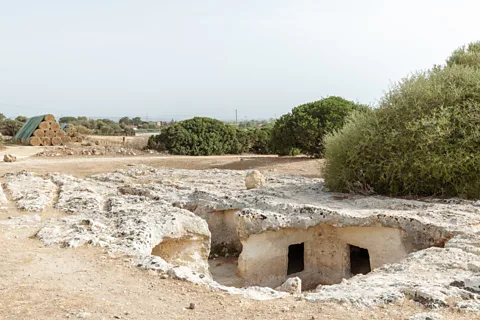
I set out by camper on Sardinia's northern coast to my first stop: the Necropolis of Su Crucifissu Mannu, a few kilometres from the island's north-western town of Porto Torres, where I was met by my guide, Maurizio Melis. The limestone plateau opened before me with low doorways hollowed into the rock, leading to 22 tombs dating to the 4th and 3rd millennia BCE.
"For the Ozieri civilisation," said Melis, "the narrow dromos that descended into the tombs was a liminal passage through the earth itself, seen as a womb, a place that welcomes and transforms."
 Andrea Cocco
Secrets beneath the stone
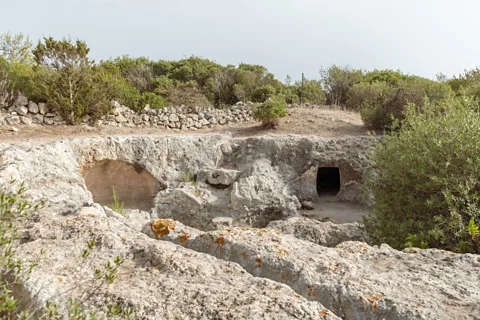
Melis led me deeper into the necropolis. "Su Crucifissu Mannu was used for centuries," he explained. "These tombs were first dug thousands of years ago and remained in use for millennia, until the Romans walked these lands." During excavations in 1972, archaeologists unearthed fragments of pottery, statuettes of the Mother Goddess and even a skull belonging to a man who had undergone two trepanations more than 3,500 years ago. "Science explains much," Melis said, "but for many, these tombs have always belonged to the janas."
 Andrea Cocco
Where time overlaps
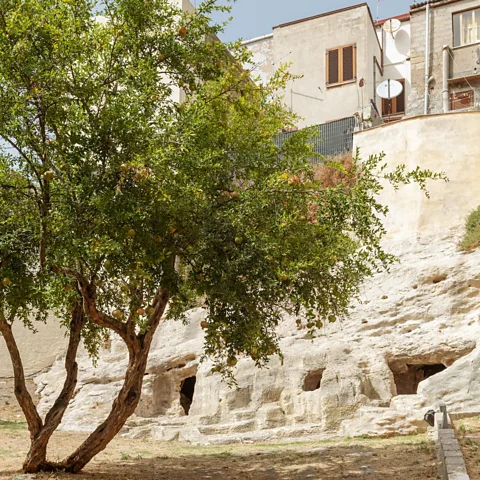
Leaving Su Crucifissu Mannu, I drove inland as the landscape gave way to hills terraced with vineyards and orchards. The road climbed to Sennori, a village with medieval roots set above the Gulf of Asinara. Just behind the Town Hall, a small gate opens onto the Necropolis of the Beneficio Parrocchiale. Here, modern houses rise directly above Neolithic tombs carved into the rock 5,000 years ago, their entrances hidden among fig, pomegranate and olive trees.
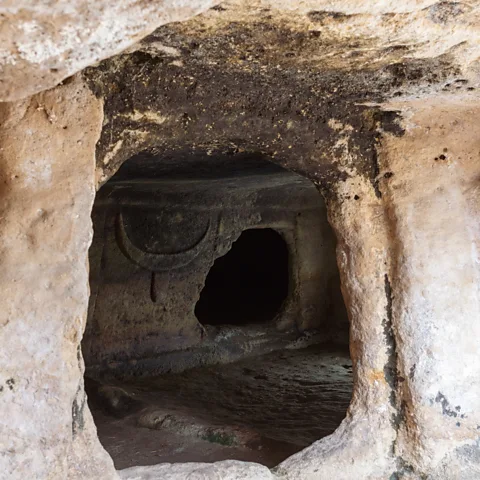 Andrea Cocco
Sacred horns of Sennori
"This is the heart of the tomb, a sign of strength and vitality," explained Elena Cornalis, Sennori's Councillor for Culture, as she walked beside me through the underground chambers. We passed along a narrow dromos where daylight vanished into shadow. Suddenly her torch swept across the wall, and a protome taurina (the stylised frontal head of a bull) emerged from the gloom.
"Since its Unesco recognition, this place has given our community a stronger bond with its history," she said proudly.
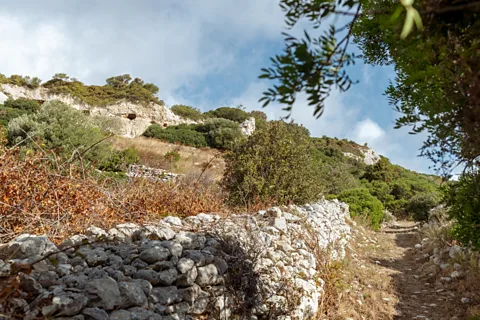 Andrea Cocco
Ascending to Mesu 'e Montes
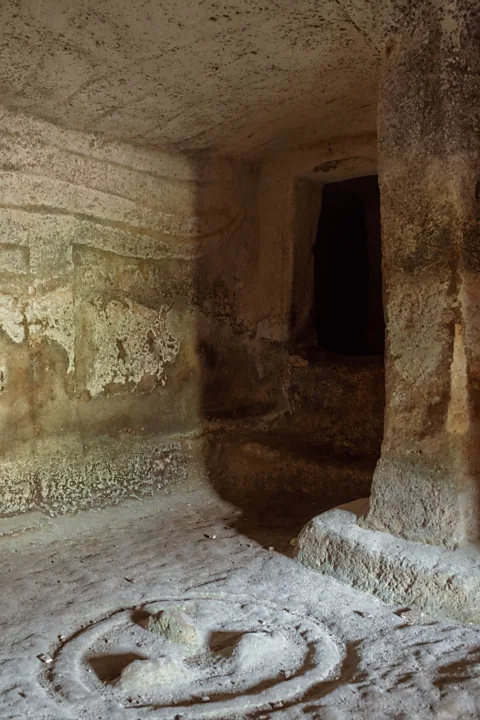
I followed the road from Sennori to Ossi, surrounded by limestone cliffs and olive groves. The climb led towards the plateau of Monte Mamas, where the necropolis of Mesu 'e Montes sits at 430m above sea level. The path, bordered by dry-stone walls and scented with helichrysum and mastic trees, leads to 18 tombs that were built to resemble scaled-down versions of the homes found above ground. These pitched roofs, cornices, panels, pilasters and false doors were believed to ease the transition to the afterlife.
 Andrea Cocco
Inside the carved chamber
I ventured inside the tombs of Mesu 'e Montes alone, where a narrow doorway opens onto a chamber supported by a central pillar. There are geometric carvings and bull horns on the walls, while a circular pit cut into the floor suggests ritual gestures of renewal. Traces of red ochre still cling to the rock. Bull horns are thought to suggest fertility and strength, while the bull itself – both earthly and divine – was believed to guide the dead through corridors painted in red.
One legend tells that the janas once led a woman into these very caves, teaching her the secret of fermentation and gifting her the frammentu, the sourdough starter to be shared within the community for making bread.
 Andrea Cocco
Towards Sos Furrighesos
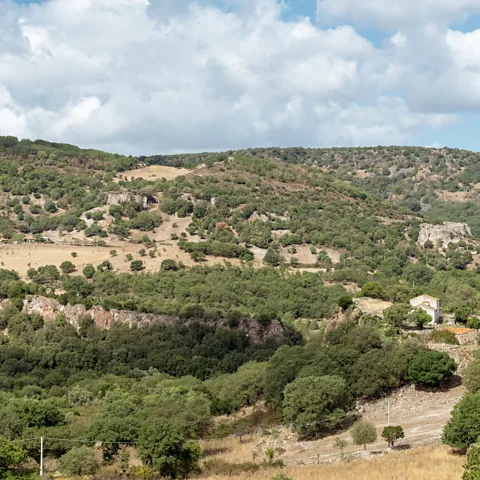
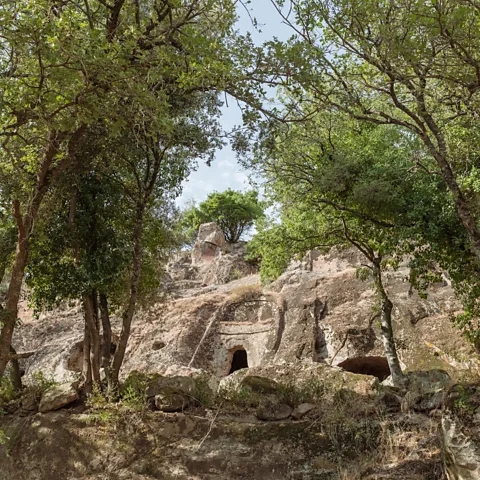
Winding into the heart of the island's Goceano subregion, I crossed the forest of Anela to reach the Necropolis of Sos Furrighesos, meaning "the pyres". Cut into volcanic rock, its 18 tombs line a cliff that rises up to 20m, arranged across three levels of the ridge. Archaeologists have recorded more than 140 petroglyphs here, the richest concentration of prehistoric carvings on the island.
Their imagery still resonates across Sardinia: local artisans, through weaving and ceramics, continue to reproduce spiral and horn motifs that descend from this ancient symbolism.
 Andrea Cocco
Faith in stone
At the necropolis of Sos Furrighesos, in front of the monumental entrance of Sa Tumba de su Re ("the King's Tomb"), archaeologist Giuseppa Tanda – who helped uncover the archeological site in the 1970s – reflected on the spirituality of the domus de janas. "Death was part of a natural cycle," she said. "The community mourned the departed and awaited a new birth to restore balance."
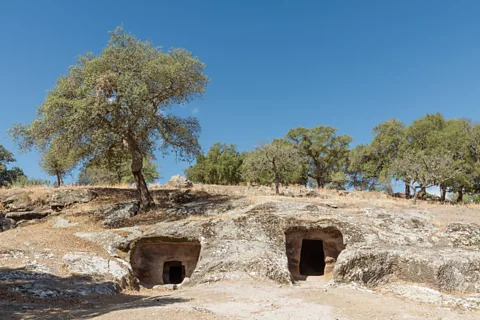 Andrea Cocco
The gaze of Brodu
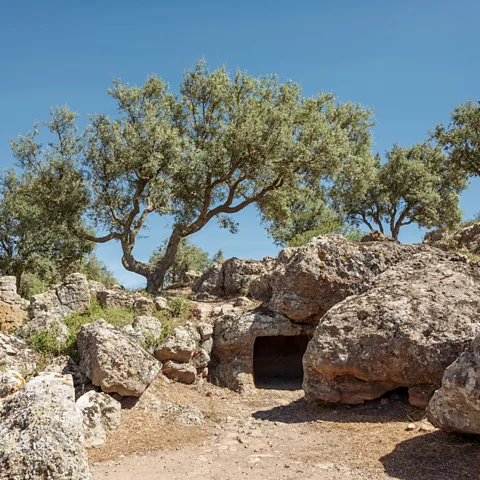
Continuing my journey south into the rugged Barbagia subregion, a land marked by countless nuraghi, I arrived in Oniferi, where the Necropolis of Brodu greeted me with its enigmatic "gaze": two dark openings carved into the rock, like ancient eyes. Above the tombs, a nuraghe rises among the trees.
 Andrea Cocco
The ancient playground
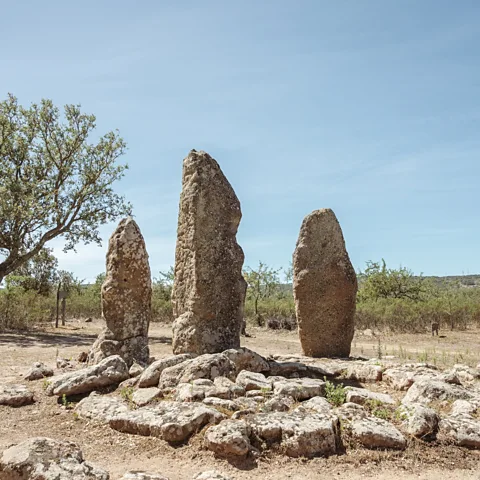
As my journey through Sardinia reached its southern terminus, the road crossed the barren plateaus of the Gerrei subregion before leading to the Necropolis of Pranu Muttedu in the vast archaeological site of Goni. Beneath the shade of a great oak, I met Graziano Arba, who has served as a caretaker of the site for nearly 30 years. "I've known these tombs since I was a child," he says. "For us, they were a place to play, or to shelter when the rain came." His uncle was a shepherd, and the family pastures once included some of these tombs – places that Arba now tends with pride.
 Andrea Cocco
Invisible guardians
As I wander, I see three menhirs (prehistoric upright stones) rising like stoic sentries around the tombs, creating one of Sardinia's most complex prehistoric panoramas. Megalithic circles and domus de janas exist side by side within the same sacred area; a rare combination that reflects the final Neolithic phase and the beliefs of the Ozieri culture.
In Sardinia, history, legend and daily life remain inseparable, carved into the same rock: an inheritance that the island still carries forward from the past into the present.
--
If you liked this story, sign up for The Essential List newsletter – a handpicked selection of features, videos and can't-miss news, delivered to your inbox twice a week.
For more Travel stories from the BBC, follow us on Facebook and Instagram.
