Are 'the world's most beautiful islands' in danger?

 Getty Images
Norway's stunning Lofoten Islands have gone viral for their midnight summer sun. But as the isles face overtourism for the first time, residents have an important message for visitors.
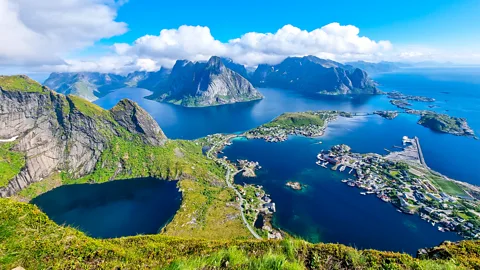
Located 300km inside the Arctic Circle, Norway's Lofoten archipelago rises dramatically from the sea in a jagged, mountainous crescendo. Its otherworldly glacier-sculpted landscapes and magical 24-hour summer daylight have led the isles to proudly dub themselves "the world's most beautiful islands". But it's a roadside stop, not a soaring summit or majestic fjord, that convinces me of this self-declared moniker.
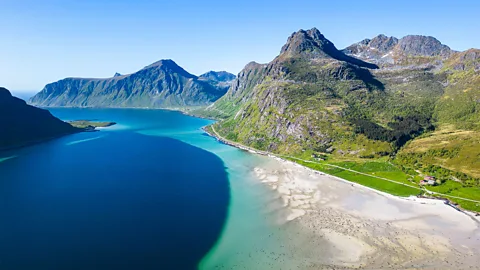
Just a few paces away from the village of Flakstad on the island of Flakstadøya, I spy a beach where the water shifts from turquoise to glass-clear as it laps against basalt rock and sugar-white sand. It's a scene more Aegean than Arctic – until you see the ridge of craggy mountains floating above the fjord, the last snow clinging to their flanks. From late May to the end of July, Lofoten is bathed in constant daylight, and in this endless summer sun, the colours feel heightened. Standing on the sand, it's hard to imagine anywhere more idyllic.
Locals tell me that the 24-hour sun bathes these islands in a unique light and point to round-the-clock fishing and 02:00 tee times as quintessential summertime experiences. But kayaks crisscross the waters in every season, and hikers come year-round for the panoramic mountaintop views of silent fjords and romantic waterside villages that define the islands, chasing the midnight sun or the Northern Lights. At times, the only sounds around are the cries of the island's resident avians: sea eagles, puffins and razorbills.
 Alamy
AlamyArctic overtourism
The Lofoten archipelago is made up of seven principal islands off the North West coast of Norway. The E10 highway runs for nearly 175km through the archipelago, threading the five largest, Austvågøya, Vestvågøya, Moskenesøya, Flakstadøya and Gimsøya, by a series of impressively engineered bridges and tunnels, allowing drivers to move between islands with ease.
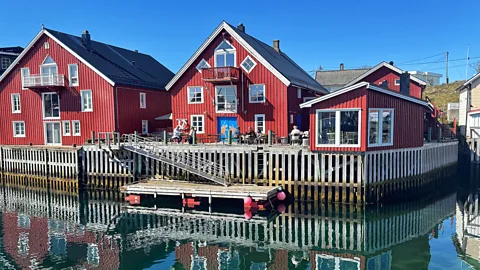
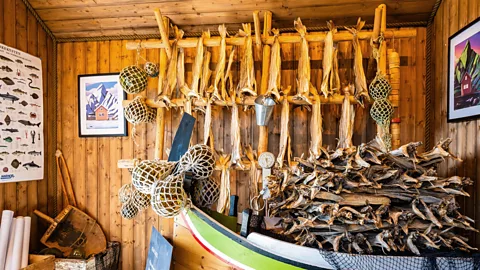
Visitors here are nothing new. The islands were home to northern Norway's earliest Viking settlement, drawing traders from as far away as Iceland. For centuries, tens of thousands of sailors journeyed here each winter to fish for Arctic cod, a tradition still reflected in the red rorbuer (fishermen's cabins) that now host tourists instead of seafarers.
And yet, tourism was late to come to this far-flung corner of the world. It only started to grow significantly in the past 20 years, helped initially by improved road and ferry links, then accelerated as social media began showcasing Lofoten's stunning scenery to a global audience. Now Lofoten's beauty is no longer a secret, and what was once a seasonal outpost of survival and commerce has evolved into one of Norway’s most popular destinations. In 2023, the islands welcomed around one million visitors, or roughly 40 times Lofoten's permanent population of 25,000.
But as European heatwaves drive travellers further north and new seasonal flights from Paris, Frankfurt and Zurich launched last year, tourism is only set to rise further. A weaker Norwegian krone is helping to seal the deal.
Lofoten residents Astrid Haugen and Frida Berg explain that they're proud to share their home and welcome the jobs (and the new bars and restaurants) brought about by tourism, but wonder whether infrastructure can keep up. They also worry whether this influx of visitors will affect the landscape and fragile ecosystem that make Lofoten so special.
Plan your trip:
When to go: Late May to late July for midnight sun, perpetual twilight until mid-August
Getting there: Bodø (1.5 hr flight from Oslo) is the best Lofoten launchpad from UK. Take a 30-minute flight to either Svolvær or Leknes. Alternatively, rent a car and take the ferry (3.5 hrs)
Stay: Waterfront rorbuerat at Eliassen Rorbuer or 360-degree views at Henningsvaer's Skata Hotel
Do:
Evening hikes – up mountains or along beaches
Lofoten Links – midnight golf at one of the world's best 100 courses by Golf Magazine
Lofotr Viking Museum – immersive experiences on the site of an excavated longhouse
No Problem Sport Fishing – try your hand at a Lofoten tradition
I meet up with them on Unstad beach, at the north-western corner of Vestvågøy, one of the best places on the islands to catch the midnight sun, thanks to its unobstructed views across the bay. Even at 23:00, surfers cheer each another on from the waves. Families enjoy snacks on the rocks while children shriek in the shallows as they splash in the frigid, single-digit Arctic waters. Mountains hover on either side of us, framed by a sky a few shades paler than the sea.
"When I used to travel abroad and said I was from Lofoten, people looked blank," says Haugen, as we stroll the beach. "Now they've seen pictures online and can't believe this is my everyday view."
"That's part of the problem," adds Berg. "This is our home – not just a backdrop for a Facebook selfie. When people litter or block roads, it's so frustrating".
Many residents I speak with share this frustration. They're not just bothered by the number of visitors, but by their behaviour.
I see many examples of this during my week on Lofoten. RVs creep along narrow fjordside roads to snap a photo, oblivious to the traffic building behind them. At 20:00, the car park hike up the vertiginous Reinebringen mountain resembles a suburban shopping centre on Black Friday, jarring with the peaceful surroundings. Groups of eager tourists spill out, eager to tackle the 1,978 steps that separate them from the vertiginous panorama at the summit.
Some locals have had enough. In a recent radio interview, Flakstad mayor Vidar Thom Benjaminsen warned of shifting sentiment: "Ten years ago, maybe 2% of our residents didn't want tourism. Now it's more like 25%."
 Phil Thomas
A tale of two villages
As in many tourist hotspots, Lofoten residents are also frustrated that an increasing number of homes are being bought by wealthy outsiders. Some are purchased as seasonal getaways or turned into short-term accommodation, hollowing out villages in winter; in other areas whole settlements have been turned into sleek resorts.
Nusfjord, on Lofoten's southern coast, illustrates this shift. The historic fishing village is postcard-perfect, with red and ochre warehouses perched on a narrow isthmus facing the sea, appearing frozen in time on its 19th-Century foundations.
The permanent population? 22. The number of annual tourists? 90,000.
After the village's fishing industry migrated to more populated areas, Nusfjord's centre became a Unesco World Heritage site, combining tourist accommodation and "a living museum where you can touch, feel and breathe the history of coastal Norway," according to local historian Ingrid Larsen. It remains an utterly charming stop: the museum, set in a former cod liver factory, offers insights into the village's fishing legacy; the restored general store serves excellent cinnamon buns; and the boardwalk, backed by a rippled grey ridgeline, is undeniably scenic.
Erling Hansen, a tour guide, understands the locals' concern but is pragmatic: "Without tourism, there probably would be no village in Nusfjord anymore."
Later that day in Henningsvær – 80km and several peninsulas away from Nusfjord – the contrast is stark. Even at 22:00, the village hums with life as locals revel in the extended daylight. Teenagers swarm towards the floodlit football pitch, improbably perched on a rocky outcrop. Two neighbours paint their front doors – one white, one blue – gesturing mid-conversation with dripping brushes.
At the harbour, tools clank as fishermen check their nets. "The fish bite better at midnight," one says with a grin.
Tourism supports 19% of local jobs on the islands. Around-the-clock fishing trips offer visitors a taste of tradition – and locals a new income stream. The message is clear: guests are welcome, but as Hansen says, "We're not some Arctic Disneyworld".
 Alamy
AlamyA new strategy
Earlier this year, the Norwegian government gave councils in high-tourism areas the right to introduce a visitor tax. Lofoten plans to roll it out in 2026. The revenue will help fund overstretched infrastructure, from extra parking to trail signage urging hikers to stick to the path – in case the dizzying drop-offs weren't clear enough.
Mayor Benjaminson welcomes the budgetary relief. "We no longer need to choose between renovating a school or cleaning up after tourists," he says dryly.
It's part of a broader, gently persuasive strategy. Local tourism campaigns feature locals – including schoolchildren – asking visitors to drive responsibly, take their rubbish home and avoid disturbing local wildlife when hiking. Officials also hope to promote Lofoten year-round, easing the summer surge and preventing areas becoming ghost towns when the light fades.
Back at Unstad, the light softens to amber as I walk along the shore with Haugen and Berg. A lone surfer rides a gilded wave while multiple families are trying – and failing – to convince their children that constant daylight doesn't cancel bedtime.
"It's hard," says Berg. "We want people to love Lofoten – just not so much that it stops being Lofoten."
She has captured the dilemma. Tourism funds heritage projects that might otherwise vanish, but the endless days – and the crowds they bring – stretch local patience and infrastructure.
And still, Lofoten captivates. Peaks catch fire as the sun stretches over the sea, quietly inviting us to linger.
Amid this serene beauty are homes, schools and businesses. Locals are learning how to share the magic without losing it. They hope visitors will do more than admire the view – that they'll tread lightly, listen closely and help protect what attracted them in the first place.
--
If you liked this story, sign up for The Essential List newsletter – a handpicked selection of features, videos and can't-miss news, delivered to your inbox twice a week.
For more Travel stories from the BBC, follow us on Facebookand Instagram.
