Amazing or a shambles? Decision on liveable neighbourhood delayed

 Alex Seabrook
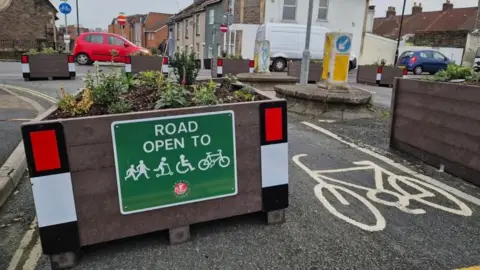
A six-month liveable neighbourhood trial will have been in place for almost two years by the time a decision on making it permanent is made.
An "outrage" and a "shambles" are just some of the ways opponents to the East Bristol Liveable Neighbourhood (EBLN) have described it, while others say they are enjoying its "amazing" benefits, such as quieter streets and safer walks to school.
The scheme has been controversial from the get-go. Bristol City Council said it would "create a safer, healthier and greener neighbourhood" but protesters argued it increased journey times, pushed congestion elsewhere and negatively impacted businesses.
A decision on whether the scheme should become permanent was due to be made in March, but the council has now pushed it back to July.
In the meantime, the authority said it was making changes to the scheme — including the removal of the bus gate on Marsh Lane and replacing other road blocks with enforcement cameras and bus gates to improve emergency access.
The council said the transport committee's final decision would be based on feedback from residents as well as data on traffic and air pollution.
Councillor Ed Plowden, chair of the city council's transport and connectivity committee, said he understood residents "may be feeling frustrated".
He said the start of the trial had been delayed by protest activity, and said "extensive" data had been analysed throughout with some immediate changes made in response to feedback.
"Implementing these changes is being done in parallel with bringing together the full business case outlining proposals for the long-term future of the Liveable Neighbourhood as well as the independent review of the trial commissioned by the West of England Mayor," he added.
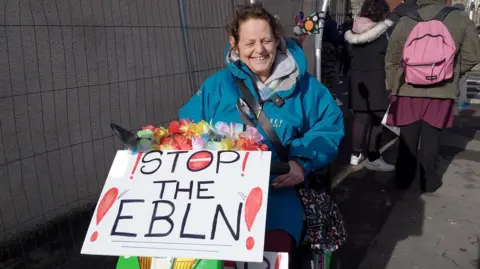
Melissa Topping is the leader of the anti-EBLN campaign and has been protesting against the scheme since it was introduced in October 2024.
She said: "This is pushing a so-called six-month trial further and further into the future without a vote on it, or making any reasonable adjustments for the disabled and elderly that weren't consulted in the first place."
'Shambles'
Topping said locals had been made to feel "like a bunch of guinea pigs".
"They [the council] keep saying mistakes have been made, and that lessons have been learnt, but we are being left with it," she added.
Ian Malley, who lives in St George, told the BBC the situation was "a bit of a shambles".
He said the traffic on Blackswarth Road was so bad that he had to spend extra time using alternative routes to get home.
According to a council report, traffic within the liveable neighbourhood dropped by 77% on weekdays, while cycling volumes rose by 22% and walking increased by 7%. Bus use in the area increased by about 5%.
However, it noted an 80% increase in traffic on Blackswarth Road during peak periods and a 42% rise on St Philip's Causeway.
Simon, who lives in Barton Hill, said: "It's an outrage that the scheme was even thought of in the first place, but delaying an obvious decision is even worse.
"Not only should the scheme be abolished, we should be compensated for additional fuel costs, and due to the distress it has caused."
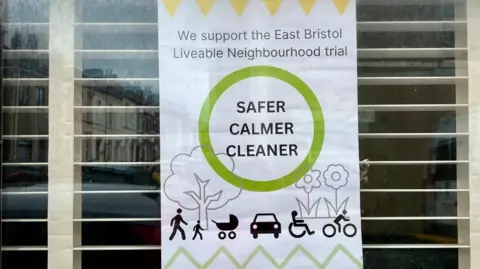
However, supporters of the scheme said restricting through-traffic had made it easier to walk and cycle.
Lyndsey Melling, who lives in St George, said: "I really hope the changes get made permanent and we get the certainty that we won't return to the old days of noise, fumes and crashes outside our house."
Pietro Herrera said the scheme had been "life-changing", and added: "For us, walking to school is amazing.
"I kind of forget how dangerous it was."
However, Herrera, who also lives in St George, said there were still issues which needed to be addressed, such as pressure on businesses due to a reduction in passing trade.
While Herrera said he did not know the decision on the scheme had been delayed, he added: "The most important thing is the data, so we need as long as it takes to collate and understand that."
Follow BBC Bristol on Facebook, X and Instagram. Send your story ideas to us on email or via WhatsApp on 0800 313 4630.
Follow BBC Bristol on Facebook, X and Instagram. Send your story ideas to us on email or via WhatsApp on 0800 313 4630.
