Low-traffic zones increased congestion in some areas TfL admits

 BBC
BBCExtra bus lanes and Low Traffic Neighbourhoods (LTNs) have increased congestion for cars in parts of the capital, Transport for London (TfL) officials have admitted.
The transport body has been shifting policy away from accommodating private-vehicle use as part of an overall aim of ensuring 80% of journeys made in London by 2041 are by walking, cycling or on public transport.
This has involved carving off some road space for extra bus lanes and the implementation of LTNs.
Measures such as the Ultra Low Emission Zone (Ulez) levy and the Congestion Charge Zone (CCZ) are also part of City Hall's drive to reduce reliance on cars in London.
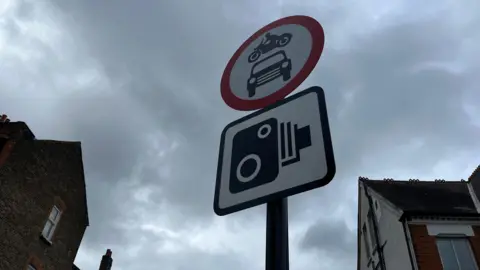
LTNs aim to reduce motor traffic in residential areas by using cameras, planters or lockable bollards.
London Mayor Sir Sadiq Khan's ambition of achieving net-zero emissions by 2030 relies on a 27% reduction in kilometres travelled by car.
'Huge successes'
Officials say that increased use of buses, trains and cycle lanes will lead to less congestion and faster journeys for those who rely on a private vehicle for business or accessibility reasons.
However, with bus speeds falling and London topping the list of the world's slowest driving capitals, the effectiveness of the measures has been questioned.
On Wednesday, TfL officials admitted to the London Assembly transport committee that the implementation of about 100 LTNs, mostly during Covid, had increased congestion in some areas.
Carl Eddleston, TfL's director of streets and network operations, said LTNs "provide significant safety and active travel benefits", adding: "Most of them are on borough roads, so they're not a TfL decision.
"In some locations they have added congestion to the local area, but nearly all of them have been huge successes. We do need to continue to actively review them – there's been a huge amount of listening to communities and tweaks to LTNs."
Clarification 9 March: The headline for this article has been updated to reflect that TFL admitted that LTNs increased congestion in some parts of London.
Listen to the best of BBC Radio London on Sounds and follow BBC London on Facebook, X and Instagram. Send your story ideas to hello.bbclondon@bbc.co.uk
