'Our daughter's cancer symptoms were dismissed because she was a child'

 Sneddon Family
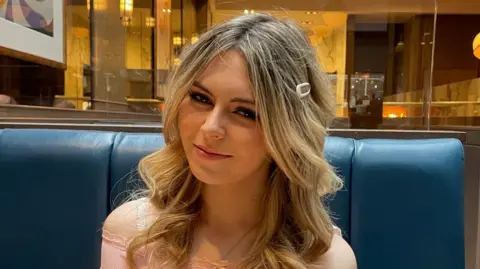
The parents of a teenage girl who died from breast cancer say their only daughter could still be alive now if she had been treated the same as an adult.
Isla Sneddon, from Airdrie, died in March 2025 aged 17, just six months after she was diagnosed with cancer.
Her parents say doctors had downgraded her referral for biopsies to a routine one because of her age, meaning her cancer went undetected until it was too late.
Mark and Michelle Sneddon now want a change in the law to ensure urgent paediatric referrals are subject to the same maximum wait times as adult cancer referrals.
The Scottish government says it published new cancer referral guidelines last August and the health secretary is looking forward to discussing Isla's family's petition.
 Sneddon Family
Isla first went to the GP in July 2022 with a lump in her breast, but she was told it was likely to be benign and caused by hormonal changes.
"She was told it was hormonal - a fibroadenoma - and she would grow out of it," Isla's father Mark said.
Two years later, Isla became ill and was taken to hospital, where doctors suspected she had cancer and made an urgent referral for biopsies
But her parents say the referral was downgraded by the clinic because of her age.
After 10 weeks in the hospital in September 2024, Isla was diagnosed with cancer when a sarcoma, that had already spread to her lungs and lymph nodes, was found on the lining of her heart.
"The oncologist took us into a room and basically said 'your daughter is going to die, she's got six months to one year to live'," said Mark.
"Isla didn't want to know, she just wanted to live her best life.
"She was a very gentle soul and our world revolved around making her happy."
He said he had told her since she was little that he was looking forward to teaching Isla how to drive and buying her her first car, but he never got the chance.
 Sneddon Family
Isla continued to receive chemotherapy and was sent home from hospital.
The family decided to spend as much time together as possible in the remaining months but Isla's condition worsened and she was rushed to hospital in March 2025.
Mark said the doctors told them she was the "sickest person in the hospital" and her needs were "too complex" for the ward she was in, but her parents were still hopeful she would push through.
Then Isla's condition reached a point where her parents were told there was nothing more anyone could do.
"We nursed her through six months of chemotherapy and she just died at the end," Mark said.
"She still looked healthy and beautiful but she died in our arms in the hospital."
Mark and Michelle believe that if there had been early intervention and Isla had been an adult presenting with the same symptoms, they would have had more time with their only child.
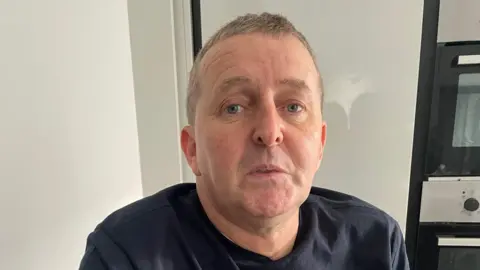
Isla's parents have been campaigning for the last year to establish Isla's Law to ensure children and young people across Scotland are assessed and treated with the same level of urgency and access to diagnostic tests as adults.
NHS England has very recently formalised a 'three strikes' rule - called Jess's Rule - meaning GPs are encouraged to rethink a diagnosis if a patient presents three times with the same symptoms or concerns. This rule is named after 27-year-old Jessica Brady who died from cancer after going to her GP 20 times before she was diagnosed.
Isla's family also want a formal review into paediatric diagnostic delays in Scotland, to identify systemic failures and implement change.
Her mother Michelle said Isla's symptoms were often dismissed as anxiety because she was young.
But they were later told by the hospital she did not actually have anxiety, it was instead a sign of the cancer.
"If a child presents with a lump, anxiety symptoms, chest infections or tonsillitis - two or three symptoms - the GP should go down a different pathway, away from the guidelines," said Michelle.
"Isla's cancer didn't have guidelines, it was rare and if someone had looked down a different pathway, Isla could maybe still be here."
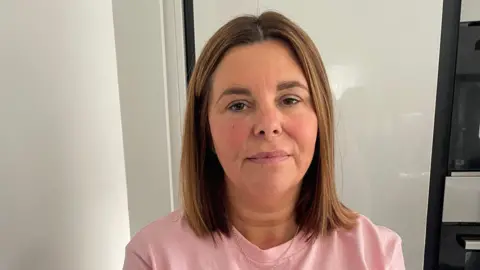
She said she believes the cancerous tumour had been lying dormant under a fibroadenoma and it slowly started to spread to the point that it was too late to treat.
But a longer investigation, such as a mammogram or scan, could have saved her life.
The couple said Isla was an "outlier" but they are now fighting to stop other families from going through what they have.
Mark said in the majority of cases children who had the same symptoms as Isla are probably in the clear because they are young and Isla was in the small minority.
But he added: "I never want another mother or father to feel the way Michelle and I feel."
The family are now set to meet with Health Secretary Neil Gray on Thursday to discuss their concerns.
However Michelle said they had been told they will have to wait until a new government is formed before a potential bill can be introduced in parliament.
Health board response
Arwel Williams, NHS Lanarkshire director of acute services, said: "Our team have been responding to the family's concerns through correspondence and face-to-face meetings and we have reassured the family that Isla's treatment was in line with expected clinical pathways.
"However, we fully recognise how devastating this has been to the family and our thoughts and sincere sympathies remain with them.
"We continue to engage with the family and will provide any further support we can."
The health secretary said: "I would like to express my deepest sympathies to the family of Isla Sneddon for their very sad loss. I look forward to meeting her family this morning to further discuss their petition and concerns.
"We published updated Scottish referral guidelines for suspected cancer on 6 August, which include a new children and young person's referral guideline. These will help to ensure the right person is on the right pathway at the right time."
