The Scottish estate transformed by King Charles' green vision

 Getty Images
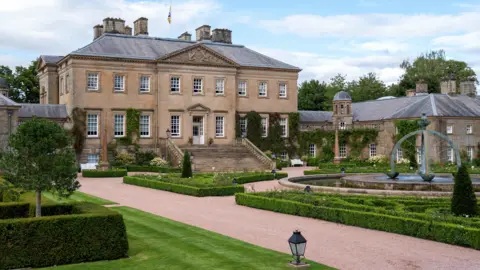
Dumfries House faced an uncertain future when it was put up for sale almost 20 years ago.
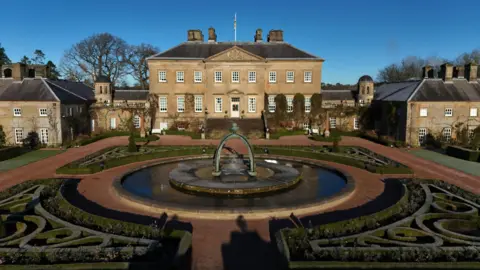
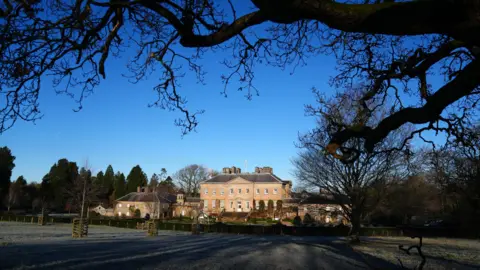
The striking 18th Century building is surrounded by 2,000 acres of gardens, woods and farmland near Cumnock in East Ayrshire.
The house contains almost all of its original Thomas Chippendale furniture, which is still in pristine condition after 250 years of private ownership.
But by the time it was put up for sale in 2007, the cost of the building's upkeep was becoming unaffordable and there were fears it would become a ruin without intervention.
That was when it came to the attention of King Charles, who at the time was the Prince of Wales.
"I knew that we had to do something to prevent a priceless treasure being lost forever, to save the house and its contents for the nation," he later recalled.
He saw it as somewhere that could embody his vision for putting nature and conservation at the heart of regenerating not just a building, but a community.
 Getty Images
Dumfries House sits alongside areas of high social deprivation in a part of Scotland still scarred by the collapse of the coal mining industry.
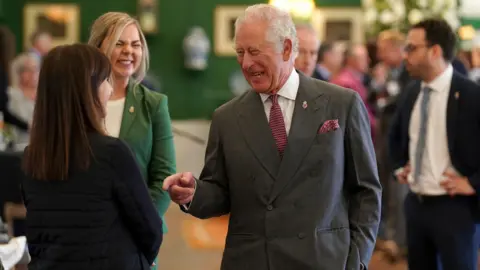
King Charles led a consortium which bought the house, its grounds and priceless collection of furniture for £45m.
They set about regenerating both the estate and the building, which was designed by architect William Adam in 1760 as a home for the 5th Earl of Dumfries.
It is now the headquarters of the King's Foundation.
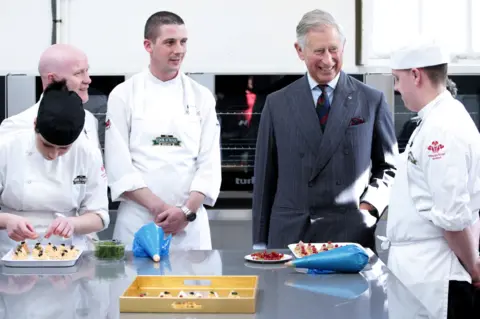
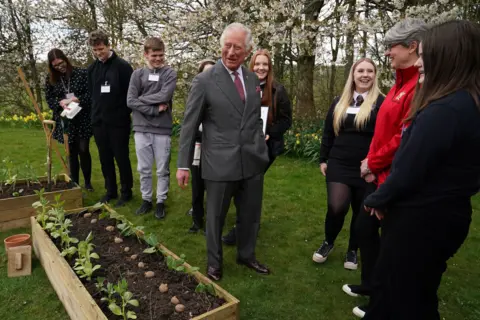
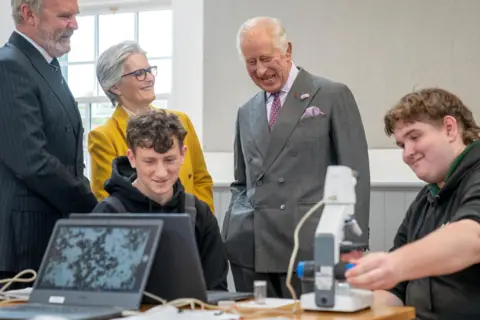
It employs about 130 people and, since 2013, has provided training in traditional skills and outdoor education for almost 100,000 students.
Its story features in the new Amazon Prime documentary Finding Harmony: A King's Vision.
 Getty Images
In the programme, the King describes it as "a great example of how you can create new business and jobs in the green economy".
His idea of "harmony" is essentially about maintaining a sustainable balance between people and the natural world.
In 2010, he co-wrote a book about his philosophy and the King's Foundation has long lived by its principles.
Dr Simon Sadinsky, executive director for education at the King's Foundation, says Dumfries House's location - sitting alongside historically deprived communities - shows that the principles can be applied across the socio-economic landscape.
He added: "These principles underpin our approaches to how we engage with communities, how we build and design our communities, how we look at our food systems; all of these processes that are so fundamental to the way that we live our lives."
 Getty Images
 Getty Images
 Getty Images
Dumfries House had been a private residence for 250 years until it was put up for sale by the Bute family in 2007.
In the film, King Charles explains: "I felt it was critical to try and demonstrate how you could regenerate an entire area; how we could help raise aspirations and create new hope by bringing people together in a thoroughly integrated, collaborative way."
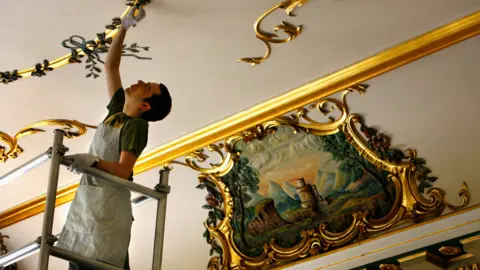
Restoration work was carried out on both the building and its contents, including rewaxing a rare Chippendale bookcase estimated to be worth about £20m.
A range of courses are now delivered at Dumfries House.
They include costume craft, which teaches students about sustainable leather, embroidery and sewing skills while making outfits for the film and television industry. The course is being financially supported by Amazon MGM Studios.

Kyra Ho, 22, from Glasgow, is one of just eight students who have secured a place on its inaugural year.
She says the increase in so-called fast fashion means the King's harmony principles fit well with the need to use more sustainable textiles.
"It's really important to me because there's so much waste and, as designers and makers, we have to be mindful of what we're creating and the fabrics we use," she says.
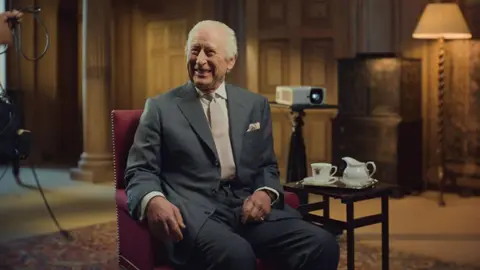
In the documentary, which will be available from Friday, King Charles watches archive footage of his speeches on the environment while sitting in the cedar-panelled Tapestry Room of Dumfries House.
 Tim Cragg/Passion Planet/PA Wire
He has been highlighting concerns around the changing climate and biodiversity loss since the early 1990s, not long after the formation of the UN's Intergovernmental Panel on Climate Change.
"I remember being profoundly concerned about all this. It seemed crazy to go on without thinking carefully about how we manage all this," he says.
Dumfries House switched early to renewable heating in some of its old and new buildings, in part to cut its high energy bills.
The demands of reserving heritage and protecting nature go hand-in-hand as those running this huge estate look to reflect the King's values.
 PA Media
 PA Media