Hundreds of trees felled as ash dieback spreads

 BBC
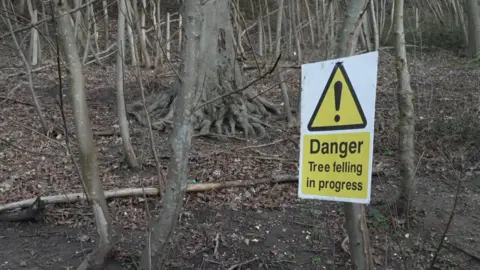
BBCUrgent work to remove dead and diseased ash trees in a Brighton woodland is under way.
Brighton & Hove City Council said: "We understand that any tree removal can be upsetting for residents, but these dead and infected trees need to be removed."
Before the felling started ash trees were inspected for signs of the ash dieback fungus, and large trees which appear to be fighting the disease have been left.
Alan Robins, cabinet member responsible for parks says, where possible, tree trunks and stumps will be left to create habitats for wildlife.
Thinning out the woodland could help to prevent the spread of ash dieback, the council says.
Peter Small, arboriculture manager for the council, says there are so many dead trees the woodland has become dangerous.
He says the work "does look severe" and "afterwards these areas will look different".
Small added the work was necessary to "ensure people are safe".
 PA Media
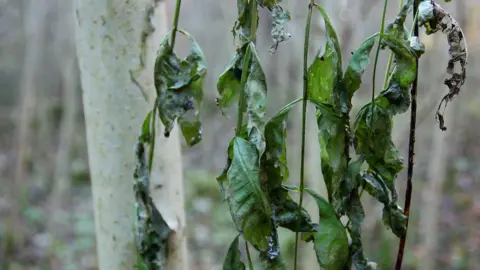
Ash dieback has been in the UK for more than a decade and is most visible when the trees are in leaf.
The Woodland Trust says the fungus, which originated in Asia, overwinters in leaf litter on the ground.
It says when the spores are released they can blow tens of miles away, landing on the surface of leaves and then penetrating the tree.
The fungus then grows inside the tree, eventually blocking its water transport systems, causing it to die.
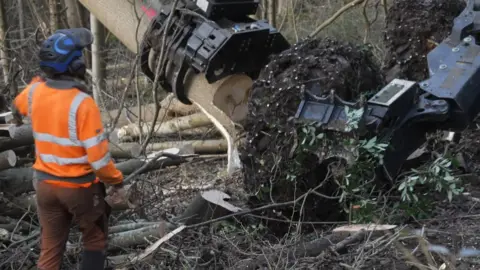
In Brighton there has been a programme of monitoring trees over the last five years to ensure that they are removed before they become dangerous.
The South East is the area where ash dieback has had the most impact across the country, and scientists estimate only 5% of ash trees develop a tolerance to the disease.
The council says once the tree-felling work is complete, work will begin to improve the footpath through the woodland.
The footpath project is being funded with a grant from the South Downs National Park Authority.
Follow BBC Sussex on Facebook, on X, and on Instagram. Send your story ideas to southeasttoday@bbc.co.uk or WhatsApp us on 08081 002250.
