Barriers affect breast cancer screening uptake

 London Assembly
The constantly-shifting population of London has been identified as one of the reasons the capital's uptake rate for breast cancer screening lags behind the rest of the UK.
London recorded a 62.8% uptake in 2024, below the NHS's "acceptable" level of 70%.
NHS London launched its first ever screening campaign last year in response to the figures and aimed to increase detection of cancers at an earlier stage.
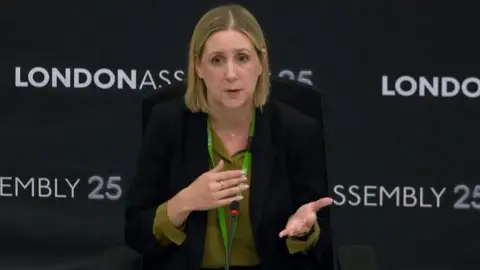
The London Assembly Health Committee recently heard how the capital faces distinct challenges compared with the rest of the country and that these issues must be addressed.
Mammograms 'terrifying'
Dr Josephine Ruwende, a cancer screening lead at NHS England, said frequent moves within the rented sector and the cost-of-living crisis pushing people out of London had made it difficult for the health service to reach eligible patients, which she described as "the impact of population churn".
She added: "This is people changing addresses and then not updating their GP - this then affects the invitation process because GP details are used to identify individuals who are eligible.
"In boroughs where we have the highest population churn, we see it strongly associated with lower uptake."
She noted that even in the wealthiest boroughs there can be high levels of movement, with around 40% of residents changing address within a year.
Such areas also tend to have more people who own second homes or spend long periods abroad, making it harder for the NHS to keep contact details up to date.
As a result, screening invitations may be sent to out-of-date addresses or to people who are overseas.
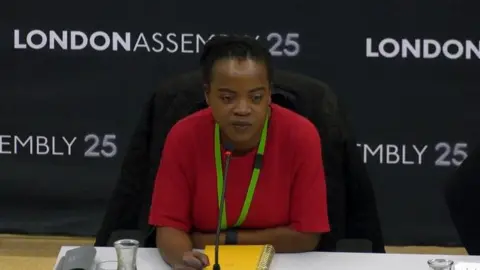
Leeane Graham, advocacy lead at Black Women Rising, which supports women of colour with a cancer diagnosis, said there were "cultural barriers, fear and a mistrust of the health service due to previous experience within our own communities".
"If you've never been for a breast screening before, the thought of having a mammogram can be really, really terrifying."
 London Assembly
Lee Dibben - from LGBTIQ+ cancer charity OUTpatients - said previous negative experiences with the healthcare system also contributed to lower uptake: "There's a trust deficit that needs to be bridged through things like inclusive campaigns and messaging."
Helen Dickens, from Breast Cancer Now, said other reasons included a lack of understanding of breast screening, along with concerns about discomfort, trust, and practical issues such as travel.
"We have amazing public transport and we feel that we've got great accessibility, but we also know that we don't have screening centres in every borough," she said.
"We know that for some women that barrier of transport and access will still be a really big reason why they're not attending screenings."
Zara Gross, from the South East London Cancer Alliance, added that in more deprived areas some women were unable to take time off work, particularly those on zero-hours contracts, further reducing attendance.
Dickens stressed that early diagnosis is key to survival rates, noting that patients diagnosed at stage one have a five-year survival outcome of 98%.
The government's new national cancer plan is due to be announced on 4 February, which is also World Cancer Day.
New figures from the Breast Screening Programme 2024–25 will be released on 19 February.
Listen to the best of BBC Radio London on Sounds and follow BBC London on Facebook, X and Instagram. Send your story ideas to hello.bbclondon@bbc.co.uk
