My heart attack at 23 shows why screening matters

 BBC
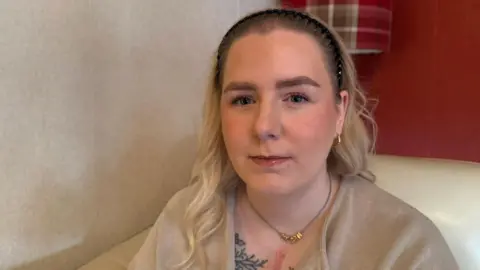
BBCA woman who had a mechanical valve fitted due to heart failure says screening at a younger age could have "changed the whole trajectory" of her life.
Megan Hetherington, 28, from Belton, North Lincolnshire, had five strokes, a heart attack and three open-heart surgeries within four years.
After enduring what she described as a "terrifying" experience, she has joined others affected by heart failure to call for compulsory screening for young people.
At present, there is no government-funded national screening programme for conditions associated with sudden cardiac death, but the Department of Health and Social Care (DHSC) said this was under review.
Megan said she experienced chest pains and breathlessness throughout her childhood, but was initially diagnosed with asthma.
However, after having a heart attack aged 23, she underwent a series of operations.
"It just impacted every aspect of my life," she said. "I remember feeling really down, very anxious.
"It was just terrifying."
Megan said screening for younger people would detect underlying issues as soon as possible.
"Knowledge is power and accepting that you may find something is better than the outcome if it's not detected early enough," she added.
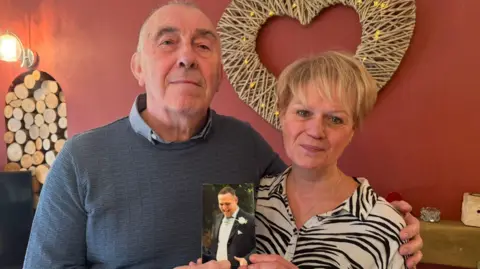
Megan is campaigning for cardiac screenings alongside a North Lincolnshire-based charity, The Beat Goes On 31.
It was founded by Gill and Steve Ayling, from Scawby, after their son Nathan died from an undiagnosed heart condition aged 31 in 2019.
The charity has funded screenings for more than 1,000 people aged 14-35, with the support of the national charity Cardiac Risk in the Young.
The Aylings have launched a petition calling on the government to fund cardiac screenings for everyone when they turn 14.
Gill said: "We know how many young people are dying and we need the government to sit up and take notice.
"There's young people walking around with time bombs in their chest. They're not getting checked by the NHS if they've got no symptoms."
Dave and Karen Stead, from Driffield, East Yorkshire, have also raised money for screening after their son, Jono, died of an undiagnosed heart condition aged 27 in 2022.
"We want the situation where we can get people screened via government funding, ideally in schools as they do in some other European countries," Dave said.
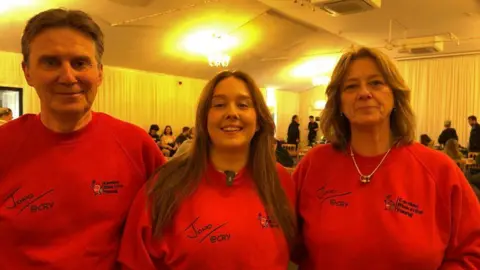
Charlie Dewhirst, the MP for Bridlington and the Wolds, attended screenings organised by the Steads on Saturday and Sunday.
He said: "We've got lots of young people from Driffield and the surrounding area here getting a heart screening, but we want to see it rolled out to a much wider scale to ensure that all undiagnosed conditions are recognised at the earliest possible opportunity."
In 2019, the UK National Screening Committee, which advises the government, recommended against screening for sudden cardiac death, citing factors including the reliability of the test, the possibility of false positives and uncertainty about whether screening would reduce deaths.
Cardiac Risk in the Young said 12 young people aged 35 and under died suddenly from a previously undiagnosed heart condition every week in the UK.
Dr Steven Cox, the charity's chief executive, said: "If a 14-year-old wants to go and be screened, they should be able to have that opportunity.
"In theory, if you have symptoms, you can go and ask for an ECG. But we know this doesn't routinely happen."
According to Cox, 80% of young sudden deaths occur "with no symptoms whatsoever".
"So that's why it's really important that all young people have the access, the opportunity to have an ECG," he added.
A spokesperson for the Department of Health and Social Care said: "We would like to express our heartfelt sympathy to Steve and Gill following the loss of their son Nathan.
"The UK National Screening Committee is currently reviewing the evidence for sudden cardiac death screening and will open a public consultation in due course."
Listen to highlights from Hull and East YorkshireorLincolnshireon BBC Sounds, watch thelatest episode of Look Northor tell us about a story you think we should be covering here.
Download the BBC News app from the App Storefor iPhone and iPad orGoogle Play for Android devices
