Brain cooling collar trial for head injury patients

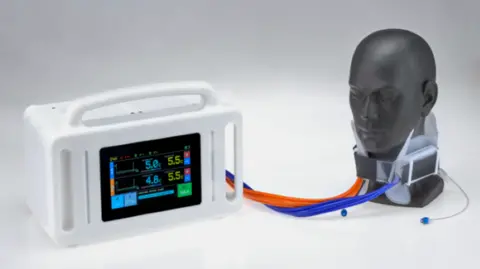 Neuron Guard
A new study will assess whether a targeted cooling collar can improve patients' recovery from traumatic brain injuries.
Cambridge University Hospitals NHS Foundation Trust, which runs Addenbrooke's Hospital, said it would be the "world's first in-human study" to measure the "pioneering medical device".
Various methods of "brain cooling" - or induced hypothermia - can be used to limit swelling in the brain when someone suffers a stroke or head injury.
However, if cooling affects the whole body it can cause "systemic side effects" that "complicate recovery", the trust said.
The cooling collar, named CB240 Aurora, is applied around the neck.
It is a "selective temperature-control device" that aims to lower brain temperature in a more targeted way.
The system is portable and could therefore be used outside hospital settings such as roadsides or sporting events.
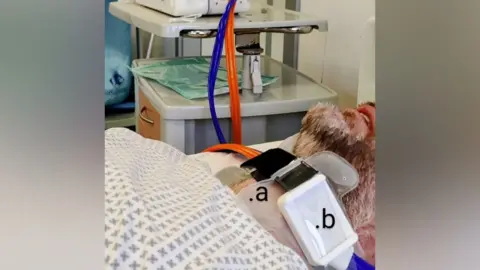 CUH NHS Foundation Trust
"The CB240 Aurora is designed to minimise systemic side-effects associated with conventional whole-body cooling strategies such as body-surface or intravascular cooling devices," the trust said.
"These systemic effects may include immune suppression and chest infections, reported to complicate recovery and offset potential benefits of therapeutic temperature control."
The trial will get under way this month at Addenbrooke's under the Neurosciences and Trauma Critical Care teams. The hospital specialises in the treatment of brain injuries and tumours.
Twenty patients with severe traumatic brain injury are expected to be enrolled over 12 months in the study, named SELETHERM 2.
Half will be randomised to receive selective brain cooling with the collar for the first 72 hours, while the remainder will receive standard current therapies.
 CUH NHS Foundation Trust
Dr Andrea Lavinio, who is leading the study, is also a minority shareholder in Neuron Guard S.R.L, the company that developed the prototypes.
He said: "In traumatic brain injury, hypothermia has long been considered a potentially neuroprotective strategy, but large clinical trials have not demonstrated a consistent benefit.
"One possible explanation is that the side-effects associated with whole-body cooling may outweigh any neuroprotective effects.
"This pilot study will assess whether selective, brain-directed temperature control can be delivered while minimising systemic effects."
James Piercy, who suffered a severe head injury after a road accident in 2011, has advised on the study from a patient's perspective.
He said: "I'm really excited to help the HealthTech Research Centre support technologies like this.
"Reducing the risk of the secondary injuries produced by brain swelling can dramatically improve people's chances of a good quality of life after an accident."
Follow Cambridgeshire news on BBC Sounds, Facebook, Instagram and X.
