Not a fan of the gym? You can build these quick wins into your day

 Getty Images
Join the gym, run up a mountain, sign up for spin classes. We are constantly being told to go to great lengths - and get very sweaty - to get fit.
What if you just don't have the time or inclination?
Jo Blodgett has the answer: activity "snacks" that you can almost effortlessly add in to your daily schedule.
Blodgett is a senior research fellow at the Institute of Sport, Exercise and Health at University College London and has studied the impact that small bursts of action can have on your health.
High intensity exercise - getting out of breath, getting your heartbeat up - is really beneficial, but it is only part of the picture, she told the BBC Radio Four podcast What's Up Doc?
Here she explains how you can get fitter without a special outfit or a gym membership.
1. Fit small bursts of activity into your day
 Getty Images
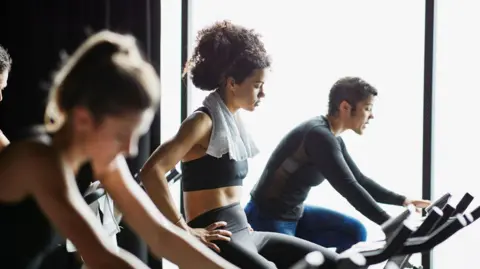
There are loads of ways you can add "exercise snacks" into your day, says Blodgett.
Officially she calls it "vigorous intermittent lifestyle physical activity" or "VILPA" - essentially briefly increasing your effort during routine activities.
"It's about finding opportunities in your daily life that are going to push you a little bit more," she says.
She suggests:
- Taking the stairs and the lift - Walking all the way to the 12th floor might be unrealistic, so walk up two floors then get in the lift
- Getting off the bus early – cycling to work is great, but if you need to take the bus, get off and walk the last stop as fast as possible. No lycra needed.
- Picking up your pace – you might already go for walks, try speeding up between two lamp posts
Fortunately, if you are not currently moving much, adding in just three or four bouts of intense movement, lasting one or two minutes each, can make a big difference to heart disease and life expectancy.
2. Don't rely on a few gym sessions
 Getty Images
If you do already manage to fit in regular gym workouts, or a game of football once a week, you can stop feeling smug now.
Plenty of us are what Blodgett calls "active couch potatoes".
Of course those activities are "a good thing" she says, but they won't make up for sitting all day at work staring at a screen or spending the evening slouching on the couch.
"Thirty minutes in the gym is only a tiny part of it", she points out. "What about the other 23-and-a-half hours?"
If that is you, she advises:
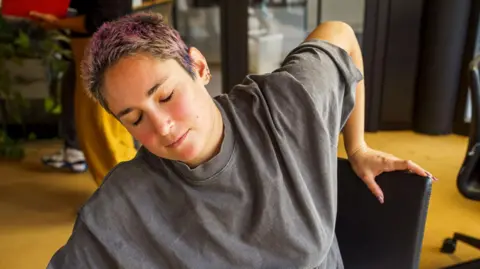
- Standing up - get up from your desk regularly
- Going for a walk - use half your lunchtime for a leg stretch instead of looking at your phone
- Meetings on the go - think West Wing, walk and talk. This works for a lot of phone meetings too
The evidence suggests sitting only for very short periods is best.
"Every 15, 30 minutes, can you stand up, shake around, sit back down?" says Blodgett.
This does not mean you should quit the gym.
There is still a hierarchy, with higher intensity activity, that raises the heart rate, still offering the biggest fitness and health gains, followed by moderate activity such as walking, says Blodgett.
3. Reduce the time you are not moving
 Getty Images
Health guidelines tend to focus on how much vigorous exercise you should be aiming for.
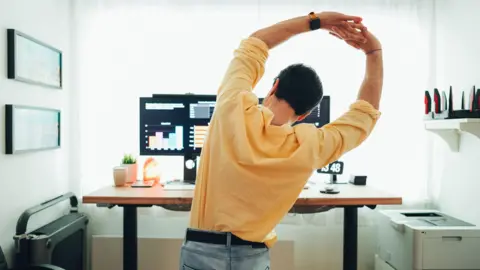
Blodgett suggests flipping that and seeing if you can reduce the time you are not moving.
A few countries including Canada and Australia have started using this message. Assuming you sleep for eight hours, at least half of the time you're awake - eight hours - should be spent on the move.
Blodgett says:
- Keep moving - aim for less than eight sedentary hours a day. The more you can cut that back the better.
- Let children go free - Advice in Australia is that pre-schoolers should not be restrained in a pushchair or car seat for more than an hour at a time. On rainy days try playing with balloons indoors
- Lean in to daily chores - Carrying groceries, pushing the lawnmower and tidying the house are all ways to keep on the move and help with strength and balance
There is no golden rule for how much is enough, says Blodgett. The more you move the better.

