Risk of corridor deaths discussed over hospice cut

 BBC
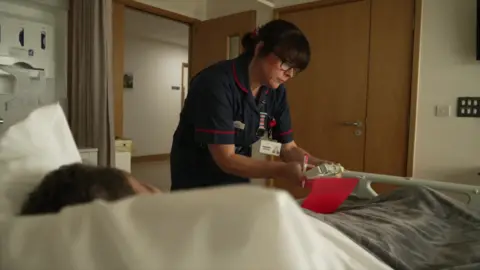
BBCA hospice has been given a year's reprieve from a planned funding cut for beds after hundreds of thousands of pounds was raised and a petition was taken to Number 10. But NHS documents reveal that during the hospital trust's decision-making process, it acknowledged there was a risk the cut to hospice beds could lead to more people dying on corridors. How did we get here?
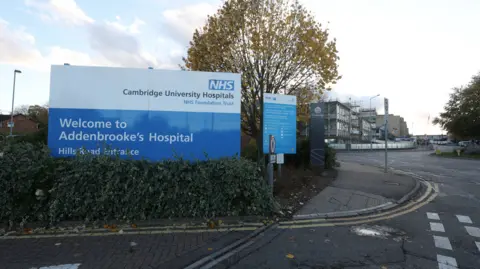
In October it was announced the trust that runs Addenbrooke's Hospital in Cambridge would remove funding worth £829,000 a year for nine inpatient beds at the nearby Arthur Rank Hospice from March.
Cambridge University Hospitals NHS Foundation Trust (CUH) justified the "very difficult decision" by saying it had undertaken "a value for money assessment" and on average it had been "able to access around six beds".
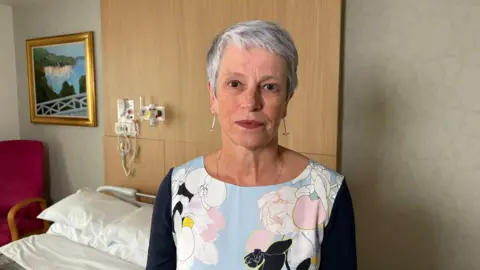
Sharon Allen, the chief executive of Arthur Rank Hospice Charity, was "devastated" and claimed the funding cut would mean "over 200 people a year will no longer have the option of being cared for in the comfort of our hospice and instead will sadly be dying in a busy hospital".
 Ben Schofield/BBC
But a public row was sparked when then-CUH boss Roland Sinker called the beds "very poor value for money" and the hospice's "very aggressive" media campaign had left a "bad taste in the mouth".
Sinker also said the hospital had plans to create its own dedicated hospice facility on site in a ward known as T2 used for "medically fit for discharge patients".
The BBC has now obtained internal CUH documents about its decision.
A quality impact assessment assessing the risks, which the hospital said was from April 2025, said even with mitigation in place, it was "likely" that end-of-life patients would stay in hospital "exacerbating capacity pressures, including side-room utilisation"; as well as "depriving them of achieving their preferred place of care/death".
In a section on staff impact, it said it was "possible" there would be "increased rates of dying patients on wards, potentially in corridors, increasing workload and emotional labour of ward staff".
In May the board report said "mitigations against these risks are not fully realised", but included exploring "repurposing a proportion of the medical bed base to support increased numbers of palliative care patients in one area", such as T2.
It also acknowledged Arthur Rank was a "bespoke facility" while "the delivery of palliative care in CUH would be in a less favourable environment and by ward nursing teams (supported by the CUH palliative care team) rather than nurses specialising in palliative care".
 Reuters
A spokesperson for the trust said: "The very difficult decision to end the Arthur Rank Hospice contract was among a number of cost-saving measures, including redundancies, taken across the trust in order to maintain core services within a significantly reduced budget.
"As part of our considerations around the future of the contract, we undertook a Quality Impact Assessment in April 2025 which is standard practice and considers the full range of potential outcomes.
"This informed the mitigations the trust is putting in place by establishing an end-of-life care ward, supported by our specialist palliative care team. This will bring together end-of-life care patients from across the hospital into a dedicated facility for the first time."
 Qays Najm/BBC
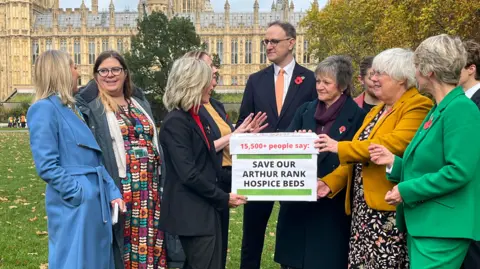
A petition - started by local Liberal Democrat MPs and signed by more than 15,000 people - to save the beds was taken to Downing Street in November.
At the time, a Department of Health and Social Care spokesperson said it had made the "biggest investment in a generation – £100m – to improve hospice facilities".
But, even without government intervention, enough has been raised to give the hospice, in the words of Allen, a "temporary reprieve from the threat of having to close capacity on our inpatient unit".
She said because of the "generosity of our supporters, including significant donations from some", the beds will remain open for a further 12 months.
"Whilst this is amazingly welcome news, we recognise the future is still uncertain. It does not resolve the longer-term funding issue."
CUH said: "We are delighted the fundraising campaign has raised enough money to keep the nine beds open at Arthur Rank Hospice for another 12 months.
"This is testament to the importance of Arthur Rank Hospice in our local community. We will continue to work closely with our colleagues at the hospice as valued partners on behalf of the populations we serve."
Follow Cambridgeshire news on BBC Sounds, Facebook, Instagram and X.
