Judge rules Dartmoor grazing not properly assessed

 BBC
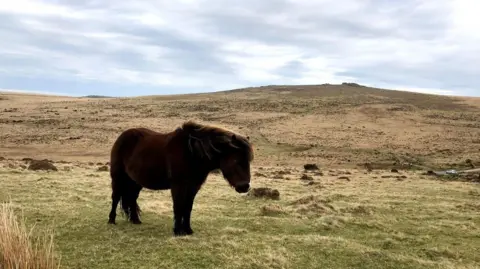
BBCThe body responsible for protecting large parts of Dartmoor's natural environment failed to assess the number of livestock grazing on the moor, a High Court judge has ruled.
Environmental campaign group Wild Justice took action against Dartmoor Commoners' Council (DCC), saying it had breached its statutory duties by allowing overgrazing on the commons.
Carol Day, on behalf of Wild Justice, said: "It has been clear for years that overgrazing is one of the major issues leading to the ecological decline of Dartmoor's important wildlife habitats."
DCC said it welcomed the decision and planned to meet with members to develop a way to carry out a full assessment of livestock numbers on the moor.
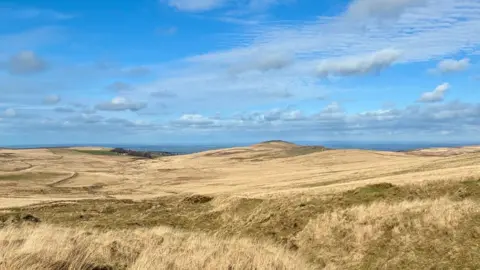
Dartmoor National Park is the largest open space in the south of England, and about 36,000 of its 95,000 hectares are registered as common land, privately owned with public access.
There are around 850 commoners who own properties on the commons; they are permitted to keep sheep, cattle and ponies, an iconic feature of the landscape.
The High Court found that while DCC had not unlawfully failed to issue limitation notices to control livestock numbers, it had failed to carry out legally adequate assessments of how many animals could properly be grazed.
Mr Justice Mould said the question for DCC was "whether stocking levels exceed the capacity of the commons properly to accommodate them".
Mould said he accepted Wild Justice's submission that the assessment of the number of animals was "fundamental to the defendant's discharge of its functions".
The judge said it was up to DCC to decide how to carry out that assessment "within the limits of its resources", but it must be "reasonably fit for its purpose".
Reacting to the decision, Bob Elliot, chief executive of Wild Justice, said: "This judgment shows that the Dartmoor Commoners' Council failed to do the most basic of work needed in order to understand how many animals the Dartmoor Commons can sustain.
"When such an important landscape is already in very poor ecological condition, this simply isn't good enough."
He said Wild Justice would be "scrutinising that assessment" and "how DCC acts upon it in areas where overgrazing is apparent".
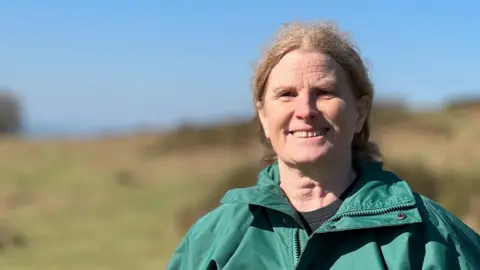
Tracy May, sheep farmer and chairwoman of DCC, said it was important the High Court did not order DCC to issue any limitation notices or take any other action to limit livestock numbers.
She said they accepted the High Court decision and welcomed "the clarification of how it should carry out such assessments moving forward".
"DCC is in the process of arranging internal meetings of its members to begin the process of developing a robust methodology for the assessment in accordance with its statutory duties," she said.
Follow BBC Devon on X, Facebook and Instagram. Send your story ideas to spotlight@bbc.co.uk.
