Farmer will make 'no money this year' due to floods

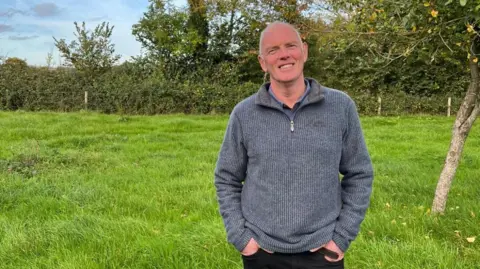 Mark Humphrey
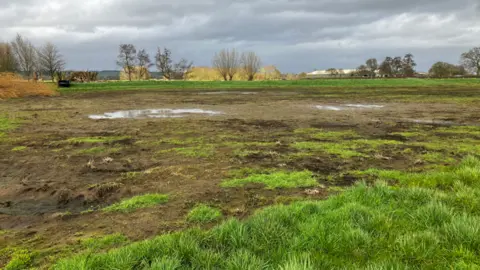
A dairy farmer has said his land lost about 30 acres of grass and he will not make any money this year because of extreme weather events.
Mark Humphrey, based near Ilminster in Somerset, said two of his fields have had no yields since October 2023 because of last summer's drought and flooding over the winter.
Humphrey told BBC Radio Somerset farms across the county are affected and the impact will be felt for months to come.
The Environment Agency said it has installed additional pumps to cope with flooding across the Somerset Levels and Moors after the area saw 200% more rainfall than normally expected in February.
Humphrey said nothing has grown on his farm to feed their 650 cows across summer and through winter, and they have had to spend an additional £30,000 on food.
A lack of rainfall and persistent warmth left the country vulnerable to droughts and wildfires through the spring and summer in 2025.
Somerset also experienced a very wet January - the wettest since the 2014 floods - with Storm Chandra in January causing widespread disruption.
 Mark Humphrey
Humphrey said: "We've lost 38 acres of crops.
"I know people across where the moors are, that are having to buy silage now to feed cows just to get through to end of this winter.
"The weather is changing dramatically. When the rain falls it's coming in more dense periods. Farmers are having to adapt and learning to adapt.
"Some farms are reducing the amount of stock they can carry on their farms, that reduces their viability.
"Other farms are trying to find more land they can rent to grow food on.
"We're having to prepare for much longer winters so we can feed stock during periods where grass isn't available to us, but that does have an impact on the business."
'Difficult to predict'
Jim Flory, environment manager from Environment Agency, said in the face of climate change what people experience is very different in each weather event.
"The intensity of the rain, where it falls, how quickly it falls, are real factors that will influence how we're able to respond.
"Storm Chandra, at its peak at the end of January, was leading up to 1.2m tonnes of water coming down the River Parrett and Tone an hour.
"It's a difficult one to predict, but what well do is spend a lot of time and engage with the affected communities to understand if there's anything different we can do in the face of that kind of challenge going forward," Flory said.
He added £250m has been spent on flooding infrastructure since the 2014 floods, protected over 18,860 properties in Somerset during this event.
Follow BBC Somerset on Facebook and X. Send your story ideas to us on email or via WhatsApp on 0800 313 4630.
