Wet winter brings long-term problems for farmers

 BBC
BBCRecord-breaking rain over the last three months has created long-lasting problems for farmers across the South West.
Parts of Cornwall and Devon have seen rainfall totals reach about 150% of the long-term average, forecasters said.
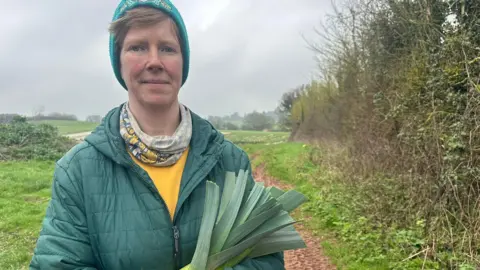
Ella Gent, from Mosshayne Farm, near Exeter, Devon, said changes in climate were threatening to put her out of business. She said she "might have to change how we farm or it might mean that we are not farming in the future".
The National Farmers' Union said food production sustained about 20,000 jobs in Devon alone.
The Met Office recorded Cornwall's wettest winter since records began.
Gent said she had "never seen this much rain".
She said: "This has definitely been the worst winter we've experienced in terms of wet."
She added the extreme weather had taken a huge hit on produce as she and colleagues had been unable to get the machinery out, so crops were removed by hand instead, which she said took a lot of extra labour.
'Just been too wet'
Liz Nattle, from Tremore Dairy Farm, near Bodmin, Cornwall, said: "It's just been relentless and gets everyone down".
The farm said its cows would normally be out in the field all day but, because of the weather, livestock had been restricted to only three hours a day outside, which meant more was spent on feed and hay.
Martin Boyd, from Stone Tree Dairy, near Dartmouth, Devon, who farms about 200 goats, said the weather had "just been too wet".
Boyd said his goats have been resigned to the barn since November.
He said pastures were "bulging with lovely grasses" but added that, if the goats went out, they would "destroy the ground", and warned that it would take the rest of the year to recover.
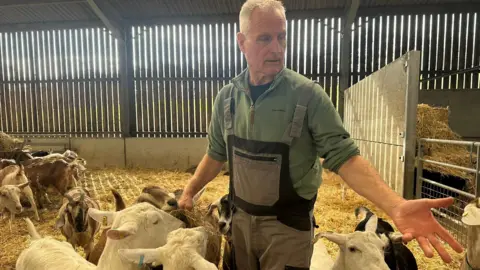
Boyd said waterlogged soil and mud outside caused problems for animals' feet and made extra work during the ultra-clean milking and cheese-making processes.
He said feed had to be bought in all winter, making tight margins even tighter.
He said: "We normally rotate them around the fields where the grass grows to keep up with them, but now we're having to spend money on buying in a lot of extra fodder."
Click the button above to submit an idea and it could be featured on TV, radio, the BBC News website and app, BBC Sounds and social media.
Click these links to read our terms and privacy notice.
