Artists inspired by the record-breaking winter

 BBC
BBCFrom giant waves in Penzance to flooded valleys in Devon, artists across the South West have been documenting a winter of extreme weather that has broken rainfall records and reshaped the landscape.
The Met Office recorded Cornwall's wettest winter since records began, with storms including Goretti, Ingrid and Chandra bringing relentless rain and dramatic seas.
Artists across the region often braved the elements to record the changing landscape through photography, printmaking, painting and sound.
'Incredible to see'
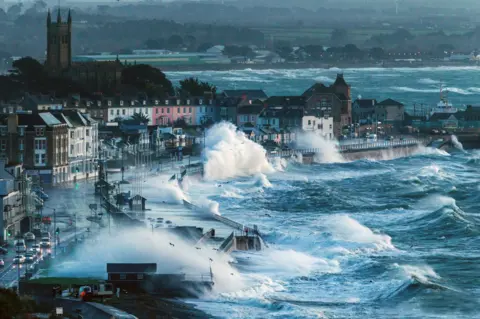
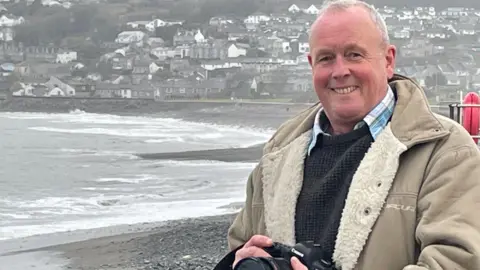
The winter brought repeated storms to Cornwall, creating dramatic conditions for photographer Mike Newman, who has has been capturing the coastline for more than three decades.
Newman, a surfer and a photographer, says he uses his understanding of wave formations to anticipate the biggest moments.
He says: "Everyone else is running away and hiding but I will go out.
"The burst of spray going up over a 200ft cliff is incredible to see."
 Cornish-Seascapes.com
Newman says he has noticed a change in the intensity of the storms and is always mindful not to get too close.
"Sea level rise makes the waves hit higher," he said.
"The Valentines Day storm in 2014 chewed this prom right up."
 Cornish-Seascapes.com
Artists recording flooding
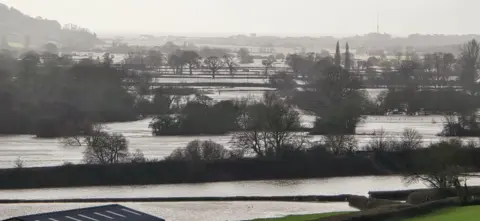
This winter's flooding transformed fields, rivers and valleys across the South West.
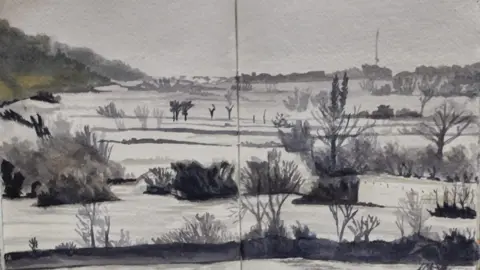
In East Devon, nature journaller Alex Boon turned to sketching the flooded Axe Valley from his home near the River Coly when roads were impassable.
 Alex Boon
 Steve Boon
Boon sketches and paints the shift in the waterlogged landscape in his nature journal.
"I've been following it (the flooding) down the Axe Valley from the top of the hill at Kilmington right down to Seaton Wetlands and estuary," he says.
He has books full of illustrations, all rooted in the daily routine of the wildlife on the riverbank affected by the flooding.
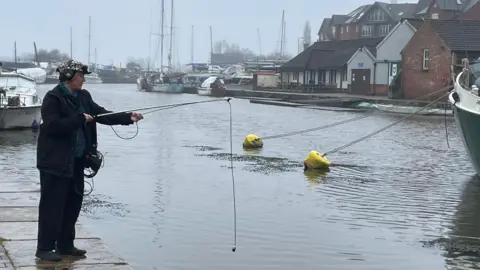
Sound artist Kathy Hinde found inspiration in waterways that were being pushed to their limits by weeks of rain.
She explores flooding in a different way - by listening to it.
Hinde drops an underwater microphone called a hydrophone into rivers and canals, allowing listeners on her guided walks to hear the shifting soundscape created by swollen waterways.
Her "deep listening" events along the Exeter Canal featured in the Ripple Effects Micro Festival.
"I put the hydrophone in and we all discover at the same moment," Hinde says.
"It's really to invite people to focus in on listening and be curious about the sound worlds we don't normally hear."
She hopes people build a relationship with the environment as a result.
"You start listening, you start noticing and you care."
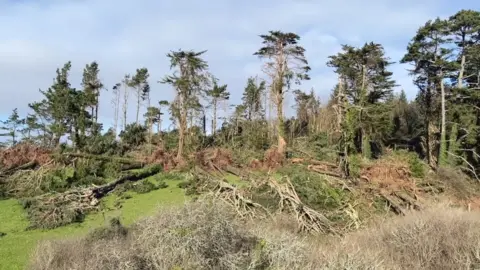
Storm Goretti's high winds in January brought down countless trees across west Cornwall.
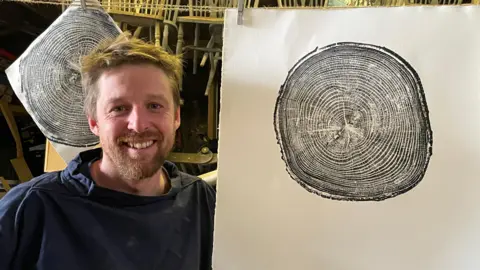
Prints by woodworker and printmaker Charlie Thacker show cedar rings and fallen branches, inked directly from storm‑damaged trees.
Thacker has been preserving the forms of these trees by soaking and heating the wood before taking ink impressions at his studio in Gweek.
He says: "It's sad so many landmarks have been affected.
"Especially places like St Michael's Mount.
"It feels like you can make something beautiful (with these prints) from such a devastating occurrence."
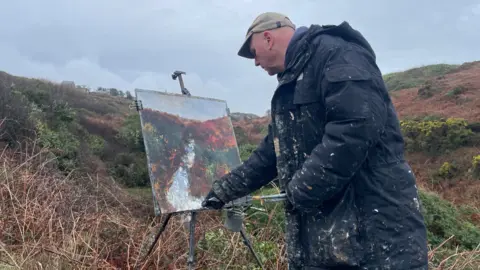
For environmentalist and painter Kurt Jackson, the Kenidjack Valley has been a constant source of inspiration for more than 35 years.
This winter intensified decades of watching it change.
Jackson often paints "en plein air", with raindrops adding texture to the work.
He says: "The Tregeseal River or stream is what's known as a flash river.
"It suddenly fills up and releases this energy downstream. But what's happening now… it's been relentless.
"This thundering mass of water has been pouring down here… a daily event really, definitely for this winter."
The recent storms have reshaped the landscape, and have also encouraged new creativity.
Inspired by the storms' power, this art will serve as a reminder of our evolving environment.
From flooded roads to damaged homes, recent storms have left many people in the region wanting clearer answers. If you have any weather-related questions for BBC South West's senior metereologist David Braine, you can ask them here and he will do his best to explain what's going on.
